Rutendo Nyeve, [email protected]
ZIMBABWE is edging closer to reducing its annual fuel import bill of more than US$1 billion as the Cabora Bassa oil and gas project gathers momentum, raising hopes of greater energy security, new jobs and industrial growth.
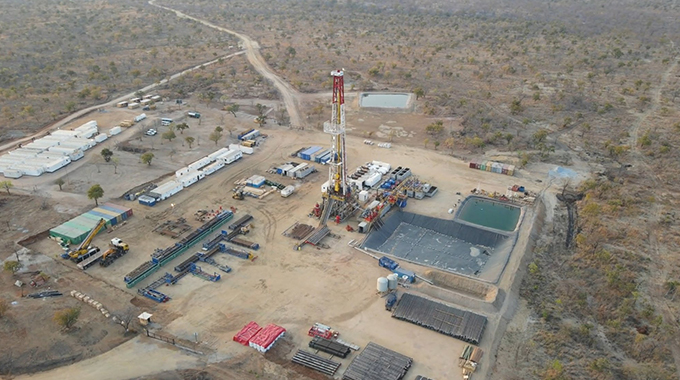
After decades of relying heavily on imported fuel, the country has now confirmed a working petroleum system in the Cabora Bassa Basin through the Mukuyu-1 and Mukuyu-2 wells, with preparations underway for another major exploration well expected to be drilled later this year.
The Musuma-1 exploration well, scheduled for the second half of 2026, will target an estimated 1,2 trillion cubic feet of gas and 73 million barrels of condensate, a light hydrocarbon that can be refined into fuels and petrochemical products.
The developments are part of Zimbabwe’s bigger strategy to harness domestic hydrocarbon resources and lessen dependence on costly fuel imports, which have for years exerted pressure on foreign currency reserves.
Speaking at the coal, oil and gas symposium held on the sidelines of the ongoing Chamber of Mines of Zimbabwe Annual Conference in Victoria Falls, Government and industry officials said the Cabora Bassa Basin could transform the country’s energy landscape.
Chief director for mining development, Engineer Leon Godza, said Government had laid a strong policy foundation through the Petroleum Production Sharing Agreement (PPSA), signed on May 28 this year.
The agreement, the first of its kind in Zimbabwe, grants the project National Project Status and Special Economic Zone status while guaranteeing State participation through the Mutapa Investment Fund.
“The agreement confers National Project Status and Special Economic Zone status and it embeds State participation through the Mutapa Investment Fund so that Zimbabwe and its citizens share directly in the upside. It is the first framework of its kind in our nation’s history,” said Eng Godza.
He said the agreement provides a stable, transparent and internationally competitive legal and fiscal framework covering the entire petroleum value chain from exploration to production.
Eng Godza said the country’s policy thrust was shifting decisively from exporting raw resources to value addition and beneficiation.
“The throughline of this overview is a single, deliberate movement: from raw extraction to integrated value. Coal remains our anchor and is being beneficiated; coalbed methane is the near-term gas prize; and Cabora Bassa opens an entirely new petroleum frontier,” he said.
“With sound policy and disciplined execution, this sector will indeed unlock value, maximise benefits and sustain growth for our nation.”
Geo Associates managing director Mr Paul Chimbodza said the resource base at Cabora Bassa was substantial.
The basin is estimated to contain about 4,2 trillion cubic feet of gas and 264 million barrels of condensate.
To put the figures into perspective, Mr Chimbodza said one trillion cubic feet of gas alone is enough to power a 500-megawatt power station for 50 years.
“In context, we measure gas in TCF, which means trillion cubic feet. So one TCF is big enough to power a 500-megawatt power station for 50 years. So that’s the upside,” he said.
Mr Chimbodza said Geo Associates, the licence holder for the Muzarabani project, jointly owned by Australia-listed Invictus Energy and local partner One Gas Resources, had only explored a small fraction of the basin.
“We have got a licence area that is 360 000 hectares. We have generated a lot of targets. We are spoiled for choice on where to drill,” he said.
Mr Chimbodza said the company had drilled two wells so far, Mukuyu-1 and Mukuyu-2, which are about seven kilometres apart and each extend approximately four kilometres below the surface.
“With a licence area that is 360 000 hectares, what it says is we have barely scratched the surface,” he said.
The Mukuyu discoveries have already attracted global attention, with energy consultancy Wood Mackenzie ranking the find as the second-largest hydrocarbon discovery in Sub-Saharan Africa in 2023.
Mr Chimbodza said the upcoming Musuma-1 well had also been identified as one of the world’s high-impact exploration wells to watch in 2026.
If commercial production is realised, analysts say the project could significantly reduce Zimbabwe’s fuel import bill, improve energy security, create thousands of jobs and stimulate downstream industries such as power generation, fertiliser manufacturing and petrochemicals production.
The development comes as Zimbabwe intensifies efforts to address energy shortages and position itself as a regional energy hub, with the Cabora Bassa Basin increasingly viewed as a potential game changer for the country’s economic transformation.