admin
admin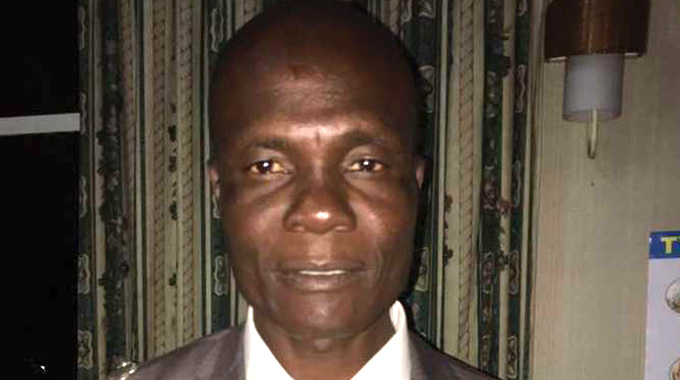
Locadia Mavhudzi Midlands Correspondent
THE Urban Councils’ Association of Zimbabwe (UCAZ) has urged its members to standardise tariff structures for the various services they provide to improve efficiency.
Addressing a service level benchmarking exercise in Gweru on Friday, UCAZ president and Gweru Mayor Cllr Josiah Makombe said the comparative analysis of the tariff schedules for water indicated that some tariff levels were way too high, while others were uneconomically too low.
“The peer review process has revealed that there is no standard way by which councils arrive at tariffs for the various services they provide,” he said. “The concept of cost build-up to tariff structure is a new phenomenon that councils are beginning to take on board as a result of the service level benchmarking process.
“There is need to come up with a standard tariff structure which can be shared and applied with consideration of the contextual factors of the particular local authority.”
Cllr Makombe said the performance of local authorities was to a large extent influenced by capacity to deliver critical services such as potable water and management of waste water.
He said Gweru council must develop long-term plans for growth and expansion taking into consideration population growth and infrastructure capacity.
“The current mushrooming of peri-urban settlements which has put pressure on mainly water and sewer infrastructure is attributed to the absence of an operational master plan,” said Cllr Makombe.
“Here in Gweru, the development of Woodlands suburb has exerted a lot of pressureon the local authority because there were no prior plans to incorporate its water and waste water needs. Going forward, that should be avoided at all costs,” said Cllr Makombe.
The mayor said Gweru was facing perennial water shortages due to outdated water pipes which led to over 60 percent of the water being lost through leakages.
He said council should continuously look at sustainable ways of improving revenue generation to complement the traditional sources of revenue so that they can improve on critical services such as water provision.
The peer review team, drawn from other local authorities, is expected to come up with recommendations to improve service delivery in the city.



 Online Reporter