

 admin
admin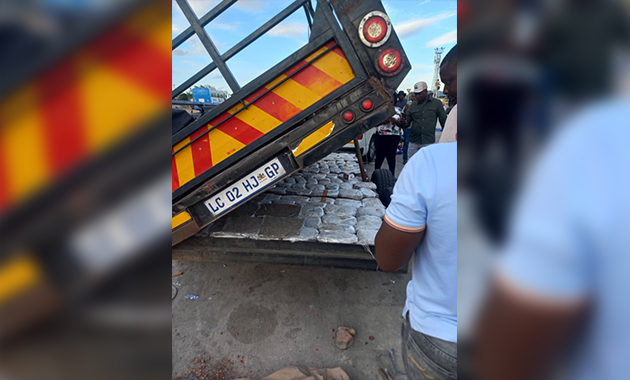
Paidamoyo Chipunza Senior Health Reporter
A local anti-drugs non-governmental organisation has called for the enactment of stiffer penalties against drug traffickers and strengthening of rehabilitation programmes for addicts to effectively curb abuse of drugs, including prescription medicines in the country.
Zimbabwe Civil Liberties and Drug Network communications officer Ms Gracious Chikomba said Chapter 9 of the Criminal Law Codification Act that deals with dangerous drugs should be amended as it portrayed addicts as criminals, when they were mere victims of traffickers.
“Drug users are victims of a vicious circle where the big fish, in this case, traffickers, are let loose whilst the small fish, the street users, are incarcerated,” she said.
Ms Chikomba said to effectively curb abuse of drugs in the country, drug use should be treated as a public health challenge and not as a crime.
“Those who should face the wrath of the law are those who supply and manufacture the illegal drugs in Zimbabwe,” she said.
She said despite efforts to rehabilitate drug users, some still go back to taking drugs because they were readily available.
Ms Chikomba said Government should consider harm reduction approaches in rehabilitating drug addicts.
She said there was strong evidence that this approach worked, rather than criminalising drug addicts.
“Countries like Tanzania have introduced harm reduction strategies and people who use drugs are being assisted,” she said.
Abuse of drugs, including prescription drugs, continues to be on the increase among youths, amid revelations that cross-border traders were smuggling the substances into the country.
Recent investigations by The Herald showed that cross-border traders were smuggling illicit drugs using haulage trucks and unscrupulous bus operators, mainly through Beitbridge Border Post.
It also emerged that the drugs were offloaded at premises and service stations along Simon Mazorodze Road, where the drivers are then paid.
From there, the consignments are taken to well-known and established bases for resale in single units, mainly to youths.
Some of the bases are at Copacabana, in Harare’s central business district, Mabvuku, Kambuzuma, Mbare, Glen View, Mufakose, Warren Park and other high- density suburbs.
The consignments largely comprise mental health tablets commonly known as the blue tablet or cough syrups such as BronCleer, also referred to as “Bronco’’ in street lingo.
Blue tablets are used to manage mental health patients, while BronCleer is a cough mixture manufactured in South Africa.
According to the Medicines Control Authority of Zimbabwe, some of the cough mixtures are not licensed for resale in Zimbabwe.



 Online Reporter