Online Reporter
Freeman Razemba
Senior Reporter
GOVERNMENT is working on measures to eliminate illegal transport operators by championing the development of an integrated mass bus transit system.
This is meant to improve traffic management and enhance public safety.
The Ministry of Transport and Infrastructural Development is collaborating with the Ministry of Home Affairs and Cultural Heritage and the Ministry of Local Government and Public Works to enforce compliance and restore order in the urban transport system.
The enforcement efforts focus on eliminating unregistered operators, improving traffic management and ensuring public safety.
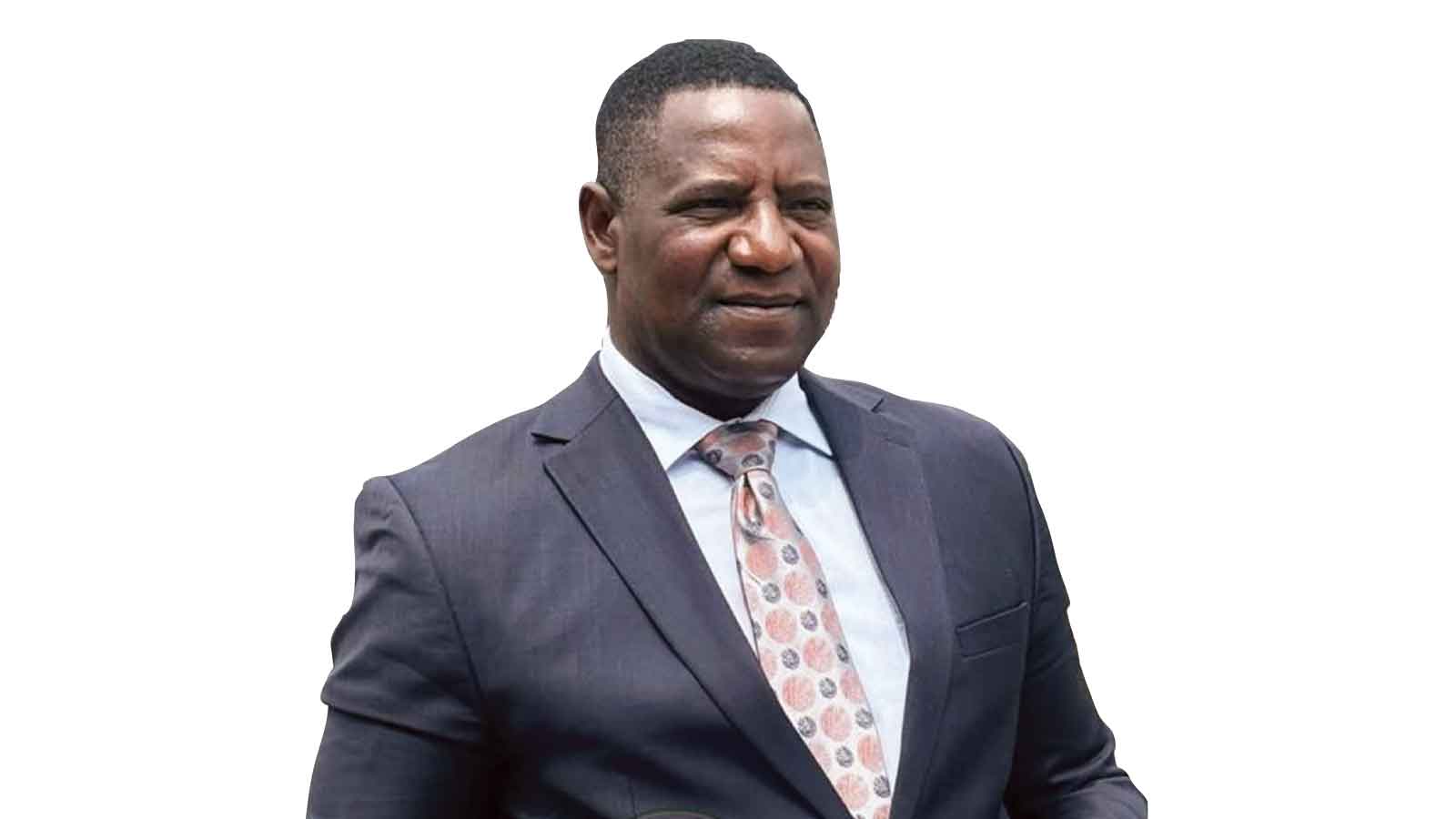
In an interview, Transport and Infrastructural Development Minister Felix Mhona said the ministry focuses on the formulation of transport policies, construction and rehabilitation of transport-related infrastructure while ensuring adherence to national and international standards.
He highlighted major milestones and outlined a strategic path toward a resilient, inclusive and modern transport system for Zimbabwe.
“To address the challenge of illegal transport operators (mushika-shika), the ministry is working jointly with the Ministry of Home Affairs and the Ministry of Local Government and Public Works to enforce compliance and restore order in the urban transport system.
Enforcement efforts focus on eliminating unregistered operators, improving traffic management and ensuring public safety. “As a long-term intervention, Government supports the development of an integrated mass bus transit system through enhanced capacity under the Ministry of Transport and Infrastructural Development’s purview to provide efficient, affordable and safe public transport across the country,” Minister Mhona said.
Minister Mhona said the ministry also acknowledges the high cost of compliance with transport requirements and has initiated measures to streamline regulatory frameworks and reduce administrative burdens.
“Key reforms include consolidating regulatory documents, simplifying reporting processes and introducing a Professional Driver Licence to strengthen driver training and competency,” he said.
Minister Mhona stated that the ministry has commenced the process of drafting Statutory Instruments (SIs) to give legal effect to Public Service Vehicles (PSV) regulatory reforms as directed by the Office of the President and Cabinet (OPC). He also mentioned that to enhance speed limit enforcement, the ministry is working in close collaboration with the Ministry of Home Affairs, the Zimbabwe Republic Police and the Vehicle Inspection Department through coordinated joint operations.
The Traffic Safety Council of Zimbabwe, in partnership with the ZRP, has also finalised technical specifications for the procurement of speed cameras to improve monitoring and compliance. “These measures will strengthen the culture of road discipline, reduce accidents and enhance public safety across the transport network,” Minister Mhona said.
He added that the strategy also targets the revival of parastatals such as the National Railways of Zimbabwe (NRZ), which is set for recapitalisation to fund locomotive rehabilitation while the ministry is advocating for the government to absorb the legacy debts crippling aviation entities like Air Zimbabwe.
“Reviving Air Zimbabwe and the National Railways of Zimbabwe under the Mutapa Investment Fund remains central to the Ministry of Transport and Infrastructural Development’s dashboard,” he said.
He indicated that there is ongoing partnership with the Government of Zambia on the Lion’s Den–Kafue Rail Link Project as part of the strategic focus on the rehabilitation and modernisation of rail infrastructure.
The European Union has already funded feasibility studies for this project, and Zimbabwe is now finalising memoranda of understanding with both Zambia and Mozambique to move it forward. NRZ recently rolled out several public-private partnerships to refurbish and operationalise wagons, tanks and locomotives.
Under a partnership with Zimasco, 84 wagons have already been overhauled and reintegrated into the fleet. Further, three locomotives were refurbished.
In March, a landmark agreement was signed between the National Railways of Zimbabwe (NRZ) and Caminhos de Ferro de Moçambique (CFM), which was aimed at enhancing cross-border rail operations.