admin
admin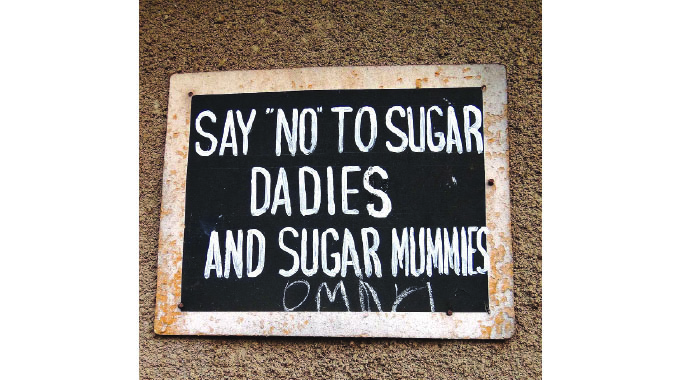
Latwell Nyangu-Youth Interactive Writer
University life can be a challenging and daunting task to students.
Most of them find it frustrating as they have, for the first time, to start to make important decisions about their life and future far away from the guidance of their parents and comfort of their homes.
Those who are financially insecure suffer the most academically, physically and even emotionally.
Getting to a university you are welcomed with a motto at the campus that it is better to be an older man’s darling than a younger man’s slave.
The emergence of “blessers” seems to be an escaping route for some students.
For long I have witnessed and heard of the existence of such relationships at tertiary institutions. We can’t rule it at high schools since the young generation is catching up very fast.
You are outdated if you are not familiar with such modern affairs, so they argue.
Having been and still being a student, the issues of blessers has caught my attention to an extent that it is now fashionable.
Despite the rise in such affairs in colleges, we can’t beautify the frog by applying lipstick, what is bad is bad.
Most girls have resorted to falling into these traps while at college.
The most worrying aspect is the age gaps between blessers and students – ranging from 20 to 30 years’ difference.
It has become fashionable for male students to be hooked up with sugar mummies.
This the reality on the ground and students are no longer scare of their parents or guardians.
To say its poverty that is driving my fellow students into such relationships is unfounded, but it has become fashionable so to say.
Blessers are now playing a major role in the lives of female students as well as males who have joined the band-wagon by accepting the ‘big mummies’ who are offering money and material to the young lovers, popularly known as “Ben 10”.
It is wrong.
The sugar mummies are taking care of the young boys at the campuses through provision of cars and trinkets.
Those who are involved with blessers seem to be enjoying the benefits and the comfortable life of having someone who buys them food, clothes and shelter.
Being a student, is not easy as assumed since some of the responsibilities lie not with the parents, but with themselves.
From the corridors of campus, I heard a ‘ladies’ discussion over issues to do with blessers.
“Haa asikana, my blesser does everything for me. He is so caring, for this weekend I was asked on what I want to do.
“So I will be going out,” said a student.
While others echoed the same sentiments.
“If you do not have a blesser at college hupenyu hwako hunowunyana (life becomes difficult when you don’t have a blesser).
As an observant student, I have come across many female students who can share their predicaments.
The temptations of money are too much that when you resist you become a laughing stock of the campus.
Most students are getting involved with “blessers” mainly for resources or material gain but surprisingly some are coming from well financed background and are still doing it.
It’s called the college life!
Indications are that the majority of the young females wouldn’t be in a relationship with a person who doesn’t support them financially, some indicated that if they would be in a relationship with a person who does not provide for them, they would find an alternative man (blesser) who will support them financially.
For sure, a blesser will not just support one for free, such relationships have resulted in concern among researchers, educators, parents and policymakers over the growing acceptance of the exchange of sex for luxury and status items.
The scariest case of blessers results in the men or women demanding discreet, often not safe sex.
Interesting at the same time, many of these young women maintain more egalitarian relationships with boys their own age.
Some of the sugar daddies, as these men are also sometimes called, infect the girls with HIV. When those teen girls reach adulthood, they find husbands and pass their HIV onto them.
Those husbands, in turn, become the next crop of sugar daddies, infecting the next generation of teen girls and perpetuating the cycle.
This cycle of contagion, is driven not only by economics and culture but also by the human body’s own microbes.
Power dynamics are recognised in such relationships, and this puts young girls’ health at risk and leads to intimate partner violence, sexual coercion, inability to negotiate condom-use and increased alcohol consumption.
Happy responsible relationships at college!



 Online Reporter