

 admin
adminNyararai Musengi Business Correspondent
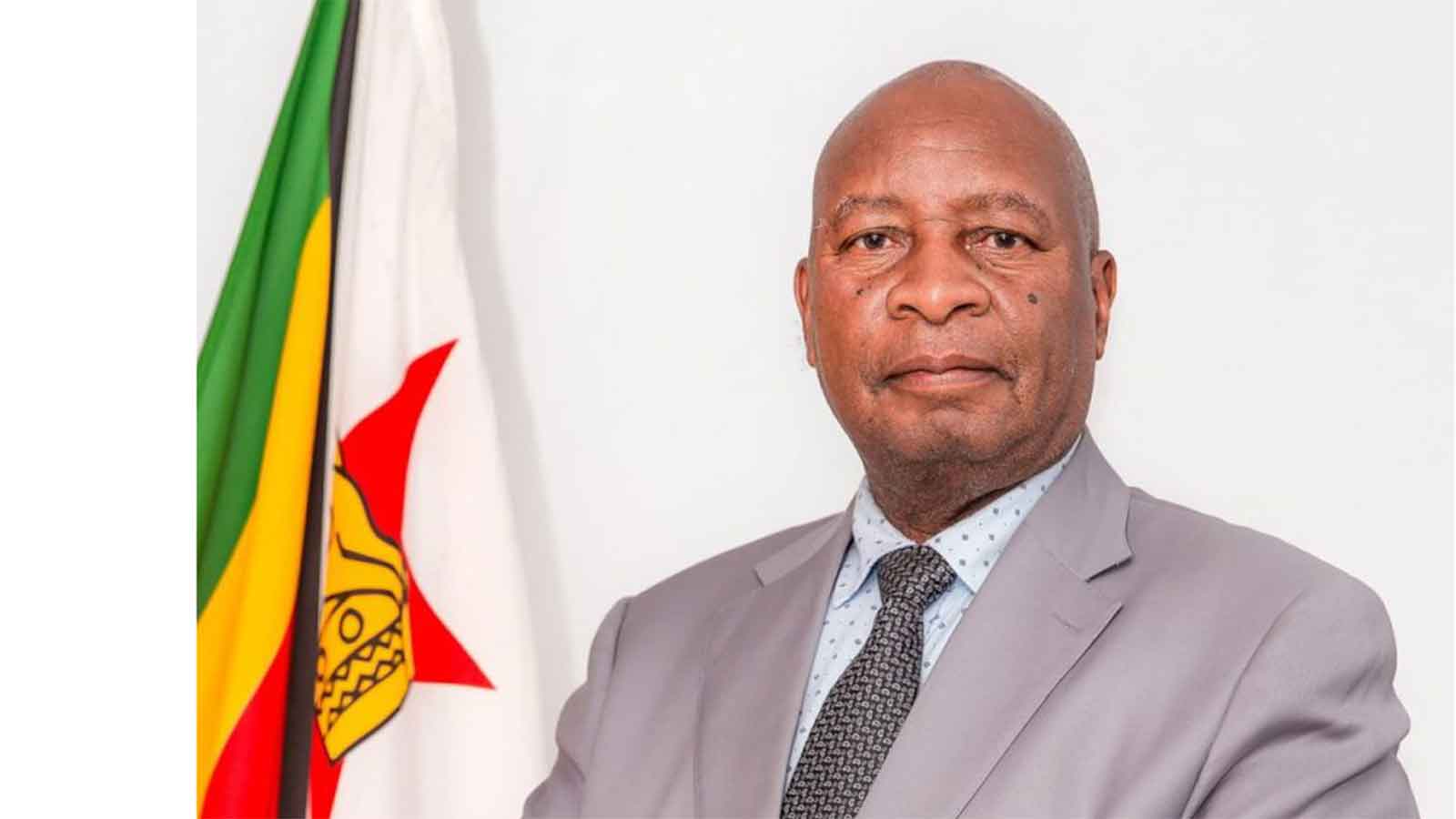
Mines and Mining Development Minister Walter Chidhakwa has been in the news since his appointment with many of his public comments seemingly suggesting that the country remains frustrated with the attitude of global mining giants. Only recently he told a 2013 Africa for Results Forum that mining companies were always complaining and asking for tax breaks yet they did little to improve infrastructure locally. The minister fits very well with what the international media likes to call the push for resource nationalism.
Resource nationalism is the tendency of people and governments to assert control over natural resources located on their territory.
Zimbabwe is indeed endowed with an array of natural resources, a good climate, relatively good infrastructure and these are well complemented by a hardworking and well-educated people. In fact, the country ranks very high when one looks at the deposits of some of the mineral wealth that it has.
For instance, Zimbabwe and South Africa are said to hold more than 80 percent of all known platinum group metals in the world and that underlines just how rich the country is. The country is a major producer of gold and still has a lot of gold deposits which are unexplored.
Diamonds are the latest resource to be discovered in the country, which again underlines why this country remains a stand-out case in terms of resource endowment. Zimbabwe is also a major producer of chrome, granite rock and nickel, to mention just a few.
However, it is fair to say the country has not been getting due rewards or benefits for possessing such an amazing amount of mineral resources. There are no easy answers as to why this is the case but clearly ignorance as well as deceitful conduct by large mining corporations has played a part. To illustrate, gold and platinum prices have been at record highs since the mid 2000s as the demand for metals, particularly from China remains very high. However, there is a sense that the record prices have not exactly trickled down to the general economy when mining corporations have raked in huge profits despite operational challenges that they face.
For example, Zimplats announced that its profits after tax dropped from US$200 million to US$122 million last year after its sales dropped from US$527 million to US$473 million during the same period. However, by Zimbabwe standards, Zimplats remains a highly profitable venture and it even achieved such results in spite of the power shortages, the poor state of the rail and other key infrastructure.
In fact, Zimplats would have realised more revenues had it processed the platinum locally but the miner, just like its counterparts, has been reluctant to do that citing infrastructure deficit in the country. This therefore means Zimbabwe will continue to lose potential revenues and jobs because it currently cannot provide the infrastructure that the miners are demanding as a pre-condition for setting up processing plants.
Such a scenario has spurred the debate on what the international media likes to call resource nationalism. Since the Government cannot provide the necessary environment for mining corporations to set up processing plants, the Government has sought to raise extra revenues from miners like Zimplats by introducing new royalties. Of course, mining corporations have cried foul charging that this was akin to nationalisation and that this would hurt the country’s mining in the long run. However, mining corporations conveniently forget that they are earning huge profits in the same environment that has the said infrastructure deficit.
In fact, the move by Government to raise royalties was not without precedent and it cannot come any better than Australia. Australia is a developed economy that is also endowed with a rich base of natural resources.
It is home to Implats, the parent company of Zimplats, and two years ago the Government in Australia caused a storm when it announced it was raising taxes paid by mining companies because it had come to a realisation that Australians deserved more.
Former Australian prime minister Julia Gillard told miners in May 2012: “You don’t own the minerals, I don’t own the minerals, governments only sell you the right to mine the resource. A resource we hold in trust for a sovereign people. They own it and they deserve their share.”
While miners were shocked, her sentiments seemed to make sense with the general people. Since then, a Mineral Resources Rent Tax (MRRT) has been introduced in Australia despite threats of disinvestment by miners.
In fact, Australia was not the only developed country that was trying to cash in on the boom in commodity prices. In the United Kingdom the government hiked taxation of North Sea oil and gas production in the same year as it realised it needed to get more for its citizens from its natural resources.
Russia has remained steadfast in its conviction that the country needs to realise more from its oil and gas resources. Brazil, the leading member of the so-called BRICS countries, has over the past few years pursued policies that have been deemed resource nationalism.
In Brazil’s présal fields, an area rich in oil, Petrobras – an energy giant from Brazil – must be the operator with a minimum 30 percent stake. This means any international corporation seeking to drill oil in that field has to cede 30 percent stake to Petrobras. In 2010, when Brazil issued US$67 billion worth of stock in Petrobras – the biggest share offering in history – it structured the deal to increase its share in the company from 40 percent to 48 percent. African countries have not been spared either in this resource nationalism movement. The boom in commodity prices may have prompted these governments to ask what they were getting out of the mining of non-renewable resources in their countries.
Ghana, Africa’s second-biggest gold producer, last year announced a review and possible renegotiation of all mining contracts to ensure that mining profits are maximised for the good of the country.
It planned to raise taxes on mining companies, from 25 percent to 35 percent, and a windfall tax of 10 percent on “super profits” in addition to existing royalties on output of five percent. Zambia, which is Africa’s biggest copper producer, doubled its royalties on the metal, to 6 percent. Guinea, home to the world’s largest bauxite reserves as well as one of the world’s biggest iron-ore deposits, is helping itself to a 15 percent stake in all mining projects and an option to buy a further 20 percent. Namibia has decided to transfer all new mining and exploration to a state-owned company.
Meanwhile, Australia has done even better by showcasing its new tax regime on mining to African countries and even offering advice on how other countries can follow suit. This has led to charges that Australia was now exporting its brand of resource nationalism to African countries, thereby, by diminishing the states that will accept the mining companies blatant domination of mining policies.
Unfortunately, these developments rarely get mentioned in the local media and national discourse. As a result, when Government raised royalties for some minerals there was an outcry that this was going to destabilise economic recovery or even result in disinvestment.
Beneficiation is another important objective that is embedded within this resource nationalism that has not been adequately addressed in the current empowerment discourse. Beneficiation will benefit the country long after the current commodity price boom is gone and again the general person in the streets will need to appreciate this.
Last, but not least, is the issue of knowledge of exactly what minerals we have and in what quantities. Foreign mining corporations have a very significant advantage over local Zimbabweans when it comes to having the knowledge about the country’s minerals resources.
Local exploration has traditionally been carried out by foreign mining companies meaning they will have total control of information they gather and we only know what they tell us.
This uneven relationship does not advance the interests of the host country since we may not be told everything even if we demanded to know.
For instance, De Beers carried out exploration work for diamonds in the Marange area and after some 15 years of exploration the company pulled out citing the non-viability of mining in that area. Surprisingly, there are now four or more companies operating in that area and according to the Zimbabwe Mining Development Corporation in 2012 nearly US$700 million was realised from diamonds mined there.
This raises questions about the transparency of major mining companies that operate here, while further highlighting the need for us to bridge this knowledge gap.
The Government has since said it plans to start its own exploration company though this will likely face funding challenges as the Government is currently incapacitated to do that.
Clearly those advocating for the so-called resource nationalism have a valid case and there is need for further debate on just how Government can approach this.


 Online Reporter