admin
admin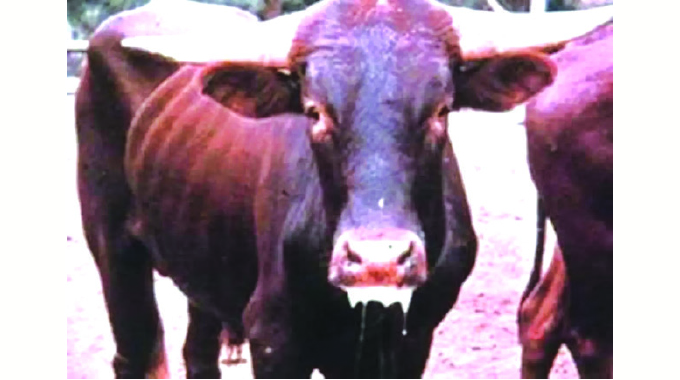
Obert Chifamba-Agri-Insight
RECENT reports that the Department of Veterinary Services (DVS) had intercepted and destroyed 81 goats in Chegutu that were being moved to an unspecified destination from Gokwe-Chireya are very disturbing to say the least.
Gokwe-Chireya is infamous for being prone to Foot and Mouth Disease (FMD), which makes the goats or any other livestock unit that is moved from there to another place a potential transmitter of the disease.
One can also easily understand and forgive the seemingly brutish response by DVS to slaughter and burn the animals given the harsh reality that the animals could have easily become a nucleus of the disease where they were destined if they had been infected.
FMD has been known for its negative impact on the economy, as it affects exports of beef and other related products.
Countries experiencing the disease usually suffer from trade embargoes affecting exports of even non-livestock products from affected areas.
Estimates by DVS put the value of the destroyed goats that were slaughtered and burnt in the presence of police at around US$3 000, which is quite a huge loss to the farmer or farmers who may have jointly arranged the movement of the animals.
If the owner(s) had not decided to side-step the legal livestock movements regulations, they would have conducted their business freely and profitably and avoided the unfortunate end.
Short cuts are not always short and farmers must know that as business people. They must always follow rules if they want to remain in business.
They were not going to lose anything by securing a clearance letter for the animals before moving them.
The recent story of the goats is not isolated. The DVS also killed and burnt a herd of 14 cattle intercepted from a red zone in Hurungwe district in Mashonaland West, as they were being transported to Mashonaland East. They were stopped in Chinhoyi.
In March this year, the DVS also put down 12 head of cattle at Arda Sanyati after the animals were illegally moved from a FMD red zone.
The destruction of the animals is not an act of cruelty but is just that ‘stitch in time to save nine’ meant to ensure the disease is nipped in the bud and not allowed to spread.
It is a noble thing that the Government has authorised DVS to kill, burn and bury livestock, which is moved without permits, especially from red zones.
This makes it easier for the country to focus on red zones mostly and concentrate resources there for the successful elimination or suppression of diseases.
However, one sad reality worth noting is that in all the cases highlighted above, the animals are intercepted far away from their place of origin, which leaves one wondering if there are no veterinary offices and personnel in all those areas and how the animals managed to evade being spotted.
There is also a common trend in most of the cases — animals are being moved at night under the cover of darkness, which means the perpetrators of the offence are taking advantage of the inability of the DVS to be active during that time of the day.
It is a good thing to observe that the DVS has since roped in the police to help contain the problem but their surveillance seems to have ended at the road blocks they jointly mount.
The reality on the ground is that these wrongdoers know their routes well and deliberately avoid check-points, with the unfortunate ones to be caught most likely just putting a foot wrong and ending up stumbling on random road blocks or check points.
On the one hand, the department has ramped up surveillance measures along the country’s borders to disrupt illegal movement of cattle and trade.
Unscrupulous traders usually take advantage of porous borders to drive cattle from one country to another before selling them illegally, which in most cases is one sure way of transmitting diseases from one side to the other.
On a refreshing note, the DVS is maintaining a high alert system of surveillance on a permanent basis and runs regular preventive vaccination programmes to prevent the spread of diseases.
It has also promulgated information to the effect that farmers who move tick-infested cattle are liable to prosecution.
Such farmers must dip their cattle prior to movement to avoid conflicting with the law.
In this regard it is also collaborating with the police and mounting roadblocks throughout the country to ensure all cattle moving to farms and markets have necessary veterinary permits, and are tick-free as required by the law.
Still, to add grit to these measures, the DVS needs to be capacitated with more manpower and off-road vehicles to randomly patrol the highways and side roads at irregular hours as well if the country is to stamp out illegal movements of animals.
Some of the people will be sending cattle for sale in distant places but do not have the means to transport them properly so they end up driving them on foot, which makes them even more difficult to spot.
There are cattle rustlers who also take advantage of the darkness to do their nefarious activities.
This group does not even have time to think of animal movement regulations – either they kill the beasts and make off with the meat or they move the animals alive, which makes it critical for a strong police and veterinary services staff presence especially in those areas known for high livestock farming activities as well as movements.
It can also make sense for veterinary personnel to work with community anti-stock theft committees and educate communities on the disadvantages of moving animals without clearance since the loss will always come back to haunt the farmer in the event that the animals are intercepted and destroyed.
It is not always the case that the animals would be carrying the foot and mouth virus but may be clean but the law is the law, they will be slaughtered because they would be coming from a red zone to a green zone.
The animal health act does not permit such movements and the DVS is expected to evoke it in such circumstances and take appropriate action.
Diseases like FMD spread like a bush-fire in the Harmattan during summer times like now hence the need for all stakeholders to be vigilant and report suspicious livestock movements to either the police or veterinary offices.
FMD is a viral disease characterised by blisters and vesicles in the mouth and inter-digital space of the animal.
These will in turn rapture to form wounds in the mouth and feet respectively, hence the name foot and mouth disease. It affects cloven hoofed animals such as cattle, goats, sheep, pigs and antelopes.



 Online Reporter