admin
admin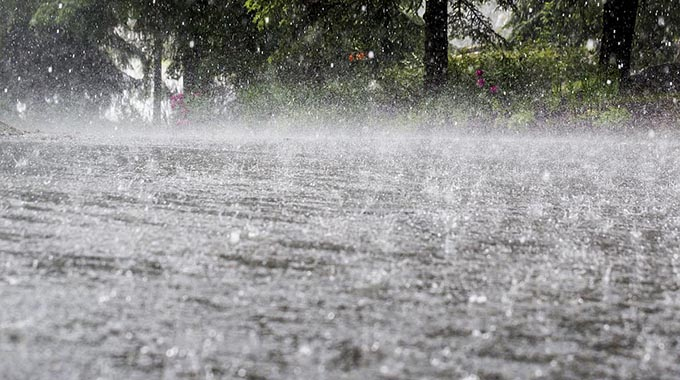
Elton Manguwo
THE Agricultural and Rural Development Services (ARDAS) and Agritex have jointly called on farmers to capitalise on the break in rains to employ the best agronomic practices and boost yields, as the nation pushes to reclaim its high production potential.
Rainfall distribution is anticipated to be lower this week with light rain-showers over the eastern half of the country, as the cloud system that causes heavy rains is now drifting further eastward out of the country.
The western half is becoming warmer with clouds breaking characterised by low rainfall activity across the country in the coming week.
In an interview yesterday ARDAS chief director Professor Obert Jiri said the break necessitated farmers to do more in terms of good agronomics so that projected yields can be attained.
In areas where farmers planted early, the break from the rains presents a slot to ensure that crops fully germinate, as a good plant population is the foundation for good yields.
In addition, farmers who have prepared Pfumvudza/Intwasa plots are encouraged to take advantage of the captured moisture to plant crops such as maize and traditional grains.
More so, the nature of the Pfumvudza planting method may result in high plant population.
“Farmers are encouraged to thin out by removing excess or weak plants to reduce competition for nutrients, which negatively impact on the growth of crops,” said Professor Jiri.
In case of gaps within fields, farmers must fill them up within the first week of emergence of the main crop to guarantee uniformity in growth, as delays in gap filling may result in lower or no yields for the late gap filler crops,” he said.
The pause in the rains also requires farmers to speed up land preparation and planting activities, taking advantage of the obtaining moisture in the soil, which makes it easier to work the soil using manual, draft or machinery in dry soils.
Professor Jiri highlighted that delayed planting affected the growth, development and productivity of the plants, therefore farmers are strongly urged to plant at the moment and enhance the yield potential of their crops.
Furthermore, good land preparation involves turning the soil to create a fine tilth, which allows the crop to germinate and facilitate deep penetration of water into the soil whilst turning over weeds and pests.
Professor Jiri added: “We encourage all farmers to go to the fields and produce as we move to attain food security and food self-sufficiency at all costs.”



 Online Reporter