Online Reporter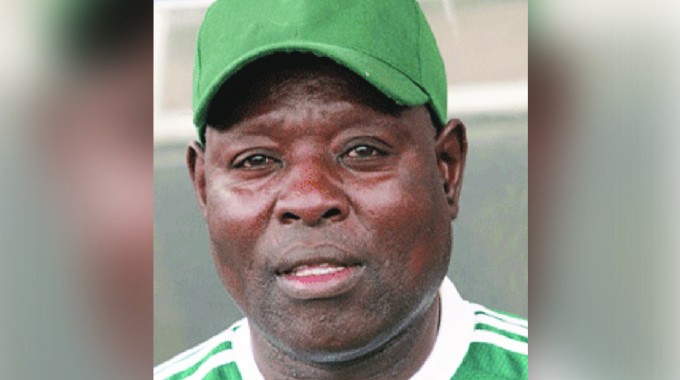
Lovemore Dube, Zimpapers Sports Hub
IN 1976, a group of teenage footballers vanished from the Highlanders Under-16 squad. Under the cover of a friendly match in Kezi, they crossed into Botswana and disappeared into the war, trading boots for rifles.
Among them were names that would never return to the pitch. One name that stayed behind? Peter “Captain Oxo” Nkomo.
He remembers the moment clearly.
“I also wanted to join those that had resolved to cross the border into Botswana, among them my elder brother George,” Nkomo says. “But he insisted I stay.”
Just a year earlier, the political tide had shifted. Nationalist leaders, including the late Vice-President Joshua Nkomo, had been released from prison. That spark lit a fire in Zimbabwe’s youth. More and more were slipping away, drawn to Zanla and ZPRA training camps beyond the borders.
Peter and his teammates were just boys back then. Politics hadn’t really touched them, until it did.
“We were too young to know what politics was back then,” Nkomo says. “But the more people spoke about the injustice around the country, worsened by the fact that we were not given cash for beating St John’s in the Castle Cup final at Rufaro, it made us politically aware that there were things that were not in order and needed addressing.”
It was on the team bus, headed home from Harare, that the conversation turned serious. The war felt closer. So did the sense that football alone wasn’t enough.
Nkomo could’ve gone. He was ready. But George, who had already committed to the liberation effort, made the call.
“One was that I was too young, and the second was that our parents needed a boy in the house to assist with chores. So my brother insisted that I should not go with them,” he says.
While others disappeared into training camps, Nkomo stayed in Bulawayo. The Highlanders side was gutted, goalkeepers George Moyo and Smart Moyo had gone to war, while Ananias Dube left for Olympics. That left the posts wide open, and Nkomo stepped in.
He competed with Yonah Malunga, who’d come from Shabanie Mine, and began carving his place in the team. But his mind wasn’t just on football.
“With each passing year, I was becoming more and more politically conscious,” he says. “Naturally thinking about my brother, especially when we would hear or read about captures, raids in Zambia and those dying in contact. I wished too I could have been part of those who left with the intention of liberating Zimbabwe.”
Then, in 1980, everything changed.
The ceasefire had been signed on 21 December 1979 at Lancaster House in Britain. Independence followed in April 1980. And George came home an armed combatant, having trained in Angola.
“I was happy to see my brother return alive from the struggle. It was a happy reunion. And on the football front, it was a relief that we would be traveling without the fear of roadblocks and searches all around the country.”
1980 didn’t just mark personal reunions. Zimbabwe was welcomed back into Fifa, and international games resumed. For Nkomo, that meant finally seeing the world.
“Yes, I had a clue of the excitement international football brought to the city,” he says.
“Watching players with a different approach to the game like the showboating by the likes of Jomo Sono, Andreas Maseko, Teenage Dladla from South Africa, brought some memories and the excitement that I too would be playing outside the country and touring at the same time. Independence was indeed time for celebrations for the majority.”
Later that year, Nkomo made history as the first Highlanders player was called up to Zimbabwe’s Olympic team. He flew to Moscow for the 1980 Summer Games.
“It was a moment to savour to be part of that team with such great players. Once, all of us realised the gains of Independence. We were now flying around the world, something Zimbabwe players had been denied since 1970 when Rhodesia was suspended from the Fifa family.”
Back home, the wins piled up. In 1980 alone, Nkomo lifted the Chibuku Trophy with Highlanders after a 4–0 rout of Rio Tinto at Rufaro Stadium and reached the Rothmans Shield final.
“We had all the reasons to celebrate that year as Highlanders,” he says. “It was on our return to the national league after we quit in 1977 to play in the South Zone. Yes, we were in the South Region League in 1979 but not as prestigious as the Super League where we played teams from across the country.”
That same year, he helped Highlanders win the inaugural Heroes Cup with a 3–1 victory over Dynamos. “It was a special match for us, to celebrate our returning heroes and those unfortunate not to make it into independent Zimbabwe. The event had all the emotions, and we were happy to have won. The emotions from all the players and teams that were involved, Dynamos, CAPS United and Wankie, were evident. The whole two days of the holidays evoked happy and sad memories.”
Right after the Heroes Holidays, Highlanders toured Zambia. That trip hit differently.
“There were some Zimbabweans who were still there, some having settled in that country in the 1950s and 1960s. You could tell from the tears that the visit had touched their hearts. As a team, it really touched us too to get such an emotional welcome by people most of whom had supported the liberation movements.”
By the mid-80s, Nkomo was one of the most decorated goalkeepers in Zimbabwe. He shared locker rooms and trophy runs with the likes of Madinda Ndlovu, Alexander Maseko, Willard Khumalo, and Mercedes Sibanda. His name made the Castle Lager calendar of top players multiple times.
Despite numerous senior national team call-ups, he never quite broke into the starting XI, edged out by greats like Japhet Mparutsa, Raphael Phiri, and Brenna Msiska. Still, in 1989, he was part of the first Zimbabwe Five-A-Side team at the Futsal World Cup in Egypt.
He hung up his boots in 1994 after 15 years in Highlanders’ first team. Since then, he’s coached around the country, but right now, he’s between jobs.
“I need to continue training the next generation of goalkeepers,” he says. “Hopefully I find a team to coach soon. I don’t want my gloves and boots to gather dust.”


 Bongani Ndlovu