admin
admin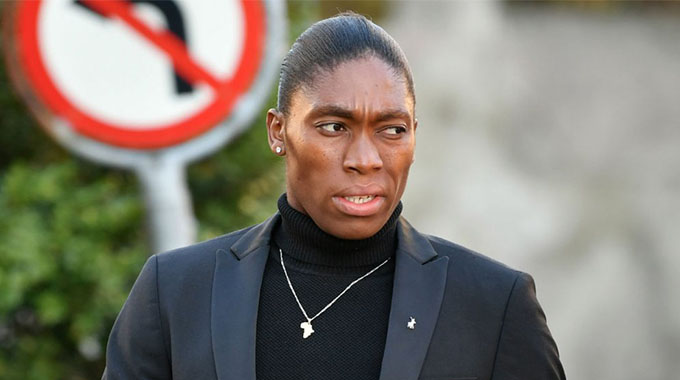
SOUTH African runner Caster Semenya yesterday lost her court challenge against the International Association of Athletics Federations (IAAF) rules forcing female athletes to regulate their testosterone levels, but judges voiced concern with the application of the “discriminatory” regulations.
Semenya, a double Olympic champion, was fighting measures imposed by the IAAF that compel “hyperandrogenic” athletes, or those with “differences of sexual development” (DSD), to lower their testosterone levels if they wish to compete as women.
A three-judge panel at the Court of Arbitration for Sport said even though the rules are “discriminatory… such discrimination is a necessary, reasonable and proportionate means of achieving the IAAF’s aim of preserving the integrity of female athletics in the Restricted Events”.
But the three judge-panel voiced “serious concerns” about the viability of rules moving forward. The judges want the IAAF to apply the rules only up to the 800m because the evidence was not clear that women with hyperandrogenism have a competitive advantage in the 1 500m.
“The CAS panel suggested that the IAAF consider deferring the application of the DSD Regulations to these events (1 500m and the mile) until more evidence is available,” the court said.
That could give Semenya a route to compete at the world championships without taking medication. She was the bronze medalist in the 1 500m at the 2017 World Championships in London.
The IAAF said it was “grateful” for the CAS ruling and that the rules, first adopted last year but suspended pending the legal battle, will come into effect on Wednesday, May 8, 2019.
“Sometimes it’s better to react with no reaction,” Semenya said on Twitter after the verdict was announced. But her advocates, who include a global coalition of nations, scientific experts and human rights defenders, are certain to be less restrained.
The IAAF insisted the rules were essential to preserve a level playing field and ensure that all female athletes can see “a path to success”.
The governing body has stressed that DSD athletes with male levels of testosterone benefit from increased bone and muscle size in a manner similar to males who have gone through puberty.
Although they rejected Semenya’s appeal, the judges urged the IAAF to treat their DSD regulations as a “living document,” which could be continually revised as they are applied and new information about their impact becomes clear.
Experts have argued that achieving excellence in sport is a combination of training and commitment as well as genetics and that barring people from competition over a single genetic factor has no scientific basis.
In a rare intrusion into the world of sport, the United Nations Human Rights Council adopted a resolution in March branding the IAAF rules “unnecessary, humiliating and harmful”.
Seema Patel, a senior lecturer in law at Nottingham Law School, called the CAS ruling “bitterly disappointing”.
“A female who has naturally higher levels of testosterone in her body should not be prohibited from competing with women, just as a female who is naturally taller than the average woman should not be prohibited,” Patel said in a statement.
Patel also questioned whether a sports court had the competence to deal with “human rights matters”.
Semenya’s testosterone levels are not publicly known, but she is unlikely to be the only athlete affected by rules compelling female runners in certain categories to cap their testosterone levels at five nanomoles per litre (nmol/L) of blood.
The two athletes who finished behind her in the Rio Olympics 800m, Francine Niyonsaba of Burundi and Kenya’s Margaret Wambui, have also faced questions about their testosterone levels.
Semenya has 30 days to appeal, in a challenge that would be heard by the Swiss Federal Tribunal.
– AFP.



 Online Reporter