admin
admin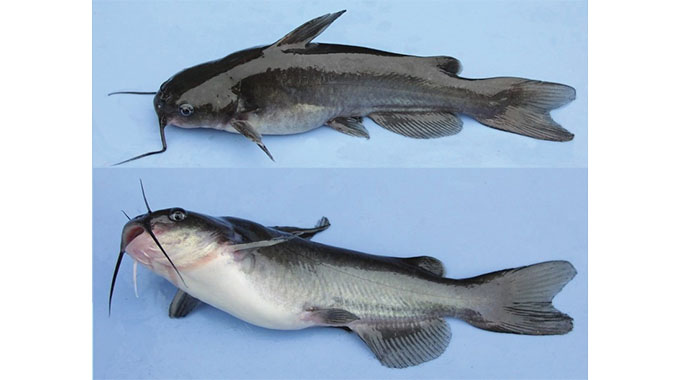
Tariro Stacey Gatsi
IN line with the Government’s drive to boost food security countrywide, catfish farmers are increasingly turning to artificial insemination (AI) to enhance fish production and improve breeding efficiency.
Fisheries and Aquaculture Resources Department (FARD) director in the Ministry of Lands, Agriculture, Fisheries, Water and Rural Development Mr Milton Makumbe recently commented that to use AI on catfish, one needed to employ either a hormone (ovaprim) or the pituitary gland of the catfish for good results.
“We don’t have an official policy on AI in fish. But we do have regulations on the use of hormones under the vet policies and that holds all animals under those policies. The former requires that you have a permit from vet services and you can just do the latter in your backyard, as this uses any fish,” added Mr Makumbe.
He added AI was only being used on catfish and not on any other breeds as they cannot breed or show low breeding capacity in captivity.
Said Mr Makumbe: “Being extremely hardy but sensitive fish species, you will note that they will grow bigger and faster than your tilapias and can do well in bad or rich water quality but breeding is another issue all together. They require a narrow belt of conditions that serves to trigger the hormones for breeding. That’s why we inject a hormone and practice AI, because that poses a bigger chance of breeding.”
Catfish is a popular fish species in Zimbabwe, particularly in the Zambezi River basin. There are several catfish varieties found in the country. They include the African catfish and the smaller variety. It is a good source of protein and is often consumed as part of traditional dishes.
In 2023, 10 000 fingerlings were produced by students who took part in a catfish production training programme that was facilitated by the FARD.
“We had four World Fish (an international aquaculture research and innovation organisation) team members that were training our people. Twenty-four people were getting training in Chitungwiza, while 37 were here at Henderson. The training was covering two components that included low-cost feed production and catfish seed production, better management practices and business management,” Mr Makumbe explained further.
The training also took on board tilapia fish farmers intending to expand into catfish production and breeding.
“Youths and women are the key beneficiaries of this programme,” added Mr Makumbe.
Through the partnership with World Fish, authorities are now expanding the programme by diversifying into catfish (also known as muramba/umulamba) production.
Government has since recognised aquaculture as a form of livestock production that has the potential to contribute significantly to sustainable livelihoods, food security and economic development through diversification of exports earnings.
Aquaculture is also known as fish farming. It is the practice of rearing fish and other water-based organisms in controlled environments such as tanks and ponds for food production. It is a rapidly growing industry that plays a crucial role in meeting the increasing global demand for food.



 Online Reporter