

 admin
admin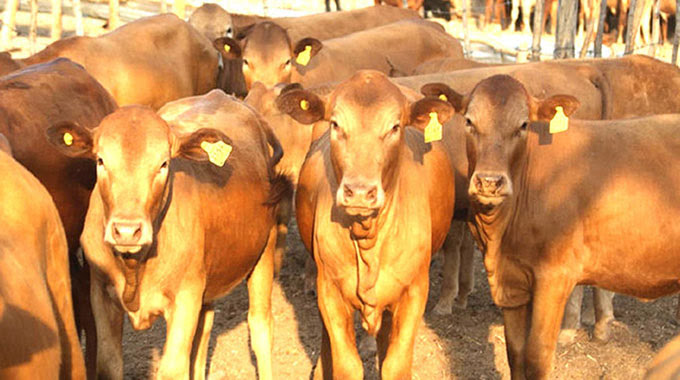
Elton Manguwo
THE country has seen a 2 percent decline in cattle mortality, as the Government’s livestock recovery and growth plan takes effect in combating tick-borne related diseases.
“We have managed to reduce the cattle mortality rates from 11 percent last season to 9 percent this year, as a result of the religious implementation of the Presidential tick grease programme,” permanent secretary in the Ministry of Lands, Agriculture, Fisheries, Water and Rural Development, Dr John Basera observed recently.
The Government is implementing the livestock recovery growth plan aimed at increasing the national herd to 6 million by 2023 from the current 5, 5 million in a bid to meet national demand for cattle products and substitute imports.
The need to improve animal health and reduce mortality rate, which is key to herd growth saw the Government rolling out the Presidential tick grease programme, which targeted one million households. Each household got a kilogramme of tick grease as the country moved to curb tick bone related diseases and deaths amid the scourge of January disease (Theileriosis) that claimed thousands of cattle countrywide.
Consequently, the use of tick grease which is applied on the ears, under the tail and other parts of the animal that are not easily accessed by dipping chemicals from plunge and spray dips managed to slash January disease related illnesses and deaths by 50 percent. Theileriosis is transmitted by the brown ear tick.
To secure the country’s herd, the Ministry of Lands, Agriculture, Fisheries, Water and Rural Development also initiated the Dip Resuscitating Programme meant to improve basic dip tank infrastructure throughout the country.
“Currently we have over 2 900 dip tanks, which are functional and we intend to make another 1 000 functional by the year 2023 because we believe that is the most sustainable way of containing January disease and other tick bone related diseases,” commented Dr Basera, as he stressed on the need for a strict dipping regime.
The Government also moved in to mitigate the impact of climate change, which saw many cattle succumbing to poverty deaths, following the decimation of pastures by droughts by rolling out the Presidential forage programmes and initiating hay baling in areas with ample biomass for shipment to troubled areas.
“We distributed a standard input package comprising climate smart pasture options and climate smart feed options in a bid to promote on farm feed formulations. Climate change is indeed a reality and the livestock sub-space needs to adapt or it will be affected by poverty deaths,” said Dr Basera.
In a statement the director of Livestock Development Mr Alban Mhindurwa added that the programme was very crucial to smallholder farmers in natural regions three, four and five where unpredictable rainfall is common year after year.



 Online Reporter