Online Reporter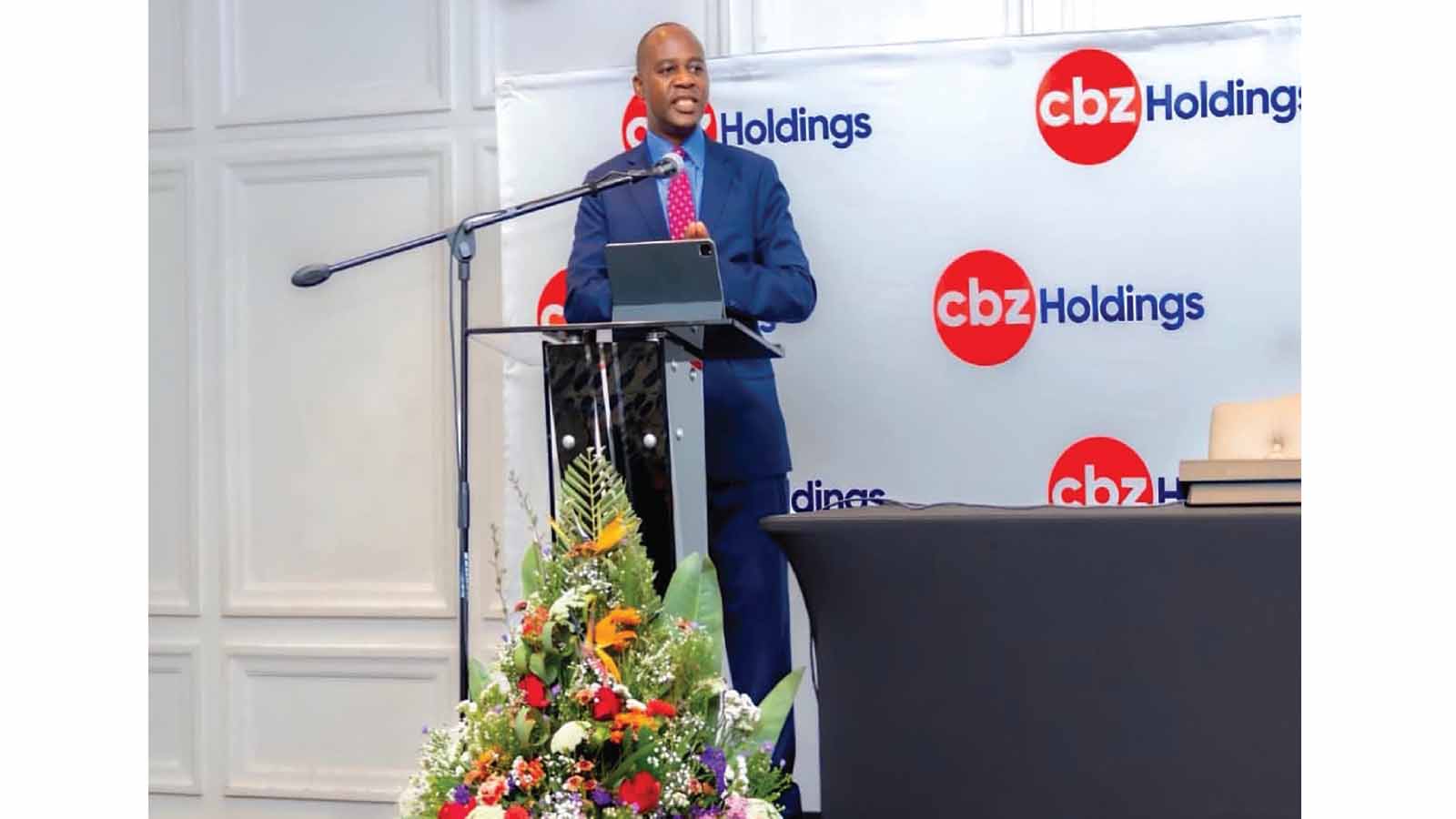
Nelson Gahadza
CBZ HOLDINGS’ plan to raise and list a US$600 million bond on the Victoria Falls Stock Exchange (VFEX) has emerged as a significant test of Zimbabwe’s ability to develop a deeper and more liquid debt market.
This potentially gives the financial services group a new platform to fund growth and large-scale infrastructure projects.
The proposed bond programme, which will be rolled out in phases, comes at a time when Zimbabwe’s capital markets remain heavily skewed towards equities, with the debt market yet to achieve the depth and liquidity required to become a major source of long-term funding.
For CBZ, the transaction is more than a capital-raising exercise.
It could mark a significant shift in the group’s funding model, giving it access to long-term United States dollar funding while reducing its reliance on conventional banking facilities and deposits to finance expansion.
For the wider market, the transaction could provide a much-needed demonstration that large Zimbabwean corporates can raise substantial amounts of long-term capital through the local capital markets.
CBZ group chief executive officer Mr Lawrence Nyazema said the group would initially raise US$100 million, of which US$75 million has already been secured, before proceeding with the larger component of the initiative.
The phased approach is intended to allow projects to commence while the group completes the regulatory, structuring and investor engagement processes required for the larger issuance.
“So, the whole programme, the first and second stage, is US$600 million.
“We did not want to wait for the processes that come with listing bonds in Victoria Falls and outside the country. That is why the first tranche is going to be US$100 million,” Mr Nyazema said at the group’s analyst briefing for financials for the half-year to June 30, 2026.
The group wants to finance major infrastructure projects, particularly road rehabilitation, while also positioning itself to participate in water, housing, property development and other strategic investments.
Mr Nyazema estimates that the country’s road rehabilitation requirements alone could run into billions of United States dollars, with the Bulawayo-Victoria Falls road potentially requiring about US$450 million and the Harare-Chirundu road another US$350 million.
The group does not view the US$600 million programme as an end in itself.
Instead, it wants to use the initial issuance to establish a platform that can attract international and regional financiers to participate in subsequent projects.
Analysts believe a successful bond programme would diversify CBZ’s funding sources and give the group access to longer-term capital that can be matched with long-duration assets and infrastructure projects.
It could also strengthen CBZ’s position as an arranger and financier of major infrastructure projects, rather than simply a conventional banking institution.
According to Mr Nyazema, the group is already pursuing about US$150 million in new lines of credit, while targeting a US$2 billion balance sheet by 2028.
Economist Mr Eddie Cross noted that CBZ might be testing the capacity of the young VFEX, but argues the market could perform better than expected.
“Caledonia raised capital on this market and it was heavily oversubscribed,” Mr Cross said.
“CBZ may be a bit ambitious, but it may prove to be within the capacity of this new market. One thing I am sure of is that this is going to play an ever-increasing role in the region, not only in Zimbabwe.”
Mr Cross said the rapid development of the VFEX had created sufficient investor appetite to absorb a large corporate debt issue.
Zimbabwe Stock Exchange Holdings chief executive officer Mr Justin Bgoni has previously argued that the country needs substantially more debt instruments if its capital markets are to develop.
He said in most developed African exchanges, Government securities form a significant part of the market and provide benchmarks against which corporate debt can be priced.
Trigrams Investments analyst Mr Wafa Kuchera sees the increasing activity on the VFEX as evidence that the exchange is becoming a more credible platform for companies seeking access to capital.
He said recent market developments, including new listings and increased trading activity, had strengthened the exchange’s appeal to investors seeking diversified US dollar-denominated investment opportunities.
“For the debt market, however, the real significance of CBZ could be whether that investor interest can be converted from equity into fixed-income instruments,” he said.
Mr Kuchera said CBZ’s status as the country’s largest financial institution made its decision to tap into the VFEX a significant vote of confidence in the exchange’s capacity to mobilise capital for a major bond offering.
He believes an infrastructure bond that allows Zimbabweans to participate directly in financing and benefit from the country’s economic development could prove attractive to investors.
Zimbabwe has more than US$5 billion in deposits in the formal banking sector, while the banking industry has close to US$10 billion in assets. There are also significant pools of liquidity circulating in the largely cash-based informal sector.
Mr Kuchera said attractive bond terms, combined with the VFEX’s US dollar settlement framework, could help draw some of this liquidity into the capital markets.
“The domestic market is starved of investible financial products before we even look at what they can mobilise from the diaspora and international financiers,” he said.
“With that context, we at Trigrams Investments do not see any capacity challenges with listing this offering.
“We, however, caution that once terms are announced, they need to be adhered to.
“The Zimbabwean capital markets have become very sophisticated in risk management and mitigation, and any hint of variation of terms will be punished by the markets, as we have seen a few times in recent years.”
Economist Mr Walter Mapfumo said the development of the debt market should be viewed within the broader evolution of Zimbabwe’s capital markets, particularly as investors increasingly seek instruments that offer greater certainty around currency and returns.
“The use of the United States dollar through the VFEX potentially addresses one of the biggest concerns for long-term investors — currency risk — but dollar denomination alone will not guarantee success,” he said.
“Investors will still assess CBZ’s creditworthiness, the projects being financed, repayment mechanisms and the overall risk environment.”
Mr Nyazema has already indicated that the group plans to conduct road shows in major financial centres, including New York, London, Johannesburg and Cape Town, as it seeks to attract international capital.
“I don’t think you can sit here in Harare and expect international capital to just come on its own. You will need to go to New York, you will need to go to London, to Johannesburg, to Cape Town and talk to the owners of capital,” he said.