


 Online Reporter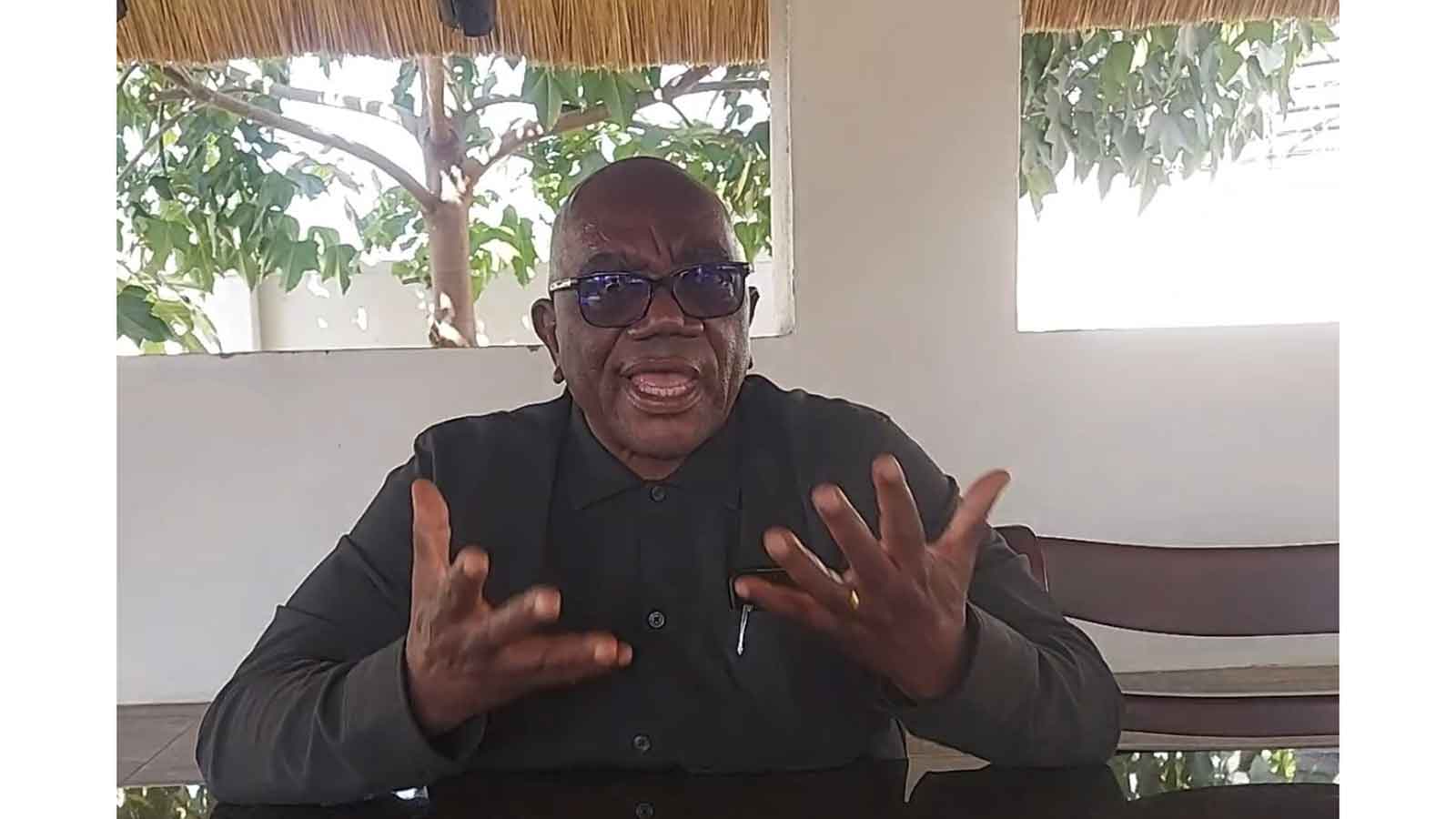
Lieutenant-General (Retired) MICHAEL NYAMBUYA, whose nom de guerre was Mike Mutare, is a distinguished politician and military officer. He formerly served as the Governor of Manicaland province and Minister of Energy and Power Development. Currently, he is the Deputy President of the Senate. His journey to join the liberation struggle was unique, as he was part of 16 learners from Hartzell High School (then known as Old Mutare High School), who, driven by the assassination of ZANU chairperson Cde Herbert Chitepo, abandoned their studies and trooped to Mozambique to join the liberation struggle. This week, he begins narrating his journey in the struggle to our Society Editor PRINCE MUSHAWEVATO.
***************
Q: To begin with, could you please introduce yourself and provide a brief overview of your background?
A: My name is Retired Lieutenant-General Michael Nyambuya. My liberation war name was Mike Mutare, though others, particularly in Hwedza, called me Mudhara Two Jets. I was 20 years old when I joined the liberation war in 1975. Back then, we used to start primary school at seven years old, not five, like they do now — your hand had to be able to reach over your head to touch your opposite ear to show that you were grown up enough.
The people who fled Rhodesia to join the liberation war were mainly teens, with ages ranging from 16 to 22. In my family, a brother of mine joined me as well. He is now late, but he passed away well after independence. He came back, participated in the integration process and joined the police. His name was Jonathan Nyambuya. Two of us left from my family, and of course, my father and mother were heartbroken to lose their children, but we thank God we came back alive.
Q: How were you first introduced to the concepts of African nationalism?
A: For me, it all started in 1975 when I was doing my Upper Six at Hartzell High School, commonly known as Old Mutare High School. We were the first group of Advanced Level students at Hartzell, having done my Ordinary Level at St Patrick’s Marist Brothers Nyanga Secondary School. We were a group of students — I remember very clearly: myself, Augustine Mpofu, Paul Mutangadura (who at some point worked at ZBC after the war), Mudonhi Bara, Charles Marwa, Simon Sibanda, Simon Samhokore and Job Shiri.
We were Advanced Level students who came from different schools, some from the Midlands and Manicaland, and others from Mashonaland West.
During that time, we were under oppression; everybody knows it. Ian Smith was the Prime Minister of Rhodesia, having declared the Unilateral Declaration of Independence (UDI) in 1965. We were very conscious that we were under oppression and not living as free citizens of Zimbabwe — it was called Rhodesia at that time. So, we, students, used to meet in my room after hours to discuss the situation and we were very clear that something needed to happen. But what sparked the whole thing was the assassination of Herbert Chitepo on March 18. I still remember vividly: It was a Tuesday when Chitepo died.
Q: What happened when you received the devastating news?
A: We met, we talked at length and we decided that we needed to be part of the struggle. We had been following what was happening in terms of the war being fought in the north-eastern part of the country, the Mount Darwin area, where Zimbabwe African National Liberation Army (ZANLA) forces were operating — though they were called terrorists then.
So, on March 18, we decided we were going to be part of the struggle. I come from Honde Valley and, as you know, Honde Valley borders Mozambique. I was among the group of students there and I was very clear in my mind about how we could get there (Mozambique). There were seven of us from Upper Six, one Form Five learner and eight who were doing Ordinary Level — a total of 16 who confirmed they wanted to go and join the struggle in Mozambique.
We decided we were going to go on a Saturday. Why? That particular Saturday, the 22nd, there was a sports gala taking place at Old Mutare.
Many schools were coming to participate and we decided that amid all that confusion, we would cross over and go to Mozambique. Sure enough, we left in the morning.
I understand they looked for me because I was a very strong participating athlete in javelin, shotput and relays. I used to run the 4×100-metre relay.
Q: What happened after you left school?
A: We left in the morning, went to Mutare, went to Musika and boarded a bus. If I recall correctly, it was a green bus owned by Derera Bus Company.
We boarded it and went to Rupinda, a small village on the border with Mozambique. I think we reached there around 4pm and then, using my geography knowledge, we crossed into Mozambique. This is where trouble started. We did not have any blankets, we did not have any spare clothes, nor any appropriate gear. We ended up getting lost in Mozambique around 7pm or 8pm. There were no villages in the area — nothing — and we had to sleep outside. We huddled together and slept somewhere out there. The following day, we carried on with our journey — very hungry and tired, of course — and, eventually, we found a village.
Q: What happened next?
A: By this time, I think I now had my bearings right. We got to a place called Jareta, where there was a store. The villagers went and notified the FRELIMO camaradas (comrades) that a group of 16 young Zimbabweans had turned up and wanted to train and fight the enemy.
The Mozambicans gave us a little bit of food (sadza) and they contacted local administrators, who instructed them to give us a place to sleep. We slept somewhere again; this time at least with a fire to keep us warm. The following day, we were taken by tractor to Vila Manica, where we met the camaradas.
We were questioned, interrogated and asked what we wanted and why we were there. They suspected we might be spies sent by Smith, but we told them we wanted to join ZANLA. They informed us that the army was not in that area, but we replied that we knew that and just wanted them to take us to where ZANLA was.
We were then told that a man named Dangarembga — who was our headmaster at Hartzell High School — had come to Vila Manica looking for his students who had deserted class. Likewise, members of the Rhodesian Special Branch were also in the area investigating our whereabouts. It was trouble for us before we reached any training camp.
Lt-Gen (Retd) Nyambuya will next week continue his narration by highlighting how they evaded the search by the headmaster and the Rhodesian Special Branch.


 Bongani Ndlovu