Online Reporter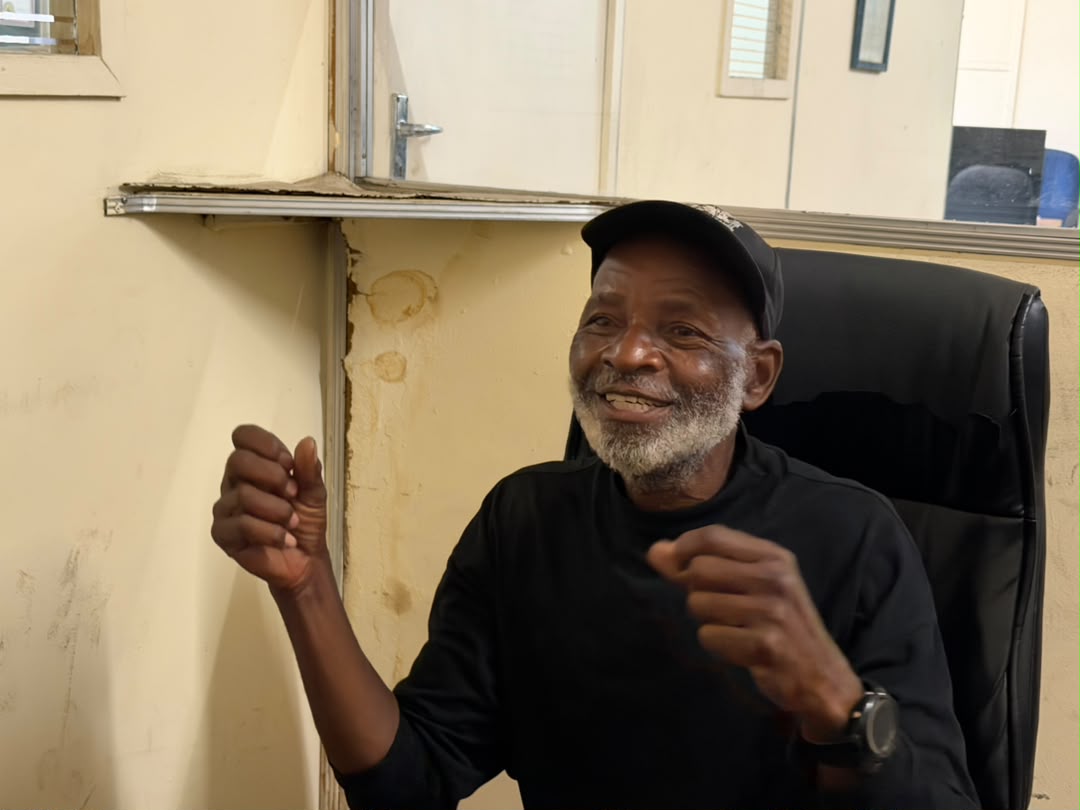
IN our Lest We Forget column this week we talked to Cde William Zimbume whose war name was Cde Musolini Sibanda. Cde Sibanda joined the liberation struggle on the ZPRA side when he was 17 years in 1977. He narrates his history and how he joined the liberation struggle in an interview with Day Editor, Vincent Gono (VG) where he mentioned that the Zambezi River from whose banks he operated from was one of the liberation war’s biggest hurdles.
He said the river required people who had knowledge of its geography because the Rhodesians had set landmines in its escarpment while skill was needed to cross it using dinges with the knowledge that the water velocity was high at the centre of the river.
He also mentioned his close call with death when he stepped on an anti-personnel mine but fortunately it was disused and rusty.
Excerpts of the interview are below.
VG: Cde Sibanda, can you tell us about your early life and how you got involved in the liberation struggle?
Cde Sibanda: I was born on the 18th of February 1960 at Triangle Hospital in Chiredzi, Masvingo Province. My parents were Misoni Zimbume and Easter Njovana. I grew up in Bulawayo’s Number
Three now Njube Township and attended primary school at Mtshede Primary School in 1966 to 1967 before transferring to Lotshe Primary School in 1968 for my Standard One and Two.
I then went to Selukwe, now Shurugwi where I did my Standard Three at Mazibisa Primary School – most of the primary schools of that time were up to Standard Three.
I got ill in 1970 and couldn’t continue with my education. After I recovered I went to St Mary’s now Poshai Primary School in Shurugwi.
In 1973, came back to Bulawayo and enrolled for my secondary education at Mgandani Secondary School now Mzilikazi Secondary School.
My involvement in the liberation struggle began unexpectedly when I was visiting my uncle in Hurungwe, Karoi in the Bvuti area around 1977.
During one of my visits, ZPRA guerillas came to our area and shortly after – about two day later, the Rhodesian soldiers in a Bedford truck surrounded my uncle’s homestead and ordered everyone to lay on the ground. We were all beaten up before they took my uncle to Karoi for further interrogation. He was accused of harbouring ZPRA guerrillas.
When they visited the second time to collect more people from the village and the homestead, we were tipped by our cousin who was working for the CID special branch to vacate the homestead and we did. So they found no-one at the homestead as we had taken cover in the mountains. That day marked the beginning of my journey to join the liberation fighters.
VG: That must have been a stressful experience. How did you and your companions manage to escape and reach Zambia?
Cde Sibanda: Yes, it was very stressful. We were five boys — myself, my brother Isaac Banga, Steven Chihava and our neighbors Donald Nxele and Majabvu. We had to run away immediately after the soldiers came for the second time. Our journey took eight days to reach the Zambezi escarpment. On our way, we met Zambian poachers who helped us by feeding us and providing boats made from big tree stems called mugoro, supported by sticks to control them across the river.
When we arrived at the first ZPRA base in Kafue River, we were welcomed and praised for our bravery. The commander of that base was called Jerry who was trained in Morogoro, Tanzania.
Two days later we were transported in a Land Rover to Nampundu Camp where we were given our war names and later to Mwembeshi Training Camp, where we joined other comrades who had started training.
VG: Can you tell us about your training and the comrades you trained with?
Cde Sibanda: At Mwembeshi, I trained with other comrades, including seven girls in Company A, some of whom are still alive today such as Sithembiso Moyo and Elizabeth Bhuzwa. The camp was led by Commander Cde Cephas Sigoge, with a Cde Emmanuel as camp commissioner and Cephas Khupe-Ntatshana handling camp logistics. Our training was rigorous, led by instructor Stanley Nleya, nicknamed ‘Doko.’
After training, at Mwembeshi I went for further training in reconnaissance and I was then deployed in the DK which was death and casualty where I participated in various military operations.
I also experienced the tragedy of a Rhodesian bombing in October 1979 but we managed to down a Rhodesian aircraft which fell in the kitchen leading to the death of Greenlead. Some of the commaders we worked with included Cde Ananias (Rtd Gen Philip Valerio Sibanda), Cde Jack Mpofu, Cde Andrew Ndlov, Cde Collen Moyo.
I was part of the team that was assisting and escorting comrades who were crossing the Zambezi River. The river was one of the biggest hurdles we had to contend with and a number of colleagues perished in it. The Rhodesians had set landmines along its banks and there was need for trained people to assist those who were crossing back to fight the war. It was during part of that operation that I stepped on an anti-personnel mine.
VG: You mentioned stepping on an anti-personnel mine. Can you share what happened and how you managed that situation?
Cde Sibanda: Yes, I accidentally stepped on a disused anti-personnel mine. At first, nobody wanted to come close to me because they thought I might set it off again. I used the bayonet attached to my AK-47 to press down the mine and carefully removed my foot before it detonated. Later, I discovered that the mine was disused, but I also found out that it had a detonating code lining the road, which I removed to prevent any future danger. It was a close call, but I managed to survive and continue my mission.
VG: What did you do after independence?
Cde Sibanda: I joined the army and became a salaries clerk at 3 Brigade in Mutare. I later retired from the army in 1983 and worked in various companies in Bulawayo before setting up my small business that I am running in town. I am also the District War Veterans Chairman in Bulawayo.