Online Reporter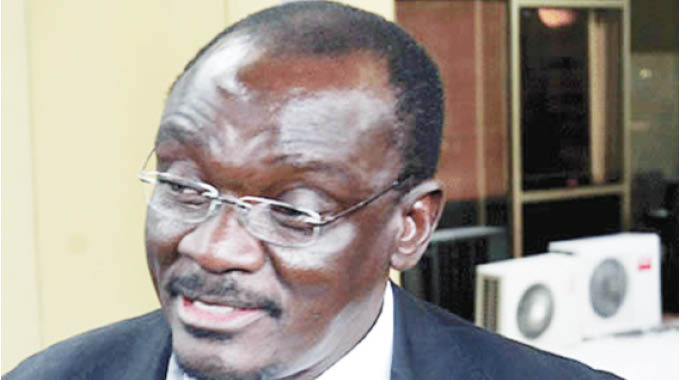
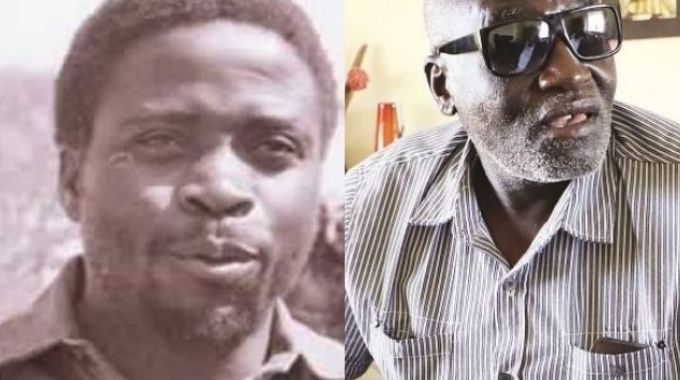
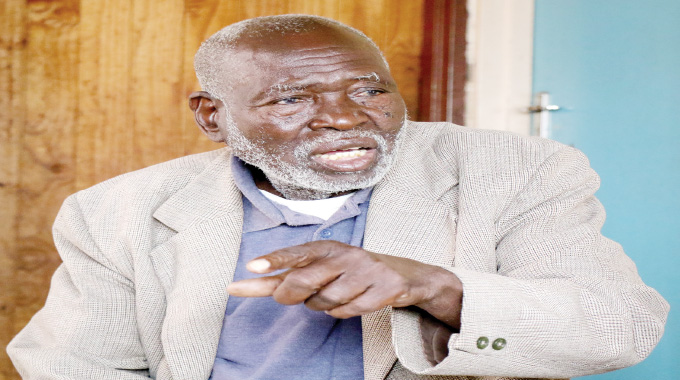
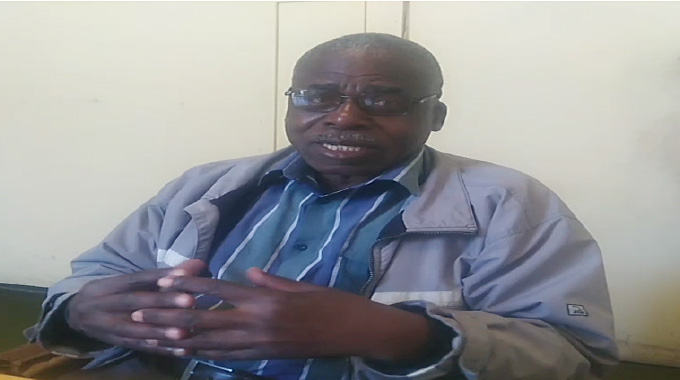
WE continue our interview with former detainee and freedom fighter, Cde Vivian Viyo Siziba. Before joining the war Cde Siziba also known by his nom de guerre, Cde Mangezi Siziba was detained in Rhodesian prisons for his political activism while he was a student at Gwanda High School in Matabeleland South Province. He was detained in several notorious Rhodesian prisons, beginning in Gwanda and later moving to Khami Maximum Prison and Grey Street Prison, now known as Bulawayo Prison. After a brief release, Cde Siziba’s attempt to return to school was thwarted when he was expelled. Subsequently, he was arrested again and taken to WhaWha Prison outside Gweru, where he was detained from November 1975 to April 1978. In 1978, he successfully crossed the border into Botswana en route to Zambia to join the armed struggle, receiving military training in Angola. In this continuation of his story,Cde Siziba speaks with our Assistant Editor, Mkhululi Sibanda (MS), about his arrest in July 1975 while attempting to cross the border into Botswana with schoolmates and fellow pupils from nearby schools in Gwanda District. Below are excerpts from that interview.
MS: You were telling us about your arrest at a roadblock while attempting to reach the border to cross into Botswana. Could you please resume your narration from that point?
Cde Siziba: The police, specifically members of the Special Branch accused us of attempting to cross the border in order to receive terrorist training. They focused on me, accusing me of recruiting others for terrorist training. Others I was with, included Philip Mashota Ndlovu and Innocent Ncube. The entire group was severely beaten as the authorities tried to force a confession regarding, who was responsible for the recruitment. What shocked us was that the individual, who had organised the mobilisation and was supposed to lead us across the border was not arrested.
MS: Do you remember his name? Please walk us through what happened.
Cde Siziba: His name was Gideon Marwala, an elderly person from Gwanda. He was on the bus with us, but was not arrested. He had also offered to safeguard the small amounts of money we had, promising to return it at the border. I had given him five dollars, which was a considerable sum at the time. There are unconfirmed reports that Marwala was killed by guerrillas when the war intensified in Gwanda and other parts of the country. Unfortunately, I don’t have the full details or confirmation that the guerrillas were responsible.
MS: When you finally appeared in court, what were the charges?
Cde Siziba: A fellow student, Vinscern Moyo was sentenced to corporal punishment and was caned. I, on the other hand, was singled out from the group of about five to 10 boys. A Special Branch officer named Haddon, read the charges to me at the charge office. I was accused of recruiting other students for terrorist training either inside or outside the country. The charge sheet labelled it as a wrongful and unlawful act. The charges were linked to the number of people I had allegedly recruited. However, I argued that I was travelling to further my education, as we had been informed that scholarships were available outside the country.
MS: Were you then taken before a magistrate?
Cde Siziba: Yes. After Haddon read the charges, I was taken to the courtroom, but the magistrate was on a lunch break, it was around noon. I was returned to the cells, and it was there that I advised the others that is, Obadiah Moyo, Thokozile Dengu, and Tongesai Shiri that if they were asked to write statements, they should state they were going to school, not to receive terrorist training as the regime alleged.
MS: Were you still being held in Gwanda?
Cde Siziba: At first yes, but we were later moved from Gwanda to Grey Street Prison, now Bulawayo Prison. Our stay there was brief, as we were later transferred to Khami Maximum Prison. It was there, were we encountered the so-called terrorists, the guerrillas. We met individuals such as the current Vice-President Kembo Mohadi, Amon Chinyoka, Elikanah Sibanda, Edmond Thwala and others. Moffat Hadebe and Joseph Ngwenya, who later worked as caretaker for Bulawayo’s Large City Hall, were also there.
MS: What was it like coming face to face with the guerrillas?
Cde Siziba: It was inspiring. Despite being incarcerated, they were pleased to see young people joining the revolution. They considered it a positive sign for the future. However, contact with those already convicted was restricted. We were placed with those on remand. One of the convicted inmates, Joseph Ngwenya, smuggled in a history book titled The British Empire and Commonwealth and encouraged me to read it. It had a profound impact on my political outlook and influenced my mindset during my later detention at WhaWha. Then one night, I dreamt walking down a hill and when I shared this with a fellow detainee, Cde Kamanja, a Zionist Church member from Gwanda, he interpreted it as a sign that I would be acquitted in court.
MS: When were you eventually taken to court?
Cde Siziba: We were only brought before the court in September, although we had been arrested in July. We were provided with legal representation, Mr Greenfield from Lazarus and Sariff, one of Bulawayo’s leading law firms. Upon reviewing my statement, he remarked it was excellent. I had maintained that I was pursuing education opportunities abroad due to scholarships. The witnesses against me, who were fellow pupils corroborated this. I pleaded not guilty and the case collapsed.
MS: You were a free man then. Did you return to school?
Cde Siziba: After my acquittal, we were taken back to Khami to change out of our prison uniforms. Unexpectedly, Special Branch officers arrived, politely stating they were giving me a lift to Bulawayo. As we reached Magwegwe, I asked to be dropped off to visit my uncle, but they insisted on taking me to Bulawayo Central Police Station to collect a travel warrant back to Gwanda. It was a ruse. At the station, I was told to remove my shoes and taken into custody. It was a Friday. I remained locked up the next day, receiving only one meal at noon. On Sunday, I wasn’t fed at all. Driven by hunger, I banged on the cell door and they informed me that a 30-day detention order was being processed.
MS: Where were you held this time?
Cde Siziba: I was taken to Grey Street Prison, where I found fellow Zapu activists from Gwanda like the late Reverend Elia Masiane and Albert Malala. Rev Masiane became a Member of Parliament for Gwanda South in the 1990s. They were soon moved to WhaWha, along with my colleagues, Philip and Innocent. After 30 days, I was released and sent home on a Pelandaba Bus Service. I returned to Gwanda Secondary School intending to resume my studies, then in Grade 10 (Form Three). There was a new headmaster, Mr Bismart, who had replaced Mr Meyers. When he saw me, he feigned ignorance and asked me where I had been. He said he would call the police and I told him there was no need, as I was required to report monthly to the police. He then declared I could not continue as a student due to my political activities, labelling me a bad influence. I had been expelled.
MS: What did you do next?
Cde Siziba: I returned to my village, Makobana, where my cousin Eden Ncube and I began planning to cross into Botswana and eventually reach Zambia. Within two weeks, a police Jeep arrived at our homestead, Special Branch officers from Gwanda again. They were infamous for targeting nationalists.
MS: Do you recall the names of those Special Branch officers?
Cde Siziba: Yes, I do. There was Zimbudzana, Doctor Matabayi, Mqanjelwa who was known for vulgar language, Bajila, and Dan Ndawana Moyo, a quiet man said to be still alive. These men were notorious not only in Gwanda, but also in neighbouring areas like Kezi/Matobo, Filabusi, Beitbridge and Mberengwa (then Belingwe).
MS: Please describe your re-arrest.
Cde Siziba: I was taken to Gwanda Police Station. The next day, they ordered me to clean their fleet of Land Rovers. Around 1 pm, Haddon summoned me to his office and read an indefinite detention order, stating I would only be released if the order was revoked or if the State of Emergency, which was renewed every six months was lifted. A policeman named Constable Maodza from West Nicholson was assigned to escort me. He took me to Mzilikazi Police Station in Bulawayo. In the evening, he handcuffed and led me to Bulawayo Main Railway Station. From there, I was transferred to WhaWha Prison for continued detention.
To be continued next week, with Cde Siziba narrating the situation in detention at WhaWha.