

 Online Reporter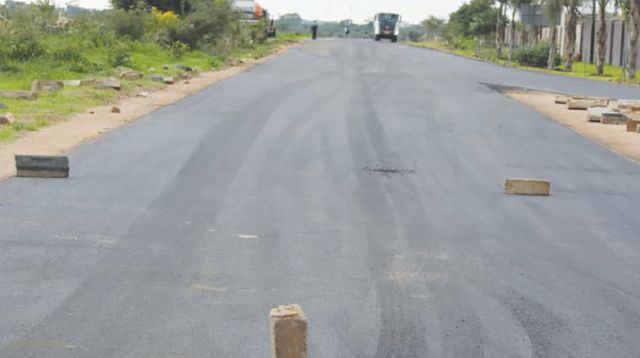
Raymond Jaravaza, [email protected]
THE rehabilitation of Cecil Avenue in Bulawayo, which has been closed for over three years, is nearing completion, with the contractor now applying the final asphalt layer — paving the way for the long-awaited reopening of the stretch.
The road links Bulawayo-Harare Road to Coghlan Avenue and connects to Bulawayo-Gwanda Road. Cecil Avenue was originally designed to divert heavy-duty vehicles away from the city centre, particularly those travelling from Victoria Falls Road to Plumtree, Hope Fountain, Beitbridge, and through Beitbridge Border Post en route to South Africa.
A Chronicle news crew observed construction workers busy on the stretch on Monday.
Permanent Secretary in the Ministry of Transport and Infrastructural Development, Engineer Joy Makumbe, said Government is forging ahead with road rehabilitation across the country, regardless of the scale of the works involved.

“Some of the road upgrade works around the country might not be on the same scale as the Bulawayo-Victoria Falls Road, but Government will continue pouring resources so that rehabilitation works nationwide are completed on time for the convenience of motorists,” he said.
Engineer Makumbe assured that road rehabilitation will not stop despite the onset of the rainy season, as Government remains committed to ensuring speedy completion of ongoing projects to support smooth business logistics and public transportation.
“The rainy season is a key consideration in our national infrastructure planning. While weather conditions can pose challenges, our contractors are expected and prepared to continue with critical works where it is safe and technically feasible to do so.
“Modern construction methodologies and contractual provisions account for seasonal variations. During heavy rains, focus may temporarily shift to activities less affected by weather, such as drainage works, culvert installations, material procurement, and site preparation,” he said.
Road infrastructure is a priority under the National Development Strategy 2 (NDS2) launched by President Mnangagwa last week. The transformative five-year plan seeks to accelerate Zimbabwe’s march toward “a prosperous and empowered upper- middle-income society.”
Government has emphasised that during NDS2, transport infrastructure development will focus on enhancing connectivity, reliability, and efficiency across all modes — road, rail, air and inland waterways.
“Government will implement a comprehensive national roads rehabilitation and upgrade programme aimed at improving connectivity, facilitating trade and enhancing regional integration.
This will entail the expansion, rehabilitation and maintenance of major trunk roads and rural feeder roads, leaving no one and no place behind.
The programme will be financed through a combination of public resources and private sector participation via public-private partnerships,” reads the NDS2 document.
One of the flagship projects under NDS2 is the US$1,2 billion upgrade of the Beitbridge–Bulawayo–Victoria Falls Highway, which will include modern toll plazas with weighbridges.
The strategic trunk route links Zimbabwe to key regional markets such as South Africa, Zambia, and the Democratic Republic of Congo, and is crucial for boosting trade, reducing logistics costs and improving competitiveness.
“Rehabilitation and upgrade of the Beitbridge-Bulawayo-Victoria Falls highway, including toll plazas with weighbridges, will be implemented over the period 2026-2030 at a cost of US$1,2 billion through a public-private partnership,” the document states.
Also in the pipeline is the long-awaited 240km Kwekwe-Lupane Highway, where two construction teams will start work from opposite ends. The project is expected to shorten the Harare-Victoria Falls route by 200km, significantly reducing travel time and transportation costs.
Additionally, Government will roll out the 159km Bulawayo-Nkayi Road project, described as a game-changer that will enhance mobility, commerce, and service delivery across Matabeleland North and the Midlands.
Despite limited access to external financing, the Second Republic continues to channel substantial resources into infrastructure development as a key driver of national progress. Roads, in particular, have been prioritised as catalysts for economic transformation, investment attraction and inclusive growth.


 Bongani Ndlovu