

 admin
admin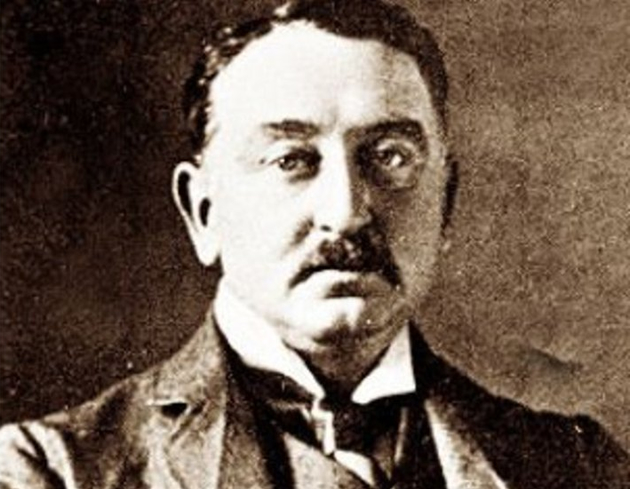
 Tichaona Zindoga Snr Political Writer
SOME criticism has been levelled against analysts and commentators who, when they discuss issues raised by MDC-T’s Eddie Cross, always refer to his “Rhodie” stock.
That is rational enough, to urge people to engage others on the basis of their expressed ideas.
However, six days ago, Mr Cross wrote a piece on his Africanherd website that might slap the very faces of those who may have thought that the Rhodie factor was irrelevant and that Cross was just one ordinary man who has outgrown Rhodesia of which his grandfather was a pioneer.
Well, he has not, apparently.
He totally blows his cover.
In the article titled, “The Importance of Leadership”, which was supposed to teach us the virtues of leadership thanks to a lecture by a professor from the Chicago School of Economics, he strangely resorts to telling us the virtues of not only Rhodesia but compares Cecil John Rhodes with President Mugabe!
In between, of course, he tells us about the other person he feels was better than President Mugabe – Ian Smith.
He says: “The country has had two short bursts of growth and stability – the 10 years from 1980 to 1990 when he was forced to share power with the remnants of the Rhodesian settler regime by the Lancaster House Constitution and then the four years up to 2013 when he was forced to share power with the MDC.”
The MDC, for those not in the know, is old Rhodesia’s preference in today’s politics.
Zimbabwe is a “very poor, marginalised state”, Cross says, because of Mugabe.
“Compare his leadership with that of Mr Rhodes,” avers Cross.
“He arrived in South Africa with $10 000 in his pocket – start-up money from a maiden aunt in Britain, he had poor health and was advised to live in a drier climate. In the next 23 years he established 70 companies – two of which are today in the top 500 global corporates. He became Prime Minister of the Cape and established the boundaries of Botswana, Swaziland, Zambia, Zimbabwe and Malawi. He built thousands of kilometres of railways and roads and opened up the mining industries in South Africa, Zimbabwe and Zambia.
“When he died at the age of 49 years, his death was marked throughout the world, but most significantly, the people of Southern Africa gave him a royal funeral that started in Cape Town and ended with his burial in the Matopo Hills outside Bulawayo, where the Ndebele people gave him the royal salute – used for the last time in this country.”
To demonstrate the gulf between Rhodes and Mugabe, Cross then makes the bizarre claim that: “When Mr Mugabe eventually leaves the stage, his legacy will have been totally destroyed by his leadership of his country and among the Ndebele, there will be celebrations, joy and certainly no royal salute.”
It is useful also to point out that Cross makes fleeting references to Botswana and China as having done better than Zimbabwe.
The above submissions do not need special incision to show the raw racism that Cross espouses as he clearly shows where his heart lies.
His generalised comparisons have the unintended effect of betraying that there were no real heroes among the settlers between Rhodes and Smith.
In fact, as Cross himself shows, Smith is nothing to write home about.
Which leaves one to interrogate Cross’ idealisation of Cecil John Rhodes.
True, Rhodes was a British patriot and dreamer who wanted to colonise Africa on behalf of the Crown.
However, he was not a pioneer in the strictest sense as all the groundwork for conquest of Southern Africa was done well before him from the Portuguese merchants of circa 12th century to the Boers.
There had been hunters and adventurers and missionaries who all had been intent on making colonies of Africa.
There was the Berlin Conference in 1884 which was held more to assert that colonisation was a foregone conclusion and only the rules for the game needed to be drawn up.
Missionaries such as Robert Moffat and ultimately C. D. Helm softened the target for colonisation which Rhodes executed through the British South Africa Company.
He was merely the right man at the right time.
The colonial geopolitics and economy that Rhodes established were on the back of racist expropriation of land and minerals, forced labour, theft and plunder.
The Pioneer Column itself was made up of mercenaries, criminals, social misfits and adventurists who had been promised, and got, land and mineral concessions when they accomplished their mission.
History records that the settlers were sooner rather than later dissatisfied with the BSAC mounted after the 1896-7 and culminated in the formation of the Campaign for Responsible Government on the eve of the First World War, a case that was settled in 1920 and 1922 when there were votes for the Responsible Government and rejection of the Union of South Africa that Rhodes had wanted.
By the way, according to historical accounts, Rhodes had entered the Parliament of Cape Colony in 1881 and became the Prime Minister of the Cape Colony in 1890.
Rhodes was to meet a sad dénouement in his short career, including being pronounced by a committee of the British House of Commons of “grave breaches of duty as prime minister (of the Cape Colony) and as administrator of the British South Africa Company” and he was forced to resign his premiership in January 1896 amid war.
His poor health eventually caught up with him and he died.
It is understandable that Cross idolises and romanticises Rhodes because it gives him comfort.
However, Rhodes, who is also said to have been a homosexual, was nothing exceptional and his unceremonious and tragic exit confirms this, even if he had plundered enough wealth for a dubious legacy.
This may be hard for Cross to swallow, but the fact of the matter is that Rhodes is well and truly gone, not because of his failed health but also because his notorious legacy has been well and truly dismantled by black revolutionaries of this country.
On the other hand, President Mugabe has been involved in the dismantling of the colonial behemoth for the last 50 years by securing independence, redistributing land and empowering the marginalised black people whose suffering began in earnest with the arrival of Cecil John Rhodes on this continent.
So, no matter how much the likes of Cross want mourn at the grave of Rhodes at Matopos, the gay gangster will never resurrect.



 Online Reporter