admin
admin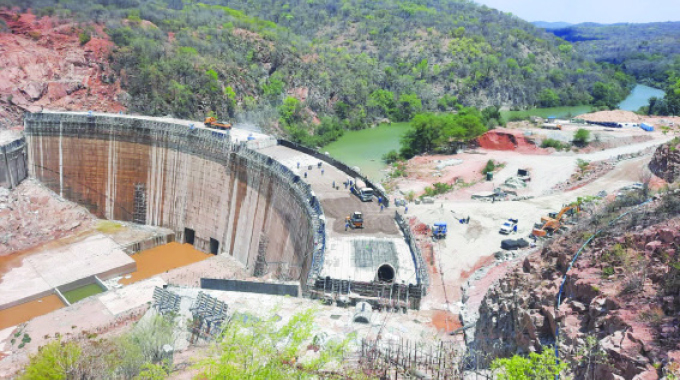
Anashe Bvumavaranda-Correspondent
The year, 2022, has indeed been an “all systems go year” for Zimbabwe both in space and on earth.
Day-after-day the media is awash with how, as a people, we are pulling the economic levers of our great nation to achieve the Zimbabwe we want.
Great Zimbabwe, we call it.
Our different economic sectors have thrust themselves into action to contribute to our national vision by the year 2030.
As all this takes shape, one cannot help, but be reminded of the much talked about workmanship of termites on a termite mount. Once they start building the mount they do not stop for anything and anyone.
This is very much the state of our nation today, following the clarion call by our leadership that “we shall build our own country brick upon brick” culminating in “Nyika inovakwa nevevene vayo” or the “country can only be built by its owners” just like the termites busy on the termite mount.
As the construction and reconstruction discourse takes shape in our country, the non-negotiable enablers that are required to achieve this milestone become apparent.
The local cement industry is a key enabler in this discourse, in the same manner that it has been for other nations both developing and developed.
As one scholar puts it, “It is impossible to envisage modern human development without cement, as the product plays a significant role in improving people’s standard of living globally through creation of employment and provision of multiple cascading economic benefits to associated industries” (Kuruva, Alakanandana and Vijaya 2018).
Cement is an extremely important construction material used for housing and infrastructure development, making it a key factor to our economic growth and as such our Government views it as a strategic industry with great importance to our economy.
The cement industry is arguably the single most integrated industry in our economy, having strong forward linkages with most industries and the consumer markets, while at the same time having equally important backward linkages to the mining and quarrying sectors and the communities surrounding them (Santos, 2018).
The critical question, as we forge ahead in our construction and reconstruction journey, is whether our cement industry is ready to contribute to the economic boom the country is gearing towards.
Cement industry in Zimbabwe
Our cement industry is made up of five players namely, PPC Zimbabwe Ltd, Lafarge Cement Zimbabwe Ltd, Sino Zimbabwe Cement, Livetouch and Pacstar Cement.
The players have a current combined annual capacity of 2,7 million tonnes against an annual demand of 1,4 million tonnes.
Over the years, the industry has also been testament to the positive policies that Government has embarked on. Of particular interest is the engagement and re-engagement efforts by Government geared towards investment promotion.
Cement players have invested close to US$200 million over the past 5 years in kiln upgrades, packing, grinding station and other cement processes in order to add efficiency to the existing equipment and to meet the anticipated growth in demand.
The Lafarge expansion Project
The Lafarge Cement Zimbabwe Ltd Expansion Project which commenced right at the peak of Covid-19 in 2019, is one of the latest investments towards capacity enhancement. National Project Status was granted to this US$25 million project and this allowed for concessions such as free import duty for equipment and a range of other tax exemptions.
This status enabled the speeding up of implementation even in the midst of Covid-19.
Phase 1, of this expansion project saw the official commissioning of a Turkish Dry Mortar Plant, by President Mnangagwa in 2021. Dry mortars include brick-laying mortars, general purpose plastering and rendering mortar, coloured rendering mortar, skim coat and decorative mortar, cementitious tile adhesives and grout.
Traditionally these products were being imported into Zimbabwe. However, as a result of this development Lafarge Cement Zimbabwe Ltd can now export into the region. This indeed brings to life Government’s Local Content Strategy into life.
The month of November 2022, marked the completion of phase 2 of the expansion project. Phase 2, constitutes a high capacity cement milling plant (Vertical Cement Mill) which has an average output of 650 000 tonnes per annum of cement production.
This will increase the current LCZ capacity from 450 000 tonnes per annum to one million tonnes per annum. The new plant has capacity to produce higher grade cement which includes the 42.5 (Supa Set) and 52.5 cement, in line with country needs.
Economic impact of the
vertical cement mill
This investment by Lafarge Cement Zimbabwe Ltd into local cement capacity, will no doubt accelerate the Zimbabwe per capita consumption of cement from 80kg to beyond 100kg in the next 5 years by improving access to high quality, innovative and affordable cement as production increases.
This increase in capacity will ensure national savings of at least USD70million which was being used to import cement annually and positively impact our Balance of Payments and preserve local jobs in cement manufacturing, retailing and distribution.
The Lafarge Cement Zimbabwe Ltd increased capacity will feed into the local content strategy of Government and reinforce the value chains being created in rail recovery for the National Railways of Zimbabwe, domestic coal recapitalization, mining expansion, the steel mills, signature road infrastructure expansion programmes together with dam construction. The coming in of the extra 650 000 tonnes per annum will have a multiplier effect toward a stronger economy and competitive industry.
Cement sector into the future
The cement industry has contributed to economic growth, employment creation and trade in Zimbabwe over the years. Without local cement industry, cement would have to be imported in large quantities thereby increasing demand for foreign currency.
Local production therefore contributes to a better trade balance and saves scarce foreign exchange reserves.
The addition of another 650 000 tonnes per annum to the already existing 2,7 million tonnes per annum, will see the sector being able to cope with the new infrastructure requirements in the country.
Given that annual demand of cement is approximately 1,4 million tonnes per annum, driven by mainly individual home building, the cement industry is more than capacitated to embrace the demand that will be brought about by our national infrastructure ambitions under Vision 2030.
Anashe Bvumavaranda is an economic empowerment advocate and a member of the Economic Indaba Initiative.



 Online Reporter