


 malvernmugadzikwa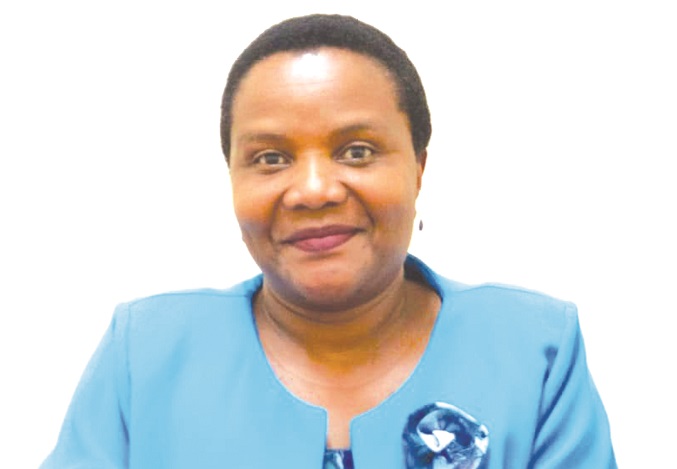
ECONOMIST MS TAFADZWA BANDAMA was recently appointed director-general of the Zimbabwe National Statistics Agency (ZimStat). She is charged with modernising the entity and ensuring the production of high-quality and timely statistics that inform policy decisions. The Sunday Mail’s TANYARADZWA RUSIKE spoke to Ms Bandama about her appointment and priorities as head of ZimStat.
********************
Q: You have been appointed Zimbabwe National Statistics Agency director-general. What does this appointment mean and what is its significance?
A: As the director-general, I oversee the strategic role that ZimStat plays in the economy, ensuring the production of high-quality and timely statistics that inform policy decisions, economic planning and development initiatives. My appointment as director-general of ZimStat is significant because the statistics produced by the agency will inform policy decisions, shaping Zimbabwe’s economic and social development trajectory.
The production of official statistics promotes evidence-based decision-making by all stakeholders, including the Government, the private sector, research institutions and the academia. Overall, my leadership will play a vital role in shaping Zimbabwe’s statistical landscape, supporting informed decision-making and driving development initiatives.
Q: What steps are being taken to improve data collection methods through leveraging digital technologies?
A: ZimStat, in line with global trends to embrace technology in data collection, is already using mobile technology for most of its surveys/censuses. Although company data is still being manually collected, introducing electronic data sharing, including administrative data, is one of the agency’s top priorities.
Q: How does ZimStat support Government ministries and policymakers in crafting evidence-based policies?
A: ZimStat provides essential, high-quality data that aids Government ministries and policymakers in making informed decisions. By collecting, analysing and disseminating data on various socio-economic indicators, ZimStat enables these stakeholders to understand key issues affecting the population.
The agency supplies up-to-date statistics on demographics, health, education, economic growth and other areas, helping ministries design targeted interventions and programmes. Through surveys, censuses and studies, ZimStat offers the evidence base needed to develop policies that reflect real conditions on the ground.
The agency also partners with Government ministries and other stakeholders who request technical assistance to undertake specific surveys for their needs.
Q: What is ZimStat’s role in tracking progress towards Vision 2030 and implementation of the National Development Strategy 1 (NDS1)?
A: ZimStat plays a crucial role in monitoring Zimbabwe’s progress towards Vision 2030 and NDS1 by regularly providing data on indicators related to the two frameworks’ goals.
Vision 2030 aims to make Zimbabwe an upper middle-income economy, while NDS1 (2021-2025) is its medium-term strategic plan.
ZimStat supplies data on key performance indicators, such as gross domestic product (GDP) growth, poverty levels, employment rates and access to basic services, allowing stakeholders to evaluate progress towards Sustainable Development Goals (SDGs).
This ongoing tracking informs strategic adjustments and ensures that development efforts remain on track.
Such data is produced through routine ZimStat surveys/censuses or from administrative data collected from institutions. The agency houses an electronic data portal with all the indicators, which is updated regularly whenever current data is available.
Q: How do you ensure that ZimStat’s data remains neutral and objective, given its role in informing Government decisions?
A: To maintain neutrality and objectivity, ZimStat adheres to strict statistical and ethical standards in data collection, analysis and reporting.
The agency operates under the principles of the United Nations (UN) Fundamental Principles of Official Statistics, which emphasise impartiality, accuracy and relevance.
ZimStat’s independence in producing statistics is essential for its credibility and its processes undergo rigorous quality control to prevent political or external influences from affecting data outcomes.
Furthermore, ZimStat’s methodology and datasets are transparent and open to public scrutiny, which fosters trust in its data integrity.
The agency also offers users a platform, through its user-producer symposium, to review and critique data produced by the agency.
Q: How does ZimStat collaborate with regional and international bodies such as the UN, the Southern African Development Community (SADC) and the World Bank to ensure global data comparability?
A: ZimStat actively collaborates with bodies like the UN, SADC and the World Bank to align with international standards and practices, which helps ensure that Zimbabwe’s data is comparable on a global scale.
These partnerships provide ZimStat with resources, technical assistance and training to adhere to globally recognised data-collection methodologies.
Collaborative efforts also support data-sharing initiatives, joint studies and the harmonisation of indicators, enabling Zimbabwe to contribute to and benefit from global statistical frameworks like the SDGs.
This international engagement ensures that ZimStat’s statistics are robust and aligned with global development objectives.
The revival of the Data for Development and Innovation Committee, in collaboration with the UN, ensures a close partnership between the agency and national statistical system stakeholders so that data produced meets required standards, such as data comparability.
Furthermore, the National Strategy for Development of Statistics (NSDS III) was developed in alignment with provisions of regional development plans such as the SADC Regional Strategy for Development of Statistics (RSDS) and African Union (AU) Strategy for Harmonisation of Statistics in Africa (SHASA) II.
Q: We understand ZimStat is undertaking a national economic census. Give us an update on the progress you have made so far.
A: The economic census started in July 2024 and runs until June 2026, with preliminary results expected by June 2025 and final results by December 2026. The census was preceded by several preparatory activities, namely mapping, listing and the input-output survey.
The mapping exercise commenced on July 8 and ended on August 31, 2024.
The exercise was aimed at coming up with business enumeration areas (BEAs) for use during the listing and data collection.
A total of 8 139 BEAs were created.
Currently, the agency is undertaking the listing, which is the second phase of the census. The exercise commenced on September 16, 2024, and is expected to end by December 31.
Information from the listing is key to informing the crafting of the National Development Strategy 2 (NDS2).
The exercise is also critical as it provides statistics for the creation of a statistical business register, which is a master sampling frame for all business surveys.
The input-output survey is expected to run from January 2025 to March 2025, whilst the main data collection will run up to June 2026.
Q: What exactly does the census seek to achieve and when was the last time Zimbabwe undertook such an initiative?
A: The economic census will be the first of its kind to be undertaken in Zimbabwe and is expected to run until the end of 2026, with preparatory activities underway as highlighted above. The main purpose of conducting the census is to:
Come up with comprehensive baseline statistics on the size and structure of the country’s economy;
Enable the Government, the private sector, research institutions, the academia and other stakeholders to understand the economic landscape of our country, thereby facilitating evidence-based policy formulation, decision-making and strategic planning;
Facilitate evaluation of various developmental policies and programmes, including the National Development Strategy 1, the AU’s Agenda 2063 and the SDGs;
Provide insights into the geographical spread of economic activities and establishments in the country while providing key information for use in:
(a) Developing a comprehensive statistical business register, which serves as a sampling frame for economic surveys;
(b) Compilation of GDP estimates; and
(c) Updating weights used in the compilation of various economic indices.
Q: What new innovations or methodologies have ZimStat introduced to ensure that it improves its operations?
A: The agency is implementing computer-assisted interviewing (CAI) techniques for data collection for most of its surveys and censuses.
A data portal was also developed to ensure easy tracking of SDGs indicators.
In terms of increasing the efficiency of human resources, upskilling of staff is being done.
The agency also introduced an online job application portal.
Q: How does ZimStat ensure that data is accessible to the public, businesses and researchers?
A: The statistics produced by the agency are disseminated virtually via the Zoom platform and shared widely through the agency’s website, social media platforms and the data portal.
Q: What challenges does ZimStat face in undertaking its operations, especially in rural and hard-to-reach areas?
A: The main challenge is transport to enable the enumerators to reach their enumeration areas. There are also network challenges in the field or when syncing data to the server.
However, the agency makes an effort to recruit some enumerators from such hard-to-reach areas and ensure supervisors visit those areas during surveys.
Q: What steps are being taken to address funding and resource constraints, if any?
A: The agency intends to strengthen stakeholder engagement with existing and new potential donors to improve survey funding gaps. The agency is also in the process of setting up a strategic business unit to raise funds for critical surveys and operations. Currently, ZimStat is conducting surveys on behalf of ministries and agencies for a fee.
Q: What are ZimStat’s key priorities for the next five years, and how do you plan to achieve them?
A: Producing data for the SDGs is a top priority.
To achieve this, ZimStat will work on strengthening partnerships with State and non-State actors to harness data from non-traditional sources.
This collaborative approach ensures that data covers a wide range of areas, including demographic, socio-economic and production statistics. One of the key priorities is to ensure that all official statistics are available in devolved formats, in line with the Government’s policy thrust of devolution and decentralisation.
Another key priority area includes enhancing the quality of official statistics through increasing response rates for both household and business surveys.
This will be achieved through robust stakeholder engagements and the introduction of web-based questionnaires.
The agency also intends to have a highly coordinated statistical system, in addition to mobilisation of alternative resources to produce official statistics.



 Online Reporter