Kudzanai Sharara in Cape Town, South Africa
Panellists at the CEO Africa Annual Roundtable have converged on a single conclusion: Africa does not have a funding gap, but a structural one, and the continent must reform its financial architecture, retain its own capital and build African-owned instruments if it is to finance its future.
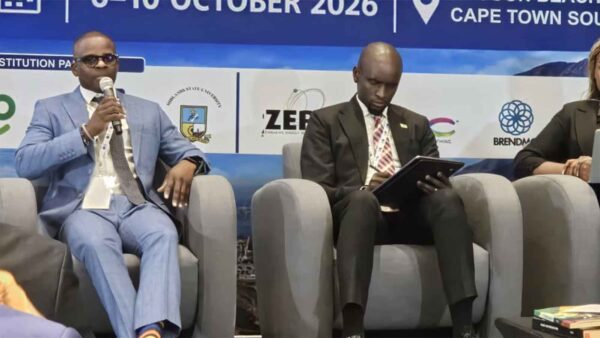
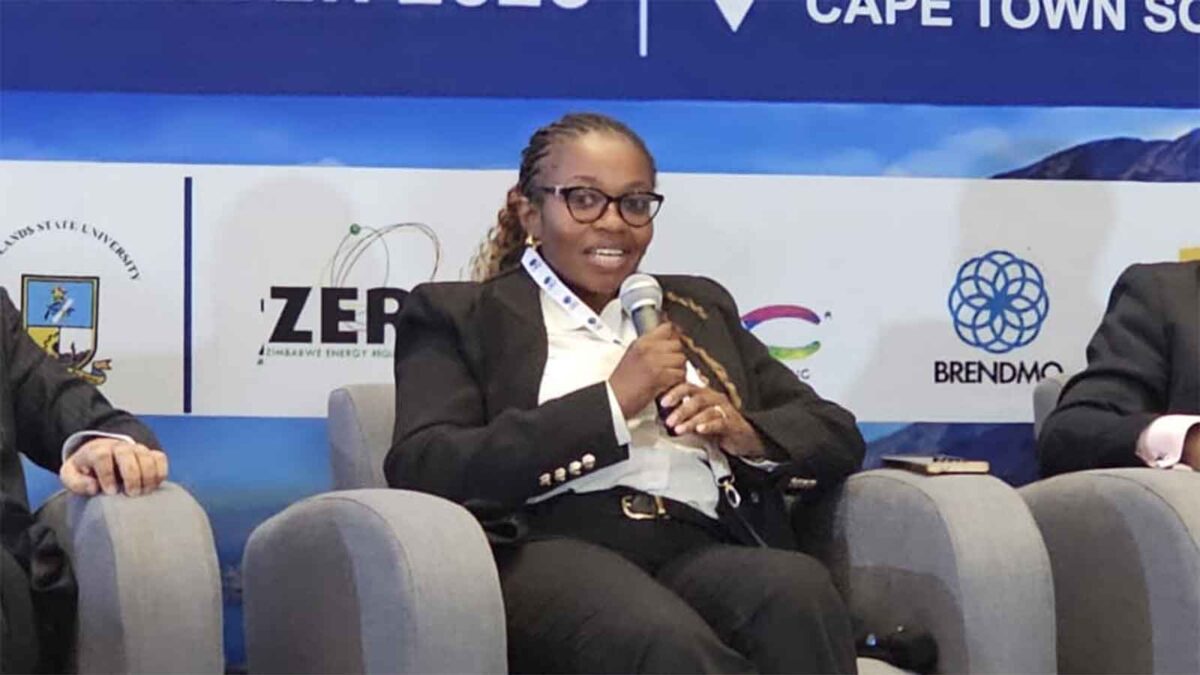
The common position emerged during the panel “Financing Africa’s Future: Blended Finance, Development Capital, and the Funding Gap”, where five panellists from investment, banking, advisory and property backgrounds argued that the money exists on the continent but is not reaching African projects.
Tandiwe Masunda, Chief Executive Officer: Investments at ZB Financial Holdings, framed the shared position most directly. “We actually don’t have a funding issue. I think the issue is then to say, do we have or have created appropriate instruments and structures that allow those funds to be deployed?” she said.
Dr Farzam Kamalabadi, Chairman of Future Trends Group, reinforced the argument in blunt terms. “Africa is not poor. Governments are broke. But there are certain places where there is money,” he said. He noted that rural areas and villages hold little capital, but pension funds, institutions, asset managers, unions and banks hold significant funds that are not reaching projects. “Those monies are not going to the project,” he said.
Dr Kamalabadi called for capital to be retained within each African country rather than moved offshore. “Every country has more money there than the country needs for its growth, but it is not using it. It is taking it outside,” he said, describing his approach as “a reordering and restructuring” of capital. He cited a partnership with the Lesotho National Development Corporation (LNDC), which he likened to a sovereign investment arm comparable to the Botswana Development Corporation (BDC). Unlike the BDC, which invests directly, the LNDC’s money is being used purely as leverage, with the institution becoming a limited partner in a corporate structure.
He went on to propose a suite of sector-specific funds — infrastructure, mineral resources, agricultural resources, health tech, digital, AI and startup — all of which would be “owned and controlled by the founders that are African”, with external investors invited to join.
Takudzwa Mhlanga, CEO of WealthAccess Investment Managers, challenged the premise of the discussion outright. He said Africans were “chasing foreign money” despite having the resources, education and access to capital on the continent, and described the annual pilgrimage of African delegates to London each October as “crazy”.
Mr Mhlanga also criticised the practice of African asset managers routing through New York to access international markets. “We are exporting our own funds out of Africa, sending the house to foreign institutions, so that they come back and then lend back the money to us,” he said. He argued that foreign institutions are the ones defining African risk, adding that Africa should start by restructuring its own positions on the continent and working together.
Dr Michael Louis, Chairman of WestProp Holdings, said branding and investor certainty were prerequisites for attracting capital. He identified branding as the first priority and called for structures that make international funding secure, citing past difficulties in moving money in and out of countries, government-regulated currency volatility and judicial problems in court cases. He said transactions should be subject to international arbitration, and called for tax incentives to reassure investors.
Delivering the closing submissions, Natasha Maatla Phuthego, Managing Director of Maatla Advisory, tied the panel’s arguments together by calling for reform of the financial architecture itself so that capital can be directed to where it is needed.
“These are how to govern, basically, the financial architecture of our country in order to allow for these funds to be used and directed to whether infrastructure, education, whether it helps to basically draw that will actually benefit Africans as a whole,” Ms Phuthego said.
The panel formed part of the CEO Africa Annual Roundtable, which runs from 6 to 10 October under the theme “The Future of Africa: Innovate, Trade and Grow”.