Online Reporter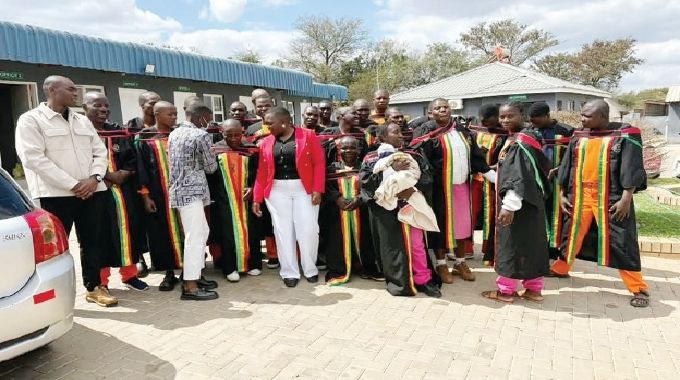
Chronicle Correspondent
WALKING out of prison gates does not always mean a fresh start. For many former inmates, the real struggle begins after release, as they try to secure employment, rebuild family ties and regain acceptance within their communities.
However, for 21 inmates from Gwanda Prison and Gwanda Farm Prison, that future now looks a little brighter.
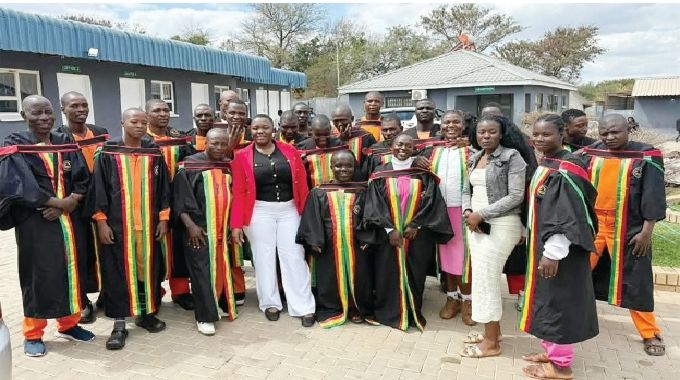
On Friday, August 28, the inmates proudly received vocational training certificates after completing a skills development programme designed to prepare them for life after release. The graduation ceremony was more than a celebration of academic achievement. It was a symbol of hope, rehabilitation and the belief that people can change when given the right opportunities.
The training programme, which ran from June 29 to July 10, was organised through a partnership between the Zimbabwe Prisons and Correctional Service (ZPCS) and Tonganyika Trust. Over two weeks, inmates gained practical skills that can help them earn a living and become productive members of society when they return to their communities.
Participants received training in five areas: Welding, Beauty and Therapy, Mortuary Science, Horticulture and Information Technology. The programme combined classroom lessons with practical training, allowing inmates to gain hands-on experience under qualified instructors.
The courses were selected because they offer real employment and business opportunities both inside correctional facilities and after release. The aim was to equip inmates with skills that can help them support themselves and their families while reducing the risk of reoffending.
The initiative reflects a broader shift within Zimbabwe’s correctional system. In recent years, ZPCS has increasingly focused on rehabilitation rather than punishment alone, recognising that offenders need opportunities to reform and rebuild their lives.
Under this approach, prisons are no longer viewed simply as places of confinement. They are becoming centres of learning, skills development and personal transformation. Programmes such as vocational training, farming projects, education and psychosocial support are helping inmates acquire the tools they need to successfully reintegrate into society.
Speaking during the graduation ceremony, Gwanda Prison Officer-in-Charge Superintendent Simon Ndodo said the programme was delivering positive results.
“This is tangible evidence that rehabilitation is on track. We anticipate successful reintegration post-release and remain committed to enhanced stakeholder engagement for sustainable rehabilitation outcomes,” said Supt Ndodo.
At Gwanda Farm Prison, the benefits of the programme are already being seen.
Chief Correctional Officer Charles Bakili said the knowledge gained by inmates would continue to make a difference within the facility while preparing them for life beyond prison.
“The knowledge they gained will take root at the farm, helping to grow food, build skills, and cultivate purpose behind the walls,” said CCO Bakili.
A key partner in the programme was Tonganyika Trust, which provided learning materials, assessment tools and support for coordinating the training.
Representing the organisation, Mr Wisdom Masase reaffirmed the trust’s commitment to supporting rehabilitation initiatives.
“We are very grateful that we also played a significant role in rehabilitating inmates. We remain committed to complementing Government efforts in human capital development,” said Masase.
The graduation ceremony also highlighted the important role communities can play in supporting rehabilitation.
Gwanda-Tshitaudze Constituency Member of Parliament Cde Fisani Moyo contributed towards the event by sponsoring academic gowns and covering certification fees for all the graduates. His support ensured that the inmates could celebrate their achievement with dignity and recognition.
For the graduates themselves, the certificates represented far more than proof of completed training. They symbolised a fresh start and an opportunity to build a better future.
Many of the inmates said the programme had restored their confidence and given them practical skills they can use to support themselves and their families once released.
Among them was Spencer Masuku, who completed training in Mortuary Science.
“The training made me feel not forgotten. It has given me skills I can use to earn a living and contribute to my community,” said Masuku.
For female inmate Abigail Mangena, who trained in Beauty and Therapy, the certificate represents the beginning of a new chapter.
“This certificate is a key to unlock my future. I am hopeful that I will start my own business and support my family when I am released,” said Mangena.
Horticulture graduate Evert Moyo also spoke about the impact the programme has had on his outlook.
“The facility gave me soil to grow and steel to build. I now have a point to start from upon my release,” said Moyo.
The graduation forms part of ZPCS’s wider effort to put rehabilitation at the centre of correctional services. Alongside vocational training, the organisation continues to operate prison schools, behavioural reform programmes and agricultural projects across the country.
As it looks to expand such initiatives, ZPCS says partnerships with non-governmental organisations, businesses and community stakeholders will remain critical in providing inmates with opportunities to learn, develop and prepare for life after incarceration.
For the 21 graduates in Gwanda, the certificates they received represent more than qualifications.
They offer a chance to start again, earn an honest living and prove that a person’s past does not have to determine their future.