Online Reporter
Onward Gangata [email protected]
SUNDAY’S ugly scenes at Chahwanda did more than halt a football match — they exposed long-standing concerns that Zimbabwean football has struggled to confront, particularly around preparedness, crowd control and whether safety at major fixtures is being taken seriously enough.
The violence that forced the abandonment of the Hardrock and Dynamos league match left behind more than damaged property and injured supporters. It also dented the image of the local game and raised serious questions about how a high-profile fixture descended into chaos.
For safety and security experts, one principle remains clear: one life lost is one too many. While the Chahwanda incident did not result in fatalities, many supporters left the stadium feeling that the situation had come dangerously close to a far worse outcome.
In the aftermath, attention has turned to what happened once trouble broke out, with issues such as police deployment, stewarding and crowd management expected to come under scrutiny. However, signs of potential disorder had already begun to show even before the match kicked off. The match had already been delayed by 20 minutes to allow supporters who were still outside the stadium to enter. Match commissioner Ruzive Ruzive announced the delay, but the additional time quickly began to reveal weaknesses in crowd control.
Seven times, supporters from both teams managed to invade the pitch to perform rituals near the centre spot.
It began when a Dynamos supporter ran onto the field and sprinkled what was believed to be liquid intended to neutralise rituals at the centre mark. Hardrock supporters responded in similar fashion, leading to repeated incursions as both groups attempted to outdo each other.
The concern for football authorities is not necessarily the rituals themselves, but the ease with which supporters repeatedly breached security at such a high-profile match.
Those incidents should have raised immediate alarm.
Instead, they went unchecked and foreshadowed the disorder that later unfolded.
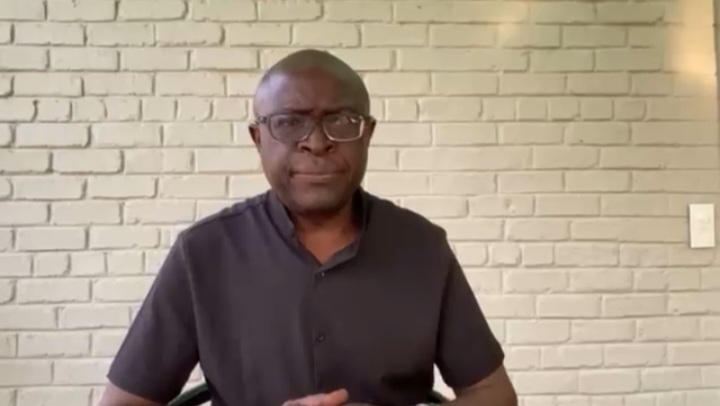
The situation took a further troubling turn with allegations involving a Hardrock official. The club’s chief executive officer, Kudzanai Hove, has been linked to a viral video appearing to show a man stomping on the head of a Dynamos supporter during the violence.
Hardrock chairperson Wellington Mpandare said the club was still establishing the facts.
“It is premature for me to comment at this stage, we are still carrying out investigations. ZIFA as well as the PSL are also carrying out investigations and the security services are also doing their part,” he said.
When play eventually resumed, focus shifted back to the match itself.
An own goal had put Dynamos ahead before Wilfred Madzungu equalised from the penalty spot following a contentious decision by referee Mhaka Magare.
With the score level at 1-1 and just over 10 minutes remaining, violence erupted in the stands.
Supporters exchanged blows and hurled missiles as panic spread across sections of the stadium. Despite the escalating situation, play initially continued before the unrest spiralled out of control.
Within moments, Chahwanda had effectively turned from a football venue into a crime scene.
The Premier Soccer League (PSL) moved quickly to condemn the disturbances following the abandonment of the match.
“The PSL strongly condemns any acts of misconduct at our events and those found guilty will face the full extent of the prescribed penalties. The PSL regrets any inconvenience caused to its members, stakeholders and partners,” the league said.
The response from those closest to the events also drew criticism.
Neither Hardrock nor Dynamos immediately accepted responsibility for the conduct of their supporters.
Shortly after the match was abandoned, Hardrock posted an aerial image of Chahwanda Stadium on social media with the caption: “This venue deserves love.”
A formal apology from the club only followed the next day.
“We strongly condemn the pitch invasions and acts of vandalism that disrupted the game and damaged stadium property,” said Hardrock media and communications officer Bruce Chikuni.
Investigations will ultimately determine how the violence started and who should be held accountable.
However, the Chahwanda incident leaves a broader and more uncomfortable question hanging over Zimbabwean football.
If supporters were able to invade the pitch repeatedly before kick-off without consequence, were the warning signs already there long before the first bottle was thrown?