

 admin
admin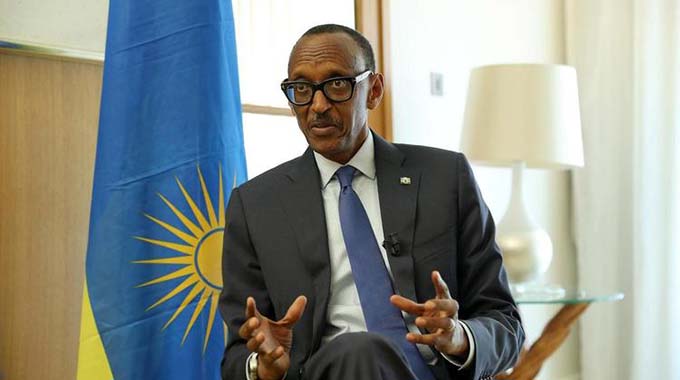
Dr Rudo Gwata-Charamba Correspondent
The strong argument that it is essential for people to change the way they think before meaningful implementation of a development or transformation programme can commence is almost universally supported.
Accordingly, in many circles, the mindset is perceived as one of the most significant root causes of poverty and underdevelopment in sub-Saharan Africa.
President Kagame of Rwanda, speaking from experience, weighed in, articulating that the transformation of Africa has to start from the level of mindsets before it can be translated into concrete processes thus weighing in on the same argument.
According to President Kagame, a key lesson learned by the nation was that it is not really necessary to have all the answers or all the funds to commence implementing a transformation programme.
Rather, realistic development goals are set based on the available resources.
Besides, both literature and experiential evidence show that out of the several development challenges in Africa, the mindset of stakeholders, particularly the implementers and end-users, matter.
The mindset, defined as the established sets of attitudes held by someone and directs what they do, hence its essence in development and transformation cannot be overemphasised.
However, a major deficiency is that the issues relating to problematic mindsets are ordinarily never mentioned enough despite the marked harm that they cause in people’s lives.
South Korea and Rwanda are typical success stories where the mindset was identified as crucial for national transformation and change of the same proved to be highly beneficial.
Sadly, mainstream economists ordinarily consider the mindset, and similar factors, as unimportant in the planning and implementation of development initiatives, a factor that often leads to inadequate performance.
In reality, the success of national programmes derives from a sum total of what all people do every day under the significant influence of their mindsets. This is primarily because development is earned rather than bestowed by others.
Also, there is no magical formula for its success, apart from stakeholders choosing to collectively and conscientiously work towards a common purpose.
The most significant features associated with the problematic mindsets in sub-Saharan Africa encompass the dependency, “what’s-in-it-for-me” plus the backtracking syndromes; lack of action and implementation, short-sightedness, weak senses of responsibility, ownership and patriotism.
The dependency syndrome is widespread at all levels in society typified by locals at nearly all levels, manifesting as serious misconceptions, negligence or intentionally ignoring development issues and relegating them to selected sections of society.
For example, people habitually wait indefinitely, hoping that the government or some other fellow stakeholder will come to their aid even for solving the most problems that they can do for themselves.
This is an obvious demonstration of sheer unwillingness which has nothing to do with lack of knowledge, capacity or resources.
A change of mindsets towards a situation where people are consistently inclined to seek answers and solutions from among themselves, thus internalising development, would greatly facilitate development.
The widespread “what’s-in-it-for-me?” disorder refers to a tendency to advance self-interest ahead of all else and at all times.
It typically entails postponing or altogether neglecting official tasks if there is no personal benefit envisaged.
Such disorder, closely associated with corruption, is likewise commonly perceived to be the main driver of poor public service delivery, steered by civil servants who correspondingly lack any sense of duty and responsibility.
In Africa, unlike other continents, improvement over time is not always a normal occurrence.
Instead, many situations and things often get worse over time due to the “backtracking syndrome” characterised by the inclination to hold or move back instead of moving forward to build on achievements made.
That is, most development stakeholders fail to “keep pace” with progress, stopping before meeting set targets, inconsistency and failing to live up to expectations.
Resources are abused while infrastructure and equipment are not properly maintained.
For example, many public facilities, encompassing medical institutions, boreholes, factories, roads and schools deteriorate shortly after their handover due to a lack of care and ownership, and in some cases due to corrupt activities.
Similarly, employees show “regression”, instead of progress in their work, behaviour that leads to their demotion or even dismissal.
Correspondingly, rewards and incentives are regularly given to employees with the normal expectation that they will perform more positively, but, unfortunately, the opposite often occurs.
That is, the employees become spoilt, complacent and sometimes even continue to ask for more.
Hence the good intentions of one party are met by the negative reaction of the other party; defying all logic and rationality.
A further distinctive feature that generally cripples development in Africa is the lack of implementation or action.
Problems are sometimes thoroughly analysed, strategies to solve them clearly identified and goals appropriately set, but nothing happens after that.
Likewise, reasons for past failures are consistently identified, albeit in some cases very inaccurately.
Infinite loops of conferences and declarations are a common feature, in this regard, but the associated problems remain unresolved while improvement in practices remains grossly lacking.
In fact, the lack of implementation, including that of very simple initiatives, is so common to the extent that it frequently gets accepted as the norm.
Correspondingly, everyone seems to agree that people’s mindset should change, albeit often with limited understanding of the notion, but without details of how this should be done.
Short-sightedness in daily work practices, which relates to cutting corners, general lack of attention to detail and thinking ahead, within a whole variety of work, ranging from menial chores to construction projects, further compounds development challenges in Africa.
This shortcoming manifests as sloppy work plus substandard products, the habit of leaving things undone while failure to keep to deadlines and promises almost becomes the “norm” rather than the exception.
The lack of responsibility and ownership is one more serious hurdle which also makes the enforcement of accountability a real insurmountable task.
For example, postings on the social media in Zimbabwe give a strong indication that we have become a complaining nation.
While acknowledging the many challenges that the nation faces, most of the perennial complaints, about everything, are often difficult to justify.
The dependency syndrome combine with a sense of entitlement, further aggravating the situation.
Actually, excessive complaining usually points to major weaknesses in the sense of patriotism — yet another feature of problematic mindsets in Africa, that equally weakens the functioning of states.
This is because the effective achievement of development and transformation goals calls for widespread patriotism that transcends any form of sectarianism.
Improving awareness for ownership of the development agenda and associated initiatives is likely to prove to be worthwhile goals to pursue.
This is also likely to make us more action-oriented towards problem solving, thus addressing several challenges at the same time.
I found a post shared recently by a brother and friend on Facebook, to be most profound, thought-provoking and probably a potential remedy for the above-mentioned grave shortcomings.
It read, “If all of us Zimbabweans employed 25 percent of the energy we deploy to negativity, we would be very progressive.”
Moreover, the continent is endowed with all the resources needed for successful transformation.
What it needs is first changing mindsets regarding its own capacity to effectively develop plus appreciating its own people as well as the quality of its own products.
For example, changing the mindsets towards recognising that agriculture is a business, with immeasurable potential for success rather than a mere strategy for ensuring food security and alleviating poverty.
Therefore, to achieve key development goals and real transformation, it is essential for sub-Saharan African nations, Zimbabwe included, to surpass the acquisition of knowledge and capacity to embrace a mindset change.
In fact, the mindset ought to be one of the subject at the centre of discussing development and transformation programmes.
Without such fundamental change in mindsets, there can never be real progress.
Dr Rudo Grace Gwata-Charamba is an author, development project/programme management consultant and researcher with a special interest in Results Based Management (RBM), Governance and Leadership. She can be contacted via email: [email protected]



 Online Reporter