

 Online Reporter
Herald Reporter
Twenty-eight chaplaincy graduates were on Saturday commissioned into national service at a colourful ceremony held at Elshaddai Ministries in Zimre Park, marking a significant milestone in Zimbabwe’s efforts to strengthen spiritual care and psychosocial support systems.
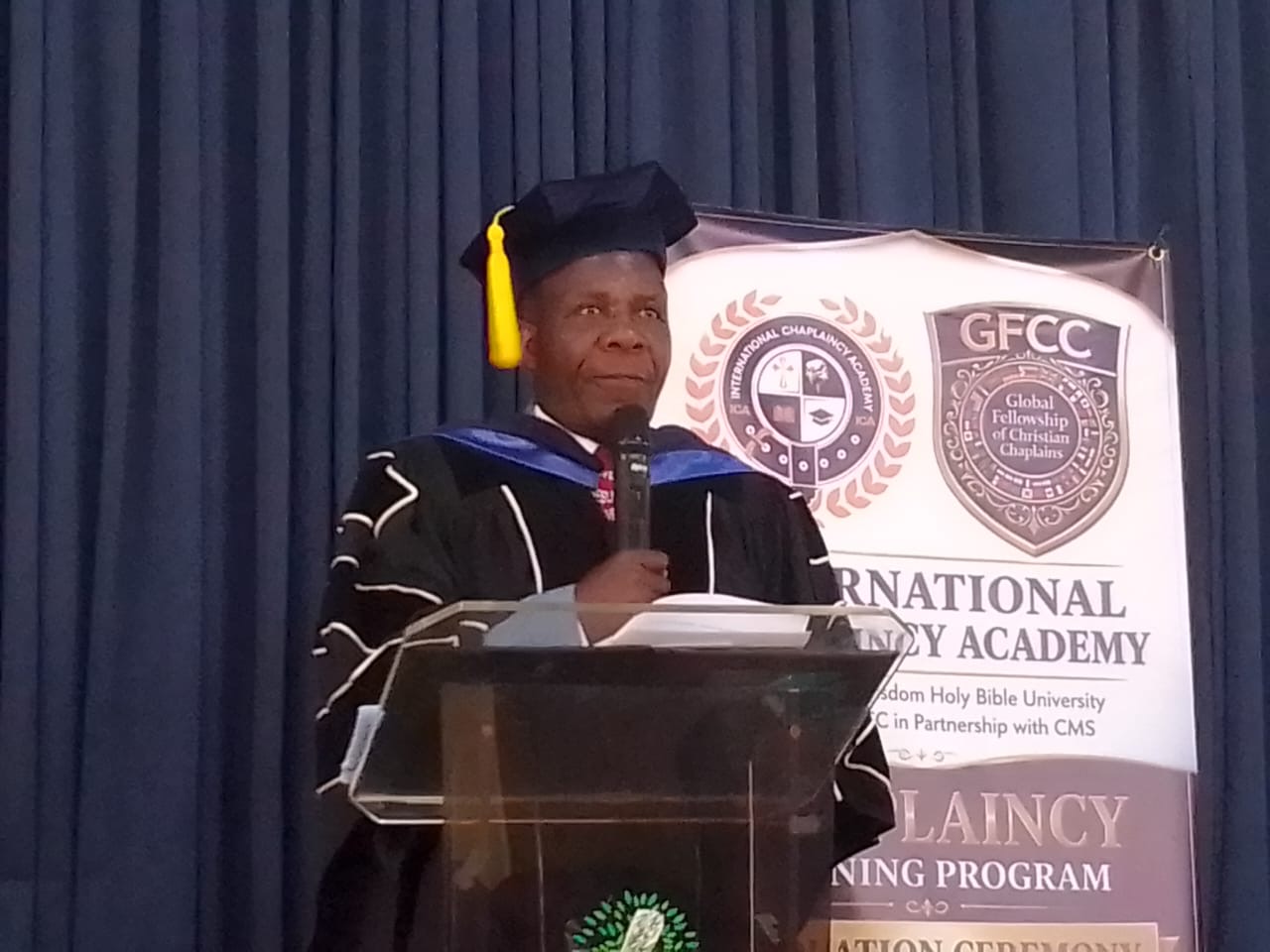
The 4th Graduation Ceremony of the International Chaplaincy Academy (ICA), an arm of the Global Fellowship of Christian Chaplains (GFCC), drew church leaders, Government representatives, academics and families to celebrate the Class of 2026 under the theme “Chaplaincy: Ministry at the Point of Human Needs.”
Guest of Honour, Bishop Dr Aderino Nyabanga, described the ceremony as not merely an academic milestone, but a historic commissioning of “spiritual responders” into a world increasingly burdened by emotional, social and psychological crises.
“Today is not merely a graduation, but a commissioning of spiritual responders into a world in pain,” said Bishop Nyabanga.
“Chaplaincy is no longer optional; it is essential. You are being deployed to stand where humanity is bleeding in hospitals, prisons, schools and communities.
“Chaplaincy is ministry beyond pulpits. It is theology in action. It is compassion institutionalised.”

Drawing from biblical teachings, Bishop Nyabanga said chaplaincy reflects the ministry of Jesus Christ, who served people in their deepest moments of need, including the sick, the poor, prisoners and grieving families.
He traced the roots of chaplaincy to the 4th century, noting its evolution from military settings to modern deployment in hospitals, prisons, schools and disaster response systems worldwide.
Today, he said, the profession has become indispensable in light of rising global challenges such as mental health disorders, substance abuse, family breakdowns and increasing suicide rates.
Turning to the local context, Bishop Nyabanga highlighted Zimbabwe’s urgent need for trained chaplains to address drug and substance abuse, domestic violence and economic stress.
He acknowledged national efforts led by the First Lady Dr Auxillia Mnangagwa in tackling substance abuse through rehabilitation programmes, noting that chaplaincy complements such initiatives by offering emotional and spiritual support.
Bishop Nyabanga, who leads Daybreak International Ministries and founded God’s Generals International Fraternity and the Legacy Builders Global Hub, said his organisations continue to complement national development efforts through humanitarian outreach aligned with Vision 2030.
“At God’s Generals International Fraternity and Legacy Builders Global Hub, we are committed to restoring dignity among widows, empowering vulnerable families and supporting Government’s Vision 2030 agenda through faith-driven community transformation,” he said.
“These graduates are a vital extension of that mission.”
He urged graduates to view their qualifications as a call to duty rather than an academic achievement.
“You are not receiving diplomas; you are receiving assignments,” he said, challenging them to embrace roles as counsellors, crisis responders and ethical leaders guided by principles such as confidentiality, integrity, emotional intelligence and continuous learning.
Key stakeholders in attendance included the Evangelical Fellowship of Zimbabwe (EFZ), the Colporteur Missionary Society, and the Council for Pastoral Counselling Education and Practice (CPCE), among other partners.
GFCC administrator Chaplain Rev Brian Macala said the graduation marked the release of trained personnel into communities at a time when moral and social challenges are on the rise.
“Our mandate is not to make profit, but to train people. We will go into society and impart the Word of God for behavioural change,” he said.
“In today’s world, young people are getting into drugs and other harmful practices, but we believe through training these men and women, they will make a difference in their communities.
“We are calling upon more people in Zimbabwe and beyond to enrol with the International Chaplaincy Academy and be trained.”
Speaking at the same event, Dr George Mapiki, Director of ICA and GFCC, said the institution is aligning its training programmes with national priorities, particularly in combating drug and substance abuse.
“I am the Director of International Chaplaincy Academy and GFCC, which means Global Fellowship of Christian Chaplains,” he said.
“We are training our chaplains and pastors to complement Government efforts in reducing drug and substance abuse, which has become a pandemic in our country.
“We are equipping them to be skilled and competent counsellors, capable of addressing complex social challenges. We are also teaching our students ICT, what we call digital platforms, where they learn to minister through the media.
“As students, we encourage them to create platforms, invite as many people as possible, and begin to address issues of drug abuse within those spaces.”
Dr Mapiki said the academy places strong emphasis on professional counselling, ensuring graduates are both spiritually grounded and technically competent to provide meaningful guidance and rehabilitation support.
Delivering remarks on behalf of CPCE, president Dr Ronoza Gwerena stressed the importance of regulation and professionalism.
“Certification is not just a formality; it is a safeguard for the communities you will serve,” said Dr Gwerena.
“You are entering a field that demands accountability, ethical conduct and continuous development.”
ICA Provost Dr Job Gurajena conferred Diplomas in Chaplaincy Studies, noting that more than 100 chaplains trained by the institution are now serving across Zimbabwe.
“This fourth graduation is proof that our mandate is alive,” he said.
“Your diploma is not a trophy; it is a tool for service.”
Among the graduates, Zambian national Bernard Nawamusha pledged to use his training to confront the growing crisis of youth drug abuse across southern Africa and beyond.
He described drug abuse as a “common cancer” affecting communities globally.
“The knowledge I have gained, I will use it in the community, in schools and in the corporate world. There is a lot of need,” he said.
Another graduand, Pastor Plaxcedes Chiota, said the training had transformed her approach to ministry.
“One thing this course has taught me is compassion. It has shown me the importance of understanding the feelings of the people we minister to,” she said.
“In chaplaincy, we know no bounds. We serve people of all beliefs, and the training has equipped me to deal with trauma and drug-related issues without judgement.”
Graduates underwent training in trauma counselling, mental health support, pastoral care, disaster response, ethical standards and digital ministry, equipping them for deployment across multiple sectors.
Stakeholders commended the collaboration between GFCC, ICA and CPCE as a model that integrates spiritual ministry with professional standards.
As Zimbabwe continues to grapple with rising cases of drug and substance abuse, mental health challenges and social dislocation, speakers noted that chaplaincy is increasingly becoming a critical support system.
In his closing remarks, Bishop Nyabanga challenged the graduates to rise to the occasion:
“Go where pain exists. Go where brokenness exists. Be the light in dark places and the voice of hope to the hopeless. Zimbabwe needs you.”
The International Chaplaincy Academy also announced that enrolment for the next intake is now open as it moves to expand its training programmes and contribution to national development through structured spiritual care services.



