Online Reporter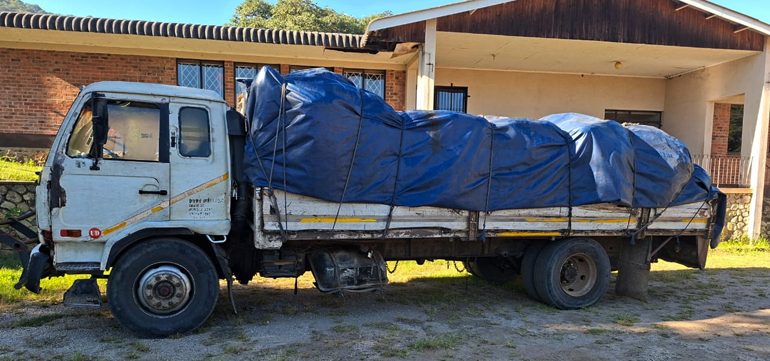
Lovemore Kadzura
Post Reporter
THE Forestry Commission has stepped up its winter campaign against illegal charcoal production, impounding haulage trucks, and confiscating more than 60 tonnes of contraband as deforestation surges across Manicaland.
This month’s intensified operations target a sharp rise in the illicit harvesting of indigenous trees, with Buhera and Chipinge districts emerging as major hotspots. Enforcement teams have already seized 1 200 sacks of charcoal—each weighing 50kg—including a 30-tonne truckload intercepted at Birchenough Bridge.
The driver of that truck was fined US$3 000, with officials stressing that filling a vehicle of such capacity requires the destruction of “scores of mature indigenous trees.”
Forestry Commission provincial manager, Mr Philip Tom, explained that the onset of winter typically triggers a spike in illegal timber felling, as charcoal producers exploit high demand for fuel.
Mopane and Musharu trees are among the most targeted species, prized for their dense wood and high energy yield.
Birchenough Bridge wards 29 and 30, along with Checheche in Chipinge, have recorded the highest levels of illicit activity, underscoring the scale of the environmental threat. Authorities warn that continued deforestation could devastate local ecosystems, accelerate land degradation, and undermine rural livelihoods dependent on forest resources.
“We have intensified operations against deforestation targeting indigenous trees that is being done by illegal charcoal makers. We are now in the winter season, and this is the period when illegal timber harvesting and making of charcoal is intensive. So far, we have confiscated 1 200x50kg sacks of charcoal, and we are active on the ground. Our hot spot areas are Birchenough Bridge in Buhera District, especially wards 29 and 30. In Chipinge District, the challenge is more pronounced in the Checheche area. They are mainly targeting the Musharu or Mopane tree for making the charcoal. We have made a number of arrests and culprits are fined, and the charcoal is confiscated.
“Last week, we impounded a 30-tonne haulage truck fully loaded with charcoal in Buhera, and the culprit was made to pay a fine of US$3 000. For one to fill up a 30-tonne truck with charcoal, it means a lot of indigenous trees would have been destroyed and burnt to make the charcoal. We want to make it clear that even charcoal from Mozambique is not allowed in this country and all those found selling the product will be arrested. Traditional leaders are helping us to curb deforestation as they are the ones leading in making reports of illegal activities in their area. All the cases we have dealt with, most of them were brought to our attention by village heads,” said Mr Tom.
Mr Tom also revealed that Manicaland Province is targeting to plant 10 million exotic and indigenous trees this year, with Mutiti being the tree of the year.
“This year our target as Manicaland is to plant 10 million trees, with seven million being exotic and three million indigenous. The exotic will mainly be planted by commercial companies with plantations. The planting is ongoing across the province and we are confident that we will surpass the target. The tree of the year is Mutiti (Erythrina abyssinica), and we are encouraging individuals, communities, companies, schools and other stakeholders to join in afforestation activities,” said Mr Tom.
Meanwhile, environmental activist, Mr Never Bonde said there is a need to impose punitive measures on illegal timber logging, as fines are proving not to be deterrent enough.
“There are people who are in the full-time business of charcoal making. They keep on doing that because when caught they just pay a fine. The laws must be tightened to protect the environment. These indigenous trees take ages to mature and are being destroyed in minutes. Indigenous forests, particularly in Buhera, Chipinge and Nyanga, are under siege from poachers. In Makoni, Mutare and Mutasa, forests are depleting due to tobacco farming and this means Manicaland Province has to up the game in fighting the scourge. People must also be aware that the use of charcoal as heaters exposes them to dangerous carbon monoxide which can cause their death,” said Mr Bonde.