Online Reporter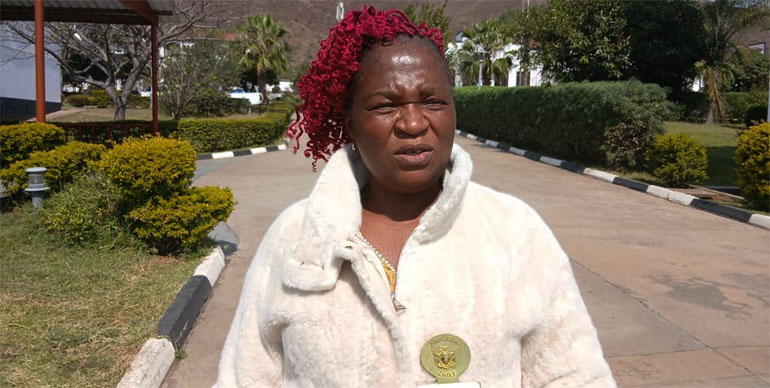
Tendai Gukutikwa
Post Reporter
FOR generations, the image of a traditional leader has been that of an elderly man seated at the head of a community court, presiding over disputes and safeguarding customs handed down through the centuries.
Women have long been custodians of culture within families and communities, yet rarely have they been entrusted with the highest traditional offices. That reality is slowly changing.
When Mrs Ruth Manyuka was installed as Chief Chitauro, of Buhera on April 24, 2026, history quietly unfolded.
Her installation, did not merely fill a vacancy in the Chitauro chieftainship, but placed the only woman among the province’s 34 chiefs, placing her at the centre of a centuries-old institution traditionally dominated by men.
Her appointment comes at a time when discussions around women’s participation in leadership are gathering momentum, with the Government and stakeholders pushing for greater inclusion in decision-making positions.
When The Manica Post caught up with her recently, it was evident that she is, in many ways, a woman of steel.
Graceful in appearance, yet firm in authority, Chief Chitauro has a rare ability to make people feel welcome while commanding unquestionable respect.
Those who meet her are greeted by an ever-smiling face, but beneath that warmth lies the sternness of a leader determined to protect her people’s traditions, administer justice fairly and prove that leadership knows no gender.
Chief Chitauro said instead of allowing the weight of history to intimidate her, she has embraced it.
Being the only female chief in the vast province is not a burden she carries reluctantly.
It is a responsibility she wears with pride.
“I am happy because this is bigger than me. It shows that women are capable of occupying the highest leadership position in our traditional structures. I hope my appointment encourages other women to believe in themselves. We should never think certain positions belong only to men. Leadership is about integrity, wisdom, service and commitment to the people,” said Chief Chitauro, adding that every woman has the potential to lead if given the opportunity.
“I always encourage women in my area not to be afraid of stepping into decision-making positions.
If we continue doubting ourselves, society will continue doubting us too. Women have ideas, wisdom and understand the challenges affecting families and communities. They deserve to have their voices heard where important decisions are made,” she said.
Behind her warm smile lies an unmistakable resolve.
Her words carry particular significance in light of statistics recently released by the Ministry of Women Affairs, Community, Small and Medium Enterprises Development, on women’s participation in leadership, decision-making and peacebuilding.
The figures paint a sobering picture of gender imbalance in Manicaland.
Of the province’s 34 chiefs, only one is a woman. At headman level, only five out of 97 positions are occupied by women – all under Chief Mutasa’s jurisdiction.
The picture is even starker at village level, where just 87 women serve as village heads out of 3 125 positions. These numbers tell the story of generations in which traditional leadership has remained almost exclusively male-dominated.
For Chief Chitauro, however, these statistics represent, not discouragement, but opportunity.
“Being the first means others can follow. I believe our nation is gradually becoming more accommodating towards female traditional leaders. Culture is not static. It grows with society while preserving our values. I am hopeful that more women will one day become chiefs because there is nothing that says women cannot serve their communities with distinction,” she said.
Her optimism is rooted not in theory, but in lived experience.
Chief Chitauro said her early days as chief were far from easy. Taking charge of a traditional court as a woman meant confronting attitudes entrenched over generations. Some men, and even women, openly questioned her authority, while others struggled to accept instructions from her.
“It was challenging during my first days. Some men found it difficult to take instructions from a woman. There were moments when people tested my authority simply because I am a woman.
“They were used to male chiefs, and suddenly they had to adjust to a different reality,” she recalled, adding that instead of responding with anger or confrontation, she chose consistency.
“I remained patient because leadership is not about proving a point. It is about demonstrating fairness and earning people’s confidence through actions. Today, many of those who initially doubted me now respect me as their chief. They now understand that leadership is not determined by gender. They know there is no one else coming to replace me simply because I am a woman,” she said, adding that respect cannot be demanded, but must be earned.
“For me, every court session, community meeting and decision is another opportunity to reinforce that lesson. My philosophy is simple – treat every person fairly, listen before making judgments, protect culture while embracing progress, and above all, serve without fear,” she said.
Unlike many leaders whose appointments alter the course of their personal lives completely, Chief Chitauro has refused to abandon the work that shaped her long before she ascended to the throne.
Away from community meetings and court sessions, she remains an active farmer.
The rhythms of agriculture continue to define her daily life.
“I am a farmer by profession and I have not stopped practising because I am now a chief. I still do poultry and crop farming because leadership should never disconnect us from the lives of ordinary people. Farming reminds me of where I came from. It keeps me grounded and connected to the realities that my people face,” she said with a broad smile.
She understands drought because she plants crops herself. She appreciates the importance of agricultural inputs because she depends on them too. She understands the struggles of rural women because she continues to live them.
Beyond her court and the farm lies another equally important responsibility — motherhood. With three children — two daughters and a son — motherhood has strengthened rather than weakened her leadership abilities.
“Being a mother teaches patience, compassion and responsibility. Those are the same qualities required when leading people. Daily you are solving problems, listening to different viewpoints and trying to ensure everyone is treated fairly,” she said.
Her journey also carries symbolic significance for young girls growing up in rural communities. For generations many have looked at traditional leadership as something forever beyond their reach. Now they see a woman occupying it. Without uttering a word, that image expands possibilities.
The gender officer in the Ministry of Women’s Affairs, Community, Small and Medium Enterprises Development, Mrs Junior Muchuchu recently warned that deeply rooted societal attitudes continue to restrict women’s participation in leadership despite constitutional guarantees of equality.
Mrs Muchuchu stressed that women must not merely occupy seats in leadership structures, but meaningfully participate in shaping decisions that affect communities — observations that resonate with Chief Chitauro’s experiences.
While acknowledging the challenges, Chief Chitauro believes attitudes are changing faster than many realise. Communities now judge leaders by competence rather than gender.
“People eventually look at results. They want a leader who is fair, approachable and committed to development. Once they see those qualities, whether you are a man or a woman becomes less important,” she said.
Today, many of those who once questioned whether a woman could successfully occupy the office of chief now speak of her leadership with respect. Her success is reshaping perceptions, making her not merely a traditional leader, but a powerful symbol of transformation.