admin
admin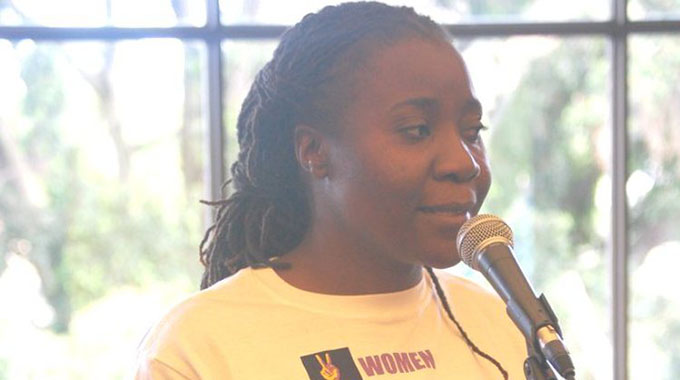
Elliot Ziwira @ The Book Store
Batsirai Chigama, whose poems have been featured in 15 collective anthologies, is one of the few Zimbabwean women who have published solo anthologies in poetry. Her poetry collection “Gather the Children” (2018), which was launched on March 2, has already received a standing ovation on the literary scene. She is also a performance poet, which has seen her performing at regional festivals in South Africa, Botswana, Malawi and Zambia.
Here Batsirai Chigama (BC), opens up to At the Bookstore’s pen Elliot Ziwira (EZ) about her experiences as a performance poet and writer as well as her aspirations as an artiste.
EZ: In brief, who is Batsirai Chigama?
BC: A seeker of answers, striving to understand the world around her and perhaps one day find peace and learn to enjoy life as it comes.
EZ: Waal that’s philosophical. I understand your journey as an artiste started with performance poetry. What prompted the shift from being a spoken word artiste to a published poet and writer?
BC: Performance can be tiring and the gigs come far in between and I thought to myself there is another market I should look at – the reader of poetry. As of whether I have transitioned well, that is for the readers to say.
EZ: What would you consider to be your strength? How has performing and writing helped you in sharing your experiences with your audiences?
BC: First you write, but I think I have worked on performance harder and it will take a bit of time for me to settle as a page poet. Most times someone comes to you after a performance and says; you spoke to me or I follow you on social media and read your work -that to me is encouraging. It shows that my work is speaking to someone.
EZ: So in your view, the stage pays more, in terms of self-satisfaction and reaching out to your fans, as compared to the written word? Do you think performance poetry is more appealing?
BC: I don’t think there is a way of comparing the two. While performance poetry offers instant satisfaction with instant feedback, it is always gratifying to have someone tell you that they read your work and give you their opinion on it too.
EZ: A perusal around the Bookstore’s shelves reveals that there are very few solo anthologies of poetry published by women. In view of your own experiences, what can you say could be the reason why?
BC: There could be more we are not aware of. The tragedy I have seen is that most people publish books and after that they don’t know what to do with them. The books sit in boxes gathering dust, so very few people know of their existence.
EZ: So you are suggesting that the books are there somewhere, but are not finding their way to bookshops? Are the books really there?
BC: I want to believe they are there. If not in the women’s heads (not places to keep things), in boxes in a house somewhere.
EZ: What do you think should be done to improve on that?
BC: As writers I think we should look out for the success stories and learn from how others have done it and try and improve the way we market our books/works whichever way.
EZ: What are your contributions to the arts industry so far. In terms of anthologies that you featured in, international and national festivals that you attended, as well as any other publications?
BC: I am featured in 15 anthologies and have attended several festivals regionally and have toured Denmark performing and facilitating spoken word workshops in schools.
EZ: And your HIFA experiences?
BC: I had taken a hiatus of about six years, I think. I went back this year, many thanks to HIVOS, it was an awesome experience, with a full band and cool crowd. I don’t think I answered the question, did I?
EZ: Part answer to a probing question I guess; but seeing that you performed only yesterday (May 3, 2018), I was expecting more on your experiences with HIFA and your performance after a six-year hiatus.
BC: HIFA has always been great, you meet a lot of foreign poets and learn how they are working their art and see in what ways you can grow yourself.
EZ: There is this kind of hopelessness, and defeatist attitude in your anthology “Gather the Children” (2018), which you launched in March. What could be the reason behind that? Are there no stories of hope any more around us?
BC: I want to believe the stories are there. I, however, feel they are overshadowed by too much strife. As writers we feed from what the environment is feeding us. We have choice though on what we write about, but some things just write themselves into our narratives.
EZ: A case of the soul crying out?
BC: True, if you write anything glossed over in happiness when your soul is saddled with sadness, it must feel like you are lying to yourself and the world too.
EZ: Who are these children in “Gather the Children”? Are you one of them?
BC: All those Zimbabweans scattered in lands far and near. I am one of them, even though I am here; I am lost in a world of desperation. I too want to come home to comfort.
EZ: So living in exile is as desperate as living homeless at home? But could these scattered children also not contribute to what they aspire for? Is there nothing for them to gather from this dispersion?
BC: More like it doesn’t matter you are in your land of birth, just like those who are scattered you are a stateless human being, yes. I don’t know how we can work this out. How we can begin to rebuild ourselves by admitting to the things that have visited us and pave way for happier stories. All I know is that we all need to make a conscious effort to begin to walk towards some kind of light and that light is good governance.
EZ: Did you at one point consider leaving home for the comfort of homeless exile?
BC: Yes I did, but it didn’t work out. I feared a lot of things. I am not a risk taker and I like to be close to my family in case anything happens.
EZ: In your anthology “Gather the Children” there is adept use of metaphors, one of which are tongues; muted tongues, archived tongues, laden tongues, sutured tongues. What is it with tongues and your experiences as an artiste, a woman and a Zimbabwean?
BC: There is a danger in speaking up to issues political, patriarchal, etc., hence, the assumption that we are a docile people, yet still our tongues are laden with things we need to speak about. I want the freedom that Freedom Nyamubaya had, that we speak freely to both our sadness and happiness.
EZ: Are you saying artistes are gagged, women especially, yet Freedom Nyamubaya could speak her heart? Is there any hope in silence, then, if you as an artiste and the presumed voice of the voiceless inspire silence?
BC: I would love to answer this question, but I can’t. Does that answer you? The hope of self-combusting perhaps! Wounds fester in silence.
EZ: You sound too crestfallen for an artiste, but anyway I will let it pass. Is there any new work in the offing?
BC: I can say my second manuscript is almost done, but I am taking a break and working on getting “Gather the Children” out there as much as I can.
EZ: How has been the marketing of the book so far? And what do you intend to do as a way of reaching out to a wider audience?
BC: It has been great. The book is now on Amazon and hopefully more sales will come through that channel. I have also been invited to attend a couple of international festivals and I am looking forward to that as well.
EZ: Any parting words or anything that you would want your readers and fans to know?
BC: My gratitude goes to team “Gather the Children”, men and women who offered their expertise to make this book happen. Also to the fans, thank you for your support, it helps me to keep going, to keep believing.



 Online Reporter