Chronicle Editor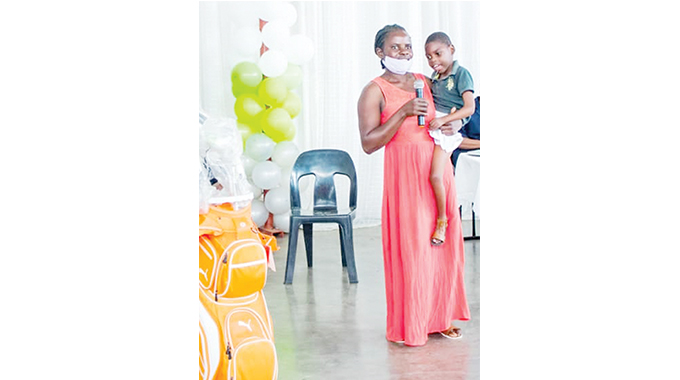
Hazel Marimbiza
Seven years ago, following a great pregnancy, Ms Brenda Munkuli became a mum and she knew there was a possibility that her son could have problems — he was born prematurely — but she never imagined the difficulties that lay ahead.
Though he seemed fine at first, after four months, Ms Munkuli began to notice that sometimes Michael seemed very floppy and could barely sit. Other times he seemed to stiffen.
“I knew he wasn’t hitting the same growth milestones like other children,” said Ms Munkuli.
After several doctors’ appointments, Michael finally received a diagnosis of cerebral palsy (CP).
Michael has CP, an incurable and permanent condition that affects the brain. He has seizures and he drools because his brain doesn’t tell him to swallow.
According to research, CP is a common pediatric disorder occurring in about 2 to 2,5 per 1 000 live births. It is a chronic motor disorder resulting from a non-progressive (static) insult to the developing brain. CP is the clinical presentation of a wide variety of cerebral cortical or sub-cortical insults occurring during the first years of life. The commonest cause of CP remains unknown in 50 percent of the cases; prematurity remains the commonest risk factor. Children with CP suffer from multiple problems and potential disabilities such as mental retardation, epilepsy, feeding difficulties, and ophthalmologic and hearing impairments.
When these various CP symptoms started to attack Michael, Ms Munkuli, found it difficult to cope.
“For weeks, I pulled away from everyone. I was mad and my anger eventually turned to horrible sadness. I felt like the son I dreamed about and hoped for was dead. I was so depressed,” she said.
Her situation became unbearable when her husband neglected Michael.
“Before my husband knew Michael had CP, he genuinely loved him. But after he found out about his disability he could not accept our son. I vividly remember soon after I told him that Michael has CP he did not respond. He just became indifferent so I used to go to the hospital alone with my child. He would not contribute any money for the hospital bills whenever Michael was sick. It became hard staying with my husband because he just did not want the child,” said Ms Munkuli.
As days went on her husband blamed her for their son’s disability leading to their marriage collapsing.
“My husband started saying I and my relatives had bewitched the child so eventually we had to divorce,” she said.
Ms Munkuli represents several women whose marriages have collapsed due to giving birth to children with disabilities.
Perhaps what is most heart rending is that when the marriage ends, the mother is left with the burden of taking care of the disabled child.
In the case of Ms Munkuli, she now fends for her child alone because his father made it clear that he will not spend any money on the child.
“After leaving my husband I went to live with my sister who helped me immensely though I could see that she was also struggling to make ends meet. I decided to look for a job as a maid. I don’t get much money but its way better than not working,” said Ms Munkuli.
Although she can afford to buy food for her son, there are some things which she wishes to do for him but she cannot — like sending him to school.
“At his age he should be going to school to learn like other children but I cannot manage. He once got a place at Jairos Jiri but I did not have money to pay his fees,” said Ms Munkuli.
Other things which break Ms Munkuli’s heart include her son being neglected by other children of his age.
“Most children run away from him so I end up making him stay in the house the whole day and most times it is just the two of us and we just play together, “said Ms Munkuli.
Exclusion of persons with disability is not a new phenomenon. From a worldwide historical standpoint, people living with disabilities have been scorned, murdered, abandoned to die and sentenced to permanent exclusion. According to research, Greeks abandoned their disabled babies on hillsides to die, while early Chinese left their people with disabilities to drown in rivers. In Europe, Nero Commodus is believed to have used bows and arrows to kill physically disabled people. Such negative attitudes towards people living with disabilities are still predominant in Africa. In most parts of Southern Africa including Zimbabwe, children born with albinism used to be killed immediately after birth. Further, people with disabilities in Zimbabwe are often ostracised and treated as if they are less human. A number of negative opinions on the causes of disabilities persist in Zimbabwe such as linking disability with witchcraft or maternal promiscuity.
But amid all the stigma Ms Munkuli encountered, she found hope after meeting Mrs Fadzai Ruziye, founder of Michael Tinotenda Foundation (MTF) a local non-profit organisation whose mission is to nurture and strengthen families with special needs children.
“I met Mrs Ruziye when my son was doing therapy at King George. She is a real mother and a pillar of strength. I even remember during the first 21 days of lockdown we experienced due to Covid-19, I was stranded but through her organisation she brought me food and medication for Michael.
“Also MTF conducts workshops in which I get to meet other women with children with CP and this gives me hope.
Now I have the strength to tell women who have children living with CP to be patient and to know that a child is a gift from God. You can’t throw away your child. I tell them to always pray because they will face challenges but God will grant them a way out,” said Ms Munkuli.
Mrs Ruziye who is also a mother of a son living with CP, believes that although CP is a disorder that can impact any and all aspects of a person, it does not define who that person is.
“These children also want to be loved and cared for just like other children without disabilities. They want to be supported and encouraged to excel in life because they are also capable of achieving great things,” she said
Mr Sipho Ncube, 23, who is living with CP and a beneficiary of MTF is a perfect example of how children with CP can excel if supported.
“I am an artist and next year I will be graduating from Mzilikazi Arts and Crafts Centre. I also make bangles and necklaces from beads which I sell in town so that I can be able to support myself,” said Mr Ncube.
Apostle Cephas Mweyamweya from Christ’s Foundation Ministries, who has partnered with MTF to aid the needs of children with special needs, said for more children with disabilities to excel just like Mr Ncube, they need support from both parents especially from the fathers.
“As a man I encourage other men to take responsibility in the event that the mother gives birth to a child with special needs. I am saying this because in most instances I see women in the forefront, and all the burden of taking care of the children living with disabilities is shouldered by them,” said Apostle Mweyamweya.
He also commended Mrs Ruziye’s husband for standing with her after she gave birth to their son.
Unlike Ms Munkuli and many other women, when Mrs Ruziye discovered her son had CP, her husband greatly supported her.
“To me it was a bit different because I had the support from friends, relatives and most importantly my husband,” said Mrs Ruziye.
But after conducting research she soon discovered that most women are neglected by their husbands after giving birth to disabled children that is why she founded MTF to support these women and to make them and their children feel comfortable in society.
In an effort to help children living with CP and caregivers, MTF provides tangible resources, therapies and clinical knowledge on how to give best care to the child in a community based environment.
“We assist children living with CP and other related physical challenges with therapies on a regular basis since they derive physical benefit such as improved coordination, balance, mobility muscle strength and speech. We also work to make sure children have cognitive benefits like concentration, language development, self-reliance and confidence,” said Mrs Ruziye.
As part of their charity work, last week MTF donated Christmas food hampers to guardians of children living with CP. Food hampers will also be donated to other cities in the coming weeks.
MTF intends to reach out to the less privileged in every corner of Zimbabwe. Their vision is to have a day care centre for the children.
“The nature of disability is that most children require attention so it becomes hard for the parent to leave the child hence we are coming in to build the bridge and capacitate the caregiver.
“Our wish is to have a day care centre which provides all therapies so that the parents can leave their children learning a they hustle. We also hope that more individuals and organisations will partner us as we work towards ensuring a warm future for children with CP,” said Mrs Ruziye.



 Online Reporter