

 admin
admin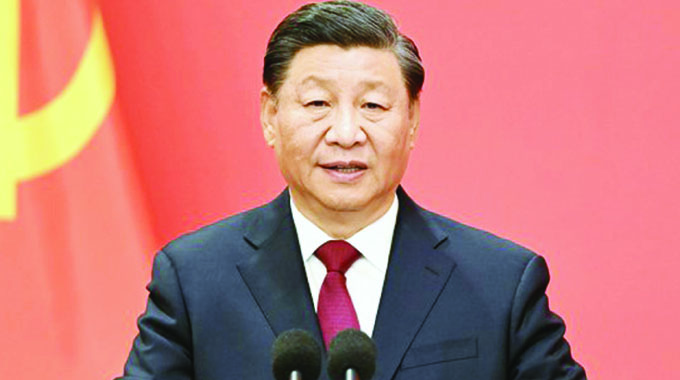
Gibson Nyikadzino
Correspondent
It is now clear that while the United States can directly mobilise against one threat (as it calls them), it cannot balance off two threats.
New realities are unfolding and emerging.
The US’ challenging of Russia through Ukraine is only the furthest it can go.
It cannot balance off China, despite that it is working hard to contain it through establishing military points in most of Asia.
The rise of Chinese influence and the decline of Westernism is set to reduce global instability, particularly ease regional instability in East Asia.
This rise is also reducing Western influence all over.
Instead of bandwagoning, Chinese actions are providing a clearer power-balancing act from Western aggression and working to make the worldscape more plural, multilateral and rooted on the development trajectory of a people based on their values.
But it does not mean states cannot bandwagon.
It is showing the world that it is a responsible stakeholder willing to enlighten other dominant powers on the necessity of having a multilateral world order that is anchored on peace and mutual co-operation.
The Asian giant is not only an economic power, but a nation with a civilisational character that spans centuries whose values are premised on dialogue, leadership and development that is human centred.
These Chinese qualities were expressed last Friday when it brokered a diplomatic agreement to re-establish ties between Iran and Saudi Arabia, after close to seven years of tensions.
Such a diplomatic balancing act between the two Middle-Eastern states is quite revealing and signals new global shifts in the international (re)distribution of power, an unleashing of new socio-political forces and the global realignment of diplomatic relations.
The Western community is surprised that Chinese influence is not only being asserted in the economic, technological and research fields, or through engagements premised on the Belt and Road Initiative (BRI), but also on the diplomatic front.
Rewriting history
The Chinese-mediated agreement between Iran and Saudi Arabia is likely to dash US hopes of mediating a peace agreement between Israel and Saudi Arabia to form a united front against Iran.
Saudi Arabia now knows the US’ behaviour that it is a country without moral principle.
For several years, it exploited the mistrust between the two states to its advantage, a gap that Chinese mediation is both exposing and filling.
It should be understood that the presence of the US in the Middle-East was manufactured and asserted through war.
In the late 1970s when the Soviets during the Cold War invaded
Afghanistan, the US supplied Afghan jihadists with weaponry for the foreign policy of the Americans was to arm everyone who was against “communist influence”.
With the Soviets having been driven out of Afghanistan, the US further entrenched its Middle-East presence by playing a key role in the Gulf War, in which the quasi-defeat of Iraqi gave room for the extension of American influence in the region.
From these adventures, the biggest casualties were Arab and Muslim nations whose animosity was created by the US because of exploiting civilisational differences from the West and the Arab and Muslim countries. China is however rewriting political and diplomatic history in that region.
Asian-Islamic Connection
The future of global peace will be determined by the relationship that will exist between Asian countries and those of the Middle-East to counter the mentality of the US to dominate global affairs.
Cementing of relations between these two means countering Western power and universalism.
This alliance has come into existence not because Asian and Arab nations are hostile to the West, but rather because of the ways in which their traditions allow people to voice concerns about issues for which the West has some of the blame.
States throughout the world feel they can no longer accept the West’s military, political, economic, and cultural supremacy.
For the rest of Asia, America might be considered a friend by some countries, but China can never be seen as an enemy in that region.
It is also possible and beneficial to locate the idea of Asian countries having enormous respect for China by looking at the issue objectively.
Before the coming of the West, China was the only significant power in East and Southeast Asia, hence its ability to be respected in that hierarchy in Asia and Southeast Asia.
Annoyance to the West
With its engagement in the Saudi-Iran accord, China is flexing its diplomatic muscles in the Middle East, adding to a gradual rise in its stable relations in Africa in the past two decades.
In Africa, it has also expanded its political clout and business connections with the Belt and Road Initiative by providing loans for mining and infrastructure projects across Africa, something the West cannot do.
Chinese President Xi Jinping is also, on the other hand, making steady progress toward his goal of making his nation a force that can help unbundle the world stage through economic and diplomatic leadership for the benefit of others.
In one of his most read books, The Clash of Civilisations and the Remaking of the World Order, Samuel Huntington was precisely perspectival in foreseeing China’s place in the world.
“Economic growth generates military power and political influence, but it can also stimulate political development and movement toward a more open, pluralistic and possibly democratic form of politics,” he said.
China is helping the world by providing leadership to see that the global political system should change in response to developments are happening by modifying, realigning and restricting political arrangements until an equilibrium is reached for mutual benefit.
Charm of soft power
With the US’ popularity plummeting around the world, the transformation of China’s image around the world is as a result of key factors that include some US missteps after the post- 9/11 counter-terrorism myopia.
This transformation is also due to a growth in China’s ability to influence by persuasion rather than coercion.
This attractiveness can be conveyed through various means, including culture, diplomacy and the gravitational pull of its economic strength.
As a result of this, to many other countries, and Zimbabwe in particular, China remains an “all weather friend”.



 Online Reporter