Chronicle Editor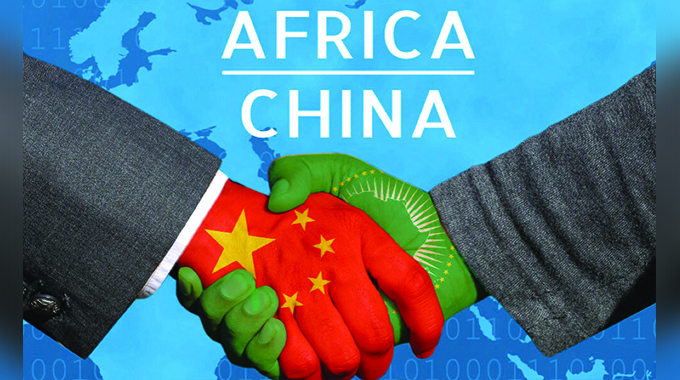
Tichaona Zindoga
Over the years, a significant body of academic literature has been generated by scholars who claim that China’s relations with African countries such as Zimbabwe are for “elite actors”, meaning that they benefit only influential people in Government and the ruling party.
Scholars such as Chipake and Bischoff (2019), Ganda (2020) and Matamanda et al (2021) have raised questions about the overarching involvement of “elite actors” in Government, particularly the ruling Zanu-PF, which has links to China’s ruling Communist Party of China and the lack of agency to influence balanced relations between China and Africa.
A number of other studies that have reinforced the idea that the relations between Zimbabwe and China are skewed or lopsided and exploitative with some scholars and commentators going to the extent of calling China the “new coloniser” and corrupting influence, have not been properly debunked.
These wrong perceptions are often amplified by the media. The 2024 Forum on China-Africa Co-operation (Focac) Summit held recently proved that contrary to common assertions by biased commentators and scholars, ordinary people can benefit and stand to benefit, more than the so-called elites.
President Xi Jinping who hosted the summit under the theme, “Joining Hands to Advance Modernisation and Build a High-Level China-Africa Community with a Shared Future”, stated categorically that, “We should jointly advance modernisation that puts the people first.”
He said the ultimate goal of modernisation “is the free and full development of human beings”.
He added: “China will work vigorously with Africa to promote personnel training, poverty reduction and employment, enhance the sense of gain, happiness and security of the people in the course of modernisation and ensure that all will benefit from the process.”
A careful reading of the outcomes of the summit, particularly the proposed “Ten Partnership Actions”, demonstrate that the key beneficiaries of the programmes and actions that China will embark on with African countries are ordinary people, not elites or institutions of Governments – and this should be seen in the proper context.
The majority of the Partnership Areas – eight out of 10 or 80 percent – have direct bearing and benefits for the people in Africa with practical programmes and projects that China will carry out in partnership with African governments.
These are, the Partnership Action for Trade Prosperity in which China will voluntarily and unilaterally open its market wider, give zero-tariffs for African goods and expand market access for African agricultural products, deepen co-operation with Africa in e-commerce and other areas.
The Partnership Action for Industrial Chain Co-operation will see China push forward the Pilot Zone for In-depth China-Africa Economic and Trade Co-operation and launch an African “SMEs empowerment programme”.
Under this, China will assist to build a digital technology co-operation centre and initiate 20 digital demonstration projects to harness the latest round of technological revolution and industrial transformation.
The Partnership Action for Connectivity will see China carry out 30 infrastructure connectivity projects in Africa (meaning transport and communication infrastructure) and assist in the development of the African Continental Free Trade Area and deepen logistics and financial co-operation for the benefit of trans-regional development in Africa.
Under the Partnership Action for Development Co-operation, China will implement what it calls “1 000 small and beautiful livelihood projects”. This will be done through the financing of the China-World Bank Group Partnership Facility to boost Africa’s development.
Further, China pledged to support Africa’s hosting of the 2026 Youth Olympic Games and the 2027 Africa Cup of Nations.
China offered to establish with Africa, a hospitals alliance and joint medical centres and pledged to send 2 000 medical personnel to Africa and launch 20 programmes of health facilities and malaria treatment.
Under this Partnership Action for Health, China is encouraging Chinese companies to invest in Africa’s pharmaceutical production and make efforts to help Africa with epidemic response, that is, fight diseases.
China expressed willingness to support the development of the Africa Centres for Disease Control and Prevention to strengthen public health capacity in African countries.
The next area of focus, the Partnership Action for Agriculture and Livelihoods, will see China providing funds for emergency food assistance, building of standardised agriculture demonstration areas in Africa, send 500 agricultural experts and establish a China-Africa agricultural science and technology innovation alliance.
China said it will implement 500 programmes in Africa to promote community welfare. It also said, it will encourage two-way investment for new business operations by Chinese and African companies, enable Africa to retain added value and create at least one million jobs for Africa.

Africa’s young people – who are the majority and the future of the continent – have a chance to benefit from China’s co-operation; and this may turn out to be a game changer. Under the Partnership Action for People-to-People Exchanges, China will implement the Future of Africa-Vocational Education Co-operation Plan, establish together an engineering technology academy and build 10 Luban Workshops. Lu Ban is an ancient Chinese woodcraft master who represents the Chinese tradition and spirit of craftsmanship.
The Luban Workshop, a Chinese vocational training programme, is named after this outstanding Chinese man. It aims to nurture workmen around the world that are highly skilful, professional and innovative.
The programme was initiated and firstly implemented by the government of Tianjin municipality. Following the spirit of craftsmanship of Lu Ban, China shares with other countries vocational education models and vocational skills that cultivate competitive local skilled talents.
According to one Chinese official media outlet, it energises the co-operation between Chinese schools and foreign educational institutions, enterprises and governments, paving a new path of development featuring joint contribution and shared benefits.
Further, China will provide 60 000 training opportunities to Africa, mainly for women and youths. China said it would launch the “Cultural Silk Road” programme as well as an initiative of co-operation on innovation in radio, TV and audio and visual programmes.
Lastly, China pledged, under the Partnership Action for Green Development programme, to launch 30 clean energy projects in Africa, put in place meteorological early warning systems, and carry out co-operation in disaster prevention, mitigation and relief as well as biodiversity conservation.
A China-Africa forum on peaceful use of nuclear technology is being considered, which will incorporate establishing 30 joint laboratories and collaborate on satellite remote sensing and lunar and deep-space exploration. All this is designed to help with green development in Africa – and its people.
On close analysis, only the first and tenth partnership areas, namely the Partnership Action for Mutual Learning among Civilisations and the Partnership Action for Common Security could be said to be largely focused on “elite” or political cooperation without direct connection to ordinary people.
The first deals with China building a platform for governance experience sharing, a China-Africa knowledge network for development and 25 centres on China and Africa studies, which will be utilised to cultivate talents for governance and invite 1 000 members of African political parties to China to deepen exchanges of experience in party and state governance.
The other area, will see China opening grants in military assistance, provide training for 6 000 military personnel and 1 000 police and law enforcement officers from Africa and invite 500 young African military officers to visit China.
The two sides will conduct joint military exercises, training and patrol, carry out an “action for a mine-free Africa,” and jointly ensure the safety of personnel and projects.
In all fairness, even the latter two areas, above-mentioned, have benefits that accrue to ordinary people, including ensuring peace and security and enhancing good governance with lessons from China. This essentially means that all the areas highlighted above – the outcomes of the 2024 FOCAC summit – stand to benefit the people of Africa.
The 51 billion dollar question
To any neutral observer, the scale and impact of these projects, if fully implemented, are massive; and that ordinary people can benefit directly and indirectly. The youth, who constitute the majority of Africa’s population at over two-thirds in proportion can benefit, in a sense, doubly. It is the best time for empowerment opportunities for young people of Africa, thanks to China.
In this analysis, I have not even mentioned that the government of the People’s Republic of China is going to provide approximately US$51 billion in the next three years to implement the 10 partnership actions.
The key question, however, is how the people of Africa are going to claim these benefits and opportunities. As long as ordinary people, including and especially young people, do not actively participate and offer themselves to pragmatically participate in this cooperation, it will be a huge missed opportunity.
It is the duty of people with knowledge and influence to assist Africans to claim these benefits, and scholars, think tanks and the media should assist in highlighting these opportunities and inform policy actions by home governments to harness them.
Citizens also have a duty to take authorities to account for their actions and inactions regarding how they interact with China, since governments claim to be representing their populations. An active citizenry aware of its civic duties and need to develop, must proactively demand action and accountability in how they are tied to international cooperation and agreements as well as exploitation of their resources.
The media have an extra responsibility to re-frame China-Africa cooperation and focus on the bigger picture of positive impact that China will have on Africa in the next three years and beyond, not just focus on minor, negative issues.
*Tichaona Zindoga is the Director of Ruzivo Media and Resource Centre think tank that specialises in analysing global and local issues with particular interest in China-Africa relations.



 Online Reporter