Online Reporter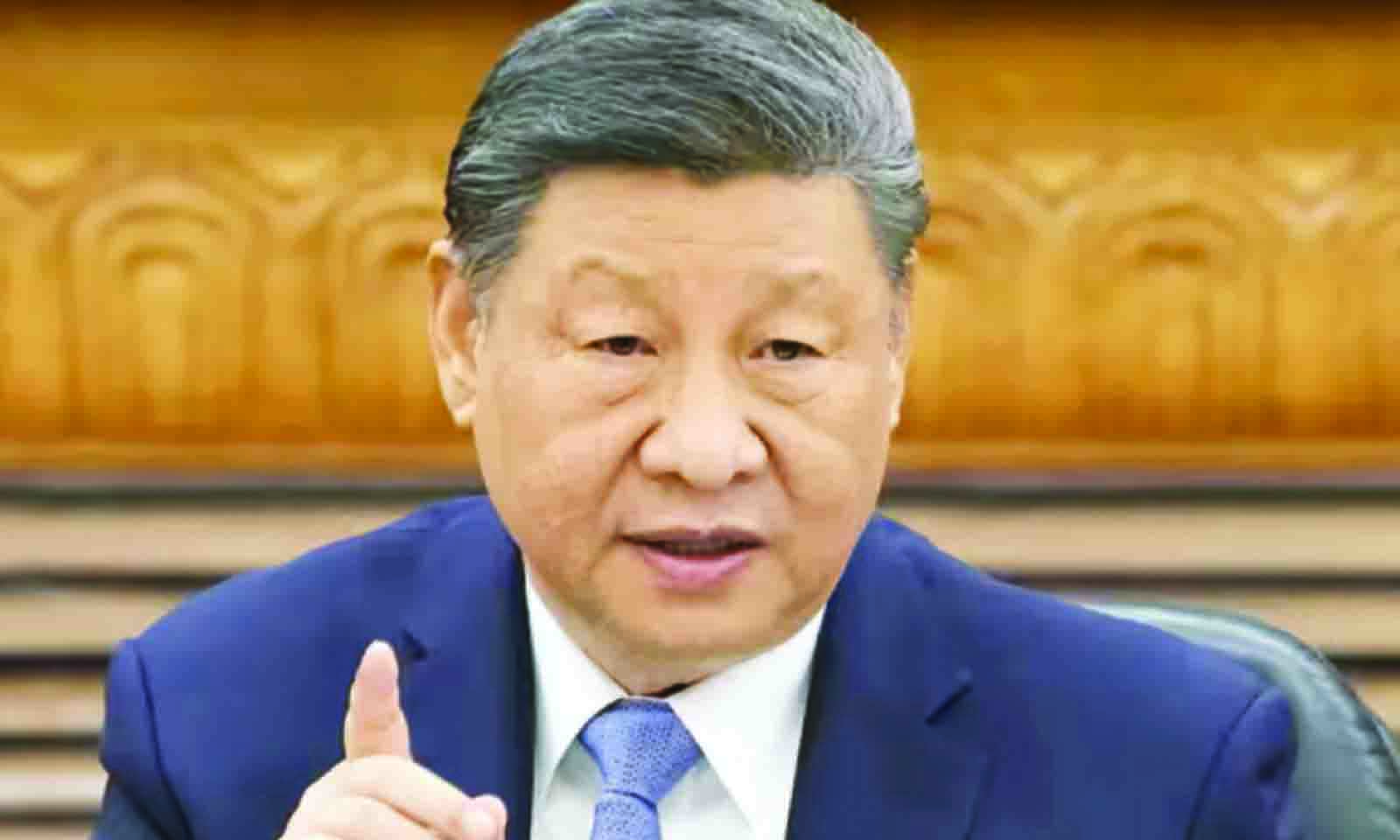
Kuda Bwititi
Zimpapers Politics Hub
NEXT Wednesday, China will mark the 80th anniversary of its victory in the Chinese People’s War of Resistance Against Japanese Aggression (1931–1945) and the World Anti-Fascist War.
President Mnangagwa and several Heads of State from around the world are expected to attend the September 3 grand event that marks the end of World War II, following Japan’s formal surrender.
A palpable sense of anticipation has built across Beijing for the ostentatious occasion that will showcase China’s military prowess.
It will be one of the most significant military parades in recent history, as the world’s second-largest economy will showcase a set of next-generation weaponry. This display, featuring state-of-the-art fighter jets, missile defence architectures and hypersonic systems, serves as a direct testament to the sweeping success of the People’s Liberation Army’s (PLA) ongoing modernisation campaign.
China’s President Xi Jinping will inspect tens of thousands of troops at Beijing’s Tiananmen Square alongside several dignitaries, including the guest of honour, Russian President Vladimir Putin.
On Tuesday, renowned Chinese academic Professor Wang Yiwei delivered a lecture on the global significance of China’s victory to journalists from around the world, who are attending a four-month training programme in Beijing.
He said up to 35 million Chinese citizens lost their lives in World War II, although other estimates put the figure at 20 million. It is not disputed that China and Russia suffered the highest losses of life in World War II.
Having endured some of the war’s most devastating losses, China’s commemoration of the 80th anniversary of victory is a profoundly significant moment of remembrance and national pride for its people.
During the war, Japan was industrialised, whilst China was a poor country.
China did not start the war; it was invaded by Japan, which launched the September 18 incident in 1931, also called the Mukden Incident, initiating its 14-year-long war against China and marking the prelude to the World Anti-Fascist War.
As such, China was the first nation to raise the banner of armed resistance against fascist aggression. The Chinese people, regardless of age or gender, waged a bloody and heroic resistance against Japanese fascist aggressors. Through tremendous sacrifice and extraordinary perseverance, China made monumental contributions to the victory in World War II.
Japan’s September 18 Incident, marked by the invasion of China’s three north-eastern provinces, was followed by other events, including Italy’s invasion of Ethiopia in 1935, the German-Italian intervention in Spain during its civil war in 1936, Hitler’s annexation of Austria and then Czechoslovakia in 1938, and Germany’s invasion of Poland in 1939. The aggression then spread to Scandinavia and Western Europe (1940), the Soviet Union (June 1941), and finally the United States (December 1941), as World War II became full-blown.
China’s resistance was therefore symbolic to the whole world, as it sent a clear message, especially to the Western powers like the US, Britain and France that the only way to stem the tide of fascist aggression and ambition lay in meeting war with war. There was no other path.
According to Professor Wang, over 200,000 battles and skirmishes were fought in China. Professor Wang said the war against Japan became a “people’s war”, because ordinary people were heavily involved and united under the country’s communist system and guerrilla warfare. “China, like most ‘intermediate countries’ was an agricultural nation fighting against an industrial power. However, the Chinese Communists, along with the Eighth Route Army, the New Fourth Army and the Northeast United Resistance Army, relied on the people and extensively waged people’s guerrilla warfare.
“This victory was not bestowed by any nation, but earned by the Chinese people,” he said. China’s war against Japan was a united effort for the entire nation. It was a life-or-death struggle for the Chinese nation.
China retains the word ‘People’ in the PLA to emphasise the importance of the masses and to embody the Maoist principle that power is derived from and must be returned to the populace.
During the war, China had a policy to ensure that the cities were subordinate to the countryside. As such, guerrilla warfare prevented Japan from controlling China’s most densely populated areas.
Professor Wang said: “Therefore, the War of Resistance against Japan completely overturned the bourgeois logic of the countryside subordinate to the city. Just like the Chinese revolution’s strategy of encircling the cities from the countryside and the reform and opening-up that began with the rural household responsibility system, it wrote a new chapter in modernisation in which the countryside nourished and supported the cities.”
“The victory in the War of Resistance Against Japanese Aggression represents a significant achievement in the sinicization of Marxism. It was a triumph of the anti-Japanese national united front, which was advocated and led by the Communist Party of China, as well as a victory for a semi-colonial and semi-feudal nation in its struggle against imperialism.”
China’s victory had worldwide significance as it was able to inspire the global movement against imperialism, colonialism and hegemony, thus inscribing a glorious chapter in the annals of human civilisation. Beijing is implementing a campaign to promote a specific view of World War II history, one that highlights the pivotal roles played by China and the Soviet Union in defeating fascist forces in Asia and Europe. The prevailing view in China is that Western accounts have selectively minimised its critical role in the Asian theatre of World War II, despite its immense suffering and contribution to defeating fascism. Historical narratives often overlook that China’s war against fascist aggression commenced earliest and endured longest, a fact that directly resulted in its staggering national losses in World War II.
Next Wednesday’s commemoration will transcend a mere national celebration as it will serve as a profound moment of collective remembrance. The occasion captures a deep-seated national narrative, intertwining the sombre legacy of sacrifice during the war with the seminal victory that it produced.
This triumph was not merely military, but existential, shattering the yoke of aggression and creating the necessary conditions for sovereignty and self-determination. It was upon this hard-won foundation of peace and independence that the nation embarked upon its remarkable trajectory of development, ultimately ascending to become the world’s second-largest economy.
The ceremony, therefore, is a testament to the direct lineage between past struggle and contemporary prosperity.