Online Reporter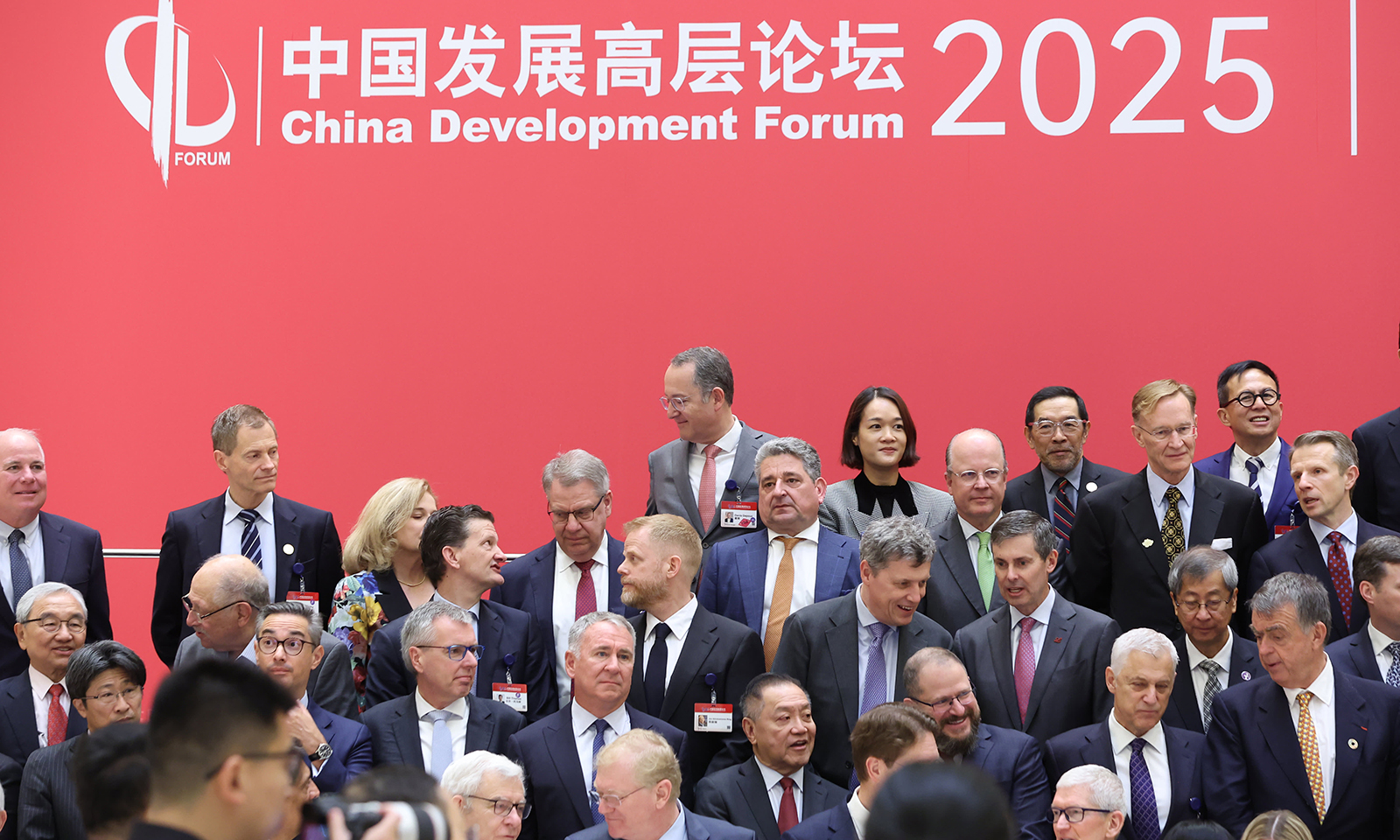
CHINA courted the executives of major US businesses at an annual conference this week in a sign of how Beijing seeks to offset trade pressures, rather than retaliate forcefully.
China has long sought to attract foreign investment as a way to bolster growth, while tapping business interests for potential influence on the White House, particularly under US President Donald Trump. The US has twice increased tariffs across all Chinese goods since January, but Beijing has only announced targeted duties and restrictions on a handful of American companies.
Conversation on the sidelines of the state-organised China Development Forum this week in Beijing reinforced a more conciliatory stance than official rhetoric this month about how China is prepared to fight “any type of war” with the United States.
Chinese conference attendees weren’t that focused on what can be done to respond to US tariffs, Stephen Roach, senior fellow at Yale Law School’s Paul Tsai China Centre, told CNBC.
“The questions I’ve been getting more (are), why is Trump doing this? What is he trying to achieve? What does he think it takes to really make America great?” Roach said.
He has attended the event since the early 2000s.
“My answer is this is an unprecedented period for America’s role in the world economy. We’re going back to a tariff regime that history tells us can be extremely destructive,” Roach said, adding he expects more policy uncertainty in the US and around the world “for a long, long time.”
US stocks have swung in recent weeks as investors try to assess the economic impact of Trump’s changing plans for tariffs on major US trading partners. US Federal Reserve Chair Jerome Powell last week said tariffs could delay progress on lowering inflation in the US.
A message of ‘reassurance’
At this week’s conference, China was trying to send a message of “reassurance” — on how it plans to boost consumption and how the country is headed in a “modestly positive direction” relative to what is happening in the US, said Scott Kennedy, senior advisor and trustee chair in Chinese business and economics at the Centre for Strategic and International Studies, a think tank based in Washington, D.C.
If the US imposes significantly large tariffs in early April, “then you go from managing costs and de-risking to possibly de-coupling,” Kennedy told CNBC. “And then that might mean the game is up. So I think the level of anxiety is pretty high. And that’s why China is trying to provide this message of reassurance.”
The Trump administration has threatened a swath of new tariffs on major trading partners starting early April. China has increased its trade with Southeast Asian countries and the European Union, but the US remains Beijing’s largest trading partner on a single-country basis. — CNBC Africa.