admin
admin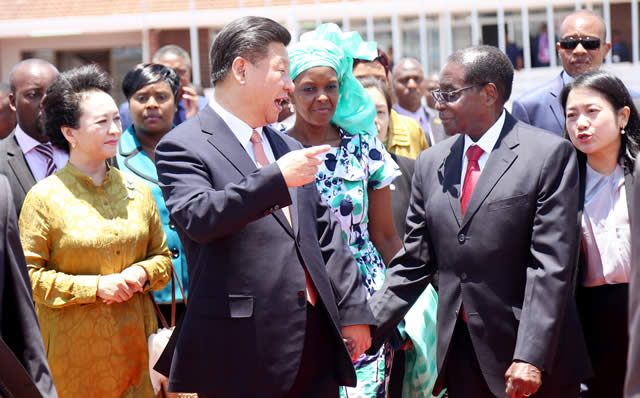

Conrad Mwanawashe Business Reporter
Solomon, King David’s wise son, wanted to build a temple for the Lord. The scriptures, according to 1 Kings 5: 1-10, Solomon conducted an introspection which revealed the challenges he would face in building the House for the Lord.
Verse 6 notes that Solomon approached Hiram, the king of Tyre and told him that he did not have cedar trees in his kingdom which he so wanted to use in the construction of the temple.
Solomon said among his people, there was no skill to hew this particular type of timber to the level he wanted to.
“Now therefore command thou that they hew me cedar trees out of Lebanon; and my servants shall be with thy servants: and unto thee will I give hire for thy servants according to all that thou shalt appoint: for thou knowest that there is not among us any that can skill to hew timber like unto the Sidonians,” 1 Kings 5:6 (KJV).
Solomon looked for Hiram to help him resolve his challenges.
“Hiram was ever a lover of David, (Solomon’s father),” the scriptures say.
Hiram and Solomon eventually made a league together. How much in season is this scripture to the times that Zimbabwe is going through? Zimbabwe is facing a myriad of challenges ranging from a biting liquidity crunch, low Foreign Direct Investment, de-industrialisation, high input costs and a $10 billion debt overhang.
These challenges are not insurmountable but require both a political and economic strategy to overcome.
They require a Hiram to lean on, learn from and develop with.
While Government is working flat out to address the debt overhang through arrangements with international financial institutions, networking with other nations on bilateral arrangements, is required.
The challenges require an all-weather-friend. Along came China, Zimbabwe’s version of Solomon’s Hiram.
China has stood by Zimbabwe, both politically and economically, on the global stage. This is a network that Zimbabwe should milk.
For Solomon, Hiram presented a focal point for networking with other kings.
Hiram became Solomon’s reference point, same as China is and can be Zimbabwe’s gateway to the international community.
Zimbabwe, therefore, should design strategies on how to tap into China’s international exposure and global reach.
The strategy should not end on mega deals with China, but should follow the Asian giant’s other networks.
Who are China’s trading partners? How can Zimbabwe reach them? What products can be exported out there?
China can be the docking point for greater global reach.
Solomon confessed to Hiram that although his nation was gifted in some aspects and endowed with some other resources, they lacked the cedar trees and the skill to treat and process the timber.
He needed Hiram who had both the cedar and the skill.
China has in the last 30 years grown consistently by over 10 percent per annum to become the world’s second largest economy. Its gross domestic product is over $10 trillion and is the largest consumer of primary commodities.
China is the world’s third largest outbound investor. In 2013, outbound direct investment from China topped $108 billion. In short, like the Biblical Hiram, China has the political and economic muscle that Zimbabwe requires.
Benefits will accrue from the relationship overtime. China, being Zimbabwe’s Hiram, can help in the infrastructure sector which the Asian giant has prioritised as the central aspect for development.
Its economy runs on the premise that a reliable transport network, power and telecommunications are the lifeblood of a modern economy.
Infrastructure is a major concern for Zimbabwe. During the Chinese President Xi Jinping’s two-day state visit to Zimbabwe, 12 landmark deals most of which are infrastructure focused were signed.
There is need to lure more Chinese investment in infrastructure.
Two loan agreements of the expansion of Hwange Thermal Power Station and TelOne’s fibre optic project were signed, along with two private sector agreements on the development of coal and methane gas mines as well the establishment of 600MW thermal power station in Gwayi.
Solomon requested for Hiram’s men to process the cedar trees. This is value addition. Zimbabwe should also entice the Chinese investors to set up industries in value addition chain of the country’s vast material resources.
As value addition and beneficiation is a critical pillar in the country’s economic blueprint, the Zimbabwe Agenda for Sustainable Socio-Economic Transformation (ZimAsset), support is required for the setting up of industries in the sector.
Verse 6 of 1 Kings 5; shows why Solomon was titled as the wisest man of his time. He said to King Hiram; “my servants shall be with thy servants”.
Solomon requested so that during the whole process of the preparation of the cedar trees, treatment and hewing right up to floating the timber by sea by Hiram’s workers, King Solomon’s men gleaned invaluable expertise and experience which they could pass on to other generations. Engaging China therefore is quite noble; however, there must be mechanism to tap the Chinese knowledge.
Technology and skills transfer is critical for Zimbabwe and can occur effectively through practical exposure as in the case with Solomon’s men.
During that time Solomon went to the extent of sending 30 000 men to Lebanon, 10 000 a month by courses: a month they were in Lebanon and two months at home. He designed a plan of training as many of his people to learn from Hiram’s workers. Now that Zimbabwe and China have signed a deal for economic and technical cooperation, more Zimbabweans should be sent to China to learn.
With a high literacy rate, the country still requires technological literacy and capacity building. Capital investment is critical as most factories are running on obsolete equipment which often breaks down.
Using obsolete equipment affects production capacity and quality.
One sector that has helped China to scale higher growth rates is their structure of State Owned Enterprises (SOEs).
An April 2015 report by PricewaterhouseCoopers International Limited titled State-Owned Enterprises: Catalysts for public value creation?; says SOEs are likely to remain an important instrument in any government’s toolbox for societal and public value creation given the right context.
The report says that SOEs have become tools for some countries to better position themselves for the future in the global economy given increased global competition for finance, talent, and resources.
SOEs have been rising in influence in the global economy over the past decade. For instance, the proportion of SOEs among the Fortune Global 5006 has grown to 23 percent in 2014 from nine percent in 2005, including a greater presence in the top rankings.
This increased SOE presence in the Global 500 has been driven primarily by Chinese SOEs, according to the report.
Three Chinese SOEs (Sinopec Group, China National Petroleum and State Grid) have consistently made the top ten since 2010 and contributed 16 percent of total revenues from the 114 SOEs on the list in 2014. The report highlights that China’s “Made in China 2025” strategy was crafted to capacitate Chinese SOEs to compete more effectively in overseas markets and to improve their high-end export capability. Some of the measures to be introduced to support the strategy include easing of red tape, introduction of market practices, and consolidation of selected SOEs to create larger and more efficient national champions.
Zimbabwe needs expertise from China in restructuring SOEs which are perennially making loses and draining the fiscus. More importantly, Solomon promised and indeed paid for the cedar and the skill. The best way to get sure service is to pay.
It is critical to ensure that strategies adopted should finance the process. Once Zimbabwe adopts a habit of paying on time it will be easy for benefits from China to continue accruing.
Zimbabwe has found a Biblical Hiram and should stick with him.



 Online Reporter