admin
admin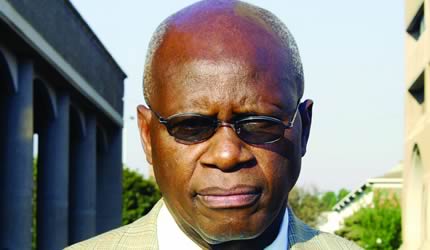
the independence of the Commission and complaints by the body’s former chairperson, Professor Reginald Austin, suggesting this are invalid, a Cabinet Minister has said.
Justice and Legal Affairs Minister Patrick Chinamasa said concerns by Prof Austin in his letter of resignation questioning the discretionary powers conferred by the Act to the responsible minister were misplaced.
He said the limitation conferred by the enabling Act were standard and did not in any way undermine the independence of that authority.
The minister was responding to concerns raised by Prof Austin in his letter of resignation where he said Section 12 of the Act conferred excessive powers to the minister, rendering the Commission weak.
Section 12 confers powers to the responsible minister to issue a certificate to have evidence to be heard in camera if he feels that disclosure of any information in public would harm the interest of the State.
In his letter, Prof Austin complained that this provision granted the Executive wide discretion to silence the Commission.
Minister Chinamasa said the provision sought to ensure that the gathering of evidence envisaged in the Section be done in camera and not in public.
“This happens even in criminal courts. Nobody has ever argued that hearing evidence in camera undermines that court. We are merely saying certain matters can affect the interest of the State,” he said.
“It is also standard that in the interest of protecting minors and raped women, evidence can be heard in camera and that does not undermine the independence of the court.
“The ground raised by Prof Austin is not valid at all, with greatest respect for him.”
The Minister said the world over, the Executive, particularly the Minister of Justice, had a constitutional and legal obligation to protect the interest of the State.
“The Minister is there to defend the interest of the State, security interest is very important.
“What kind of a State is that where a Minister has no regard to the protection of the State?
“This happens everywhere, the world over,” he said.
In his letter, Prof Austin the provision where the Minister had wide discretion undermined the commission as it sought to gag the institution.
Prof Austin also criticised the creation of a Special Investigation Committee comprising the police, the commission and political parties, saying that would create confusion.
But Minister Chinamasa said there was nothing wrong with that arrangement.
He said the Zimbabwe Human Rights Commission would chair the committee and he had discussed these issues with Prof Austin and he had not raised any reservation.
“We discussed this at length and we said let’s give it a trial,” he said.
In his letter, Prof Austin, said it was not prudent to involve this “conglomerate” body as that would undermine the integrity of the Commission.


 Online Reporter