

Sitting down with Mrs Lilian Chinembiri felt like coming home to a mother-in-law who understands you and treats you like her own daughter.
It was a fitting reflection of the warm relationship we have shared since our days as former neighbours.
As we often joke, Mrs Chinembiri’s son (My Taku, as I call him) had declared me his wife when he was just two years old, a childhood pronouncement that has remained a source of laughter over the years.
Our relationship with his mother has endured to this day, creating a bond that made this conversation feel less like a formal interview and more like catching up with family.
Born Lilian Mhungu at Patchway Mine in Kadoma in the early 1980s, Mrs Chinembiri discovered her talent for sewing at an early age, inspired by her mother and aunt, who sewed and crocheted articles for Rio Tinto Women’s Club competitions and for sale.
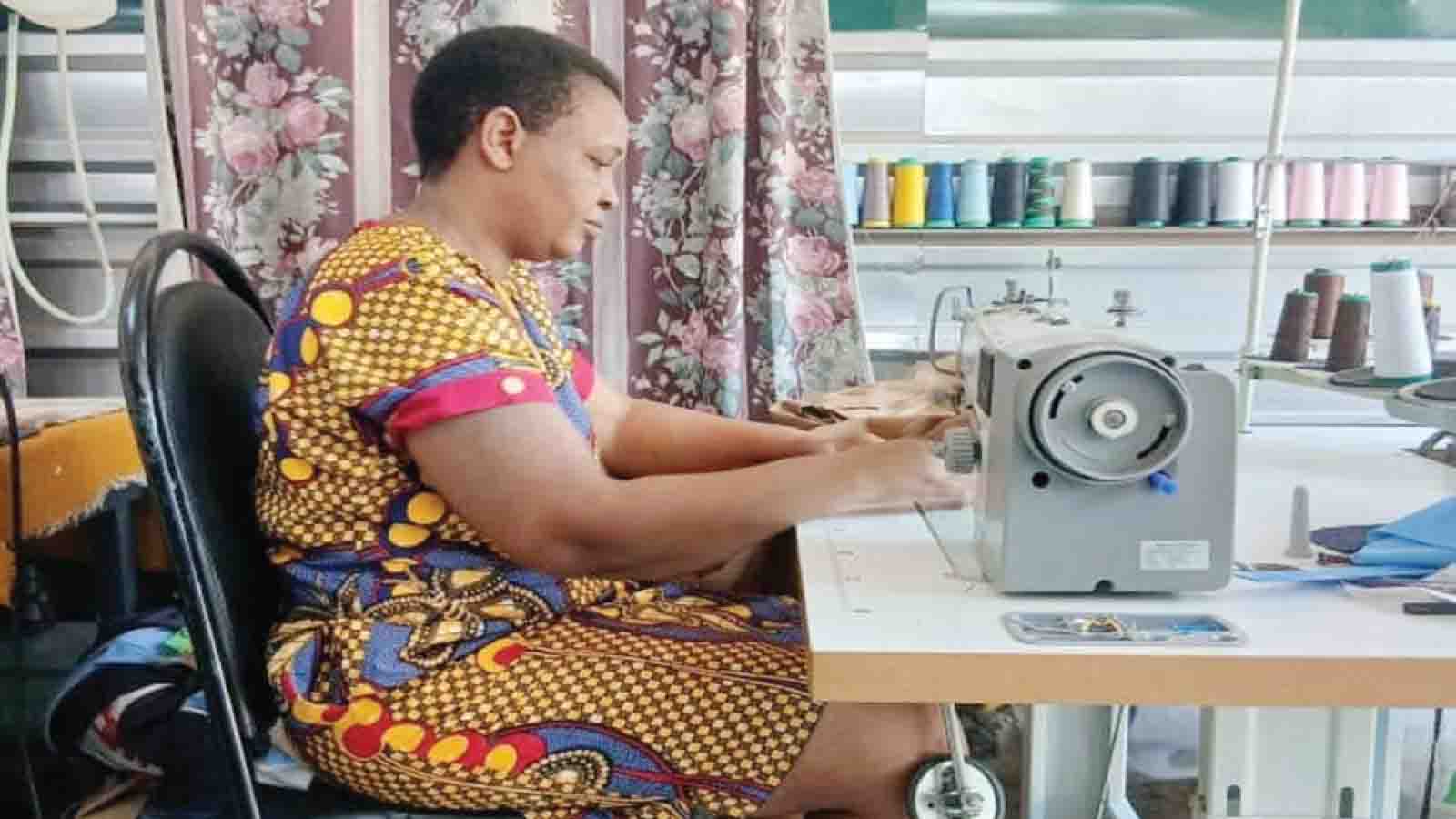
What began as a childhood passion for sewing has grown into a career that combines education, entrepreneurship and community empowerment for Mrs Chinembiri, a trained garment construction specialist and teacher based in Hwange.
“I remember when I was in Grade Three, helping my mother finish crocheting articles she intended to sell in South Africa so that she could bring me clothes and shoes for Christmas,” she recalled.
Her father played a significant role in nurturing her talent. Recognising her abilities while she was in Form Two, he bought her a sewing machine, marking an important milestone in her journey.
Her talent was first recognised at Patchway Primary School, where two teachers, Mrs Muswaka and Mrs Maforimbo, encouraged her to participate in primary school sewing competitions held at Dalny Mine Primary School in Chakari.
At secondary school, she continued to excel in Fashion and Fabrics, first at Kwayedza Secondary School under Mrs Matsa and later at Brompton Secondary School.
Following the closure of Brompton Mine, she moved to Chemkute, where teachers, Mrs Pfumbi and Mrs Paradza, continued to nurture her skills. Her passion for fashion soon translated into practical experience. One of her earliest customers was Ms Faith Mazungunye, for whom she made an African outfit.
Although the garment was oversized, the customer was delighted that the young girl could produce an outfit at such an early age.
Education and professional development
Mrs Chinembiri’s journey into professional tailoring was accelerated by her aunt, Mrs Kereke, who took her to Harare after she completed her Ordinary Level examinations.
Rather than allowing her to spend the holidays at home, her aunt enrolled her for a National Certificate in Designing and Tailoring at Speciss College in Magaba.
While awaiting her Ordinary Level results, she was already pursuing her vocational training. After completing the certificate, her aunt encouraged her to proceed to diploma level at the same institution. Following her diploma, she helped her aunt fulfil orders in the beddings and curtains business. After marrying in December 2002, she relocated to Hwange and temporarily put her tailoring skills aside to focus on family life.
Her return to formal training came in 2014 when her husband encouraged her to pursue garment construction under a different examination board.
She enrolled at Don Bosco Technical College, completing her National Certificate that year before proceeding to diploma level from 2015 to 2017. She completed a one-year industrial attachment at Colliery Hospital. Although she had initially aspired to become a fashion designer rather than a teacher, her husband later encouraged her to pursue teacher training at Belvedere Teachers College.
“I had told myself that I was done with educating myself and that it was time to start a business. My husband was always behind me, supporting me financially and emotionally,” she said.
She believes her two careers developed at different stages of her life, allowing her to combine teaching with her passion for garment construction. Balancing teaching and tailoring was not easy.
Mrs Chinembiri often returned home exhausted from work, only to continue sewing customers’ orders to meet deadlines.
She eventually employed an assistant, a decision that helped her manage the competing demands of her two careers.
Access to capital and sewing equipment was another major obstacle. She bought her first industrial sewing machine using money earned while covering for one permanent employee in the Colliery Hospital sewing room.
Her business received another boost in 2019 when she secured orders to make Covid-19 masks for learners. She also benefitted from customer referrals through her son, Eddington, her daughter, Caroline and parents of Marist learners in her community. Today, Mrs Chinembiri has employed two assistants who trained at Don Bosco Technical College, the same institution where she acquired her garment construction skills.
Through this initiative, she hopes to give back to the Salesian community, inspire others to pursue vocational education and create more employment opportunities as her business expands. She serves as an ambassador for the Don Bosco Hwange Salesian community, promoting the value of education and skills development.
Read more on www.heraldonline.co.zw
Quality, affordability and customer satisfaction, Mrs Chinembiri, focuses primarily on school uniforms and women’s clothing because these are the products that generate the greatest demand for her business. She also provides alterations and repairs for men’s clothing. To ensure school uniforms last longer, she emphasises proper stitching, appropriate stitch sizes, strong fabrics and quality sewing accessories. For women’s garments, she uses individual body measurements rather than standard measurements to ensure a better fit and meet each customer’s expectations.
A message of perseverance
Reflecting on her journey, Mrs Chinembiri encourages teachers and working women who wish to turn their talents into profitable businesses not to give up when faced with difficulties.
“Keep on trying and don’t lose hope because the journey is never easy,” she advised.
She likened entrepreneurship to farming, where crops must be protected against monkeys and baboons rather than abandoning cultivation altogether.
“It is the same with business. Sometimes there is profit and sometimes there is loss, but we soldier on,” she said.
For Mrs Chinembiri, the journey from a young girl sewing in Kadoma to an educator and businesswoman in Hwange demonstrates how early talent, family support, vocational education and determination can create opportunities not only for personal growth, but also for empowering others.