Online Reporter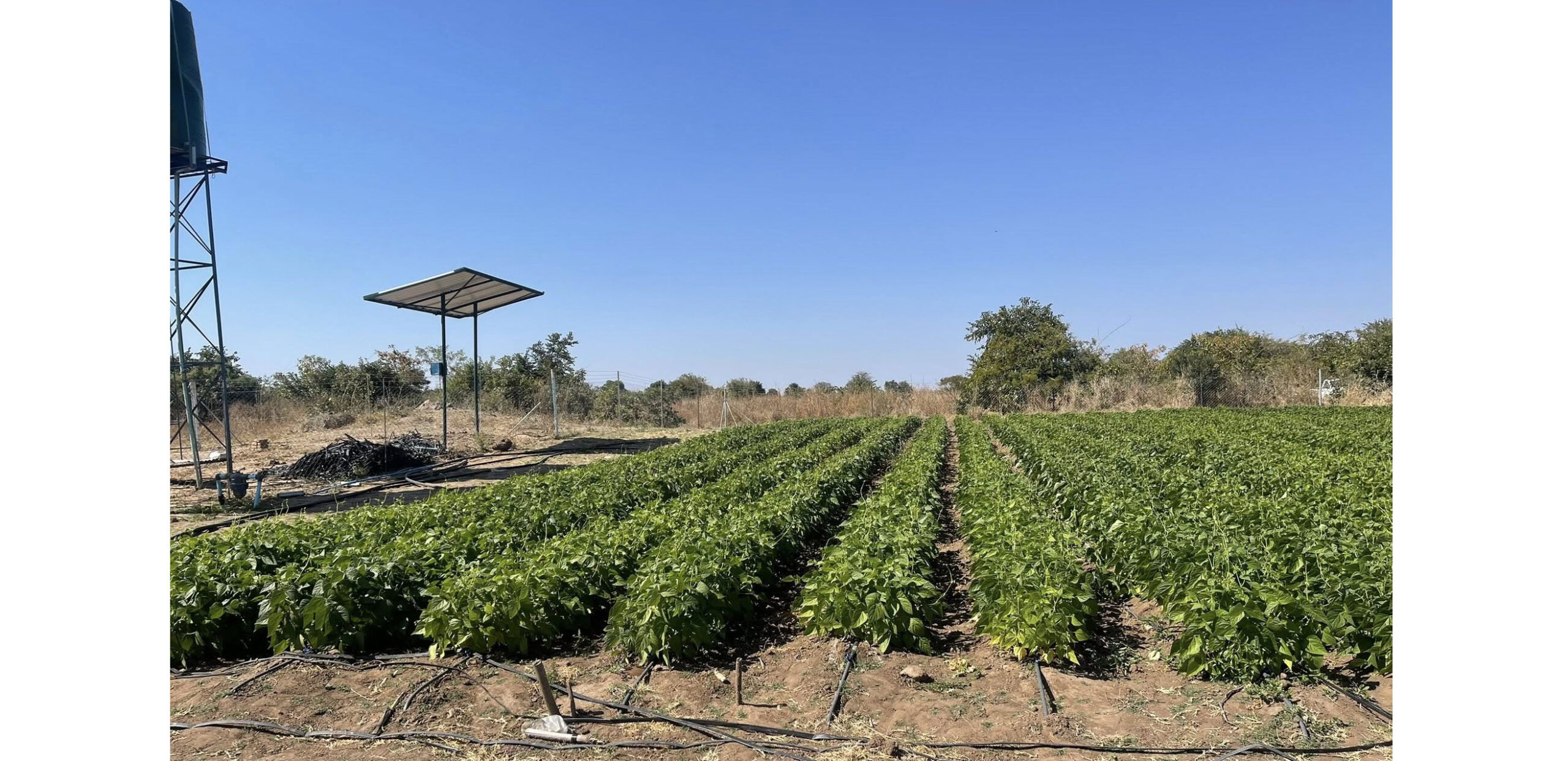
Theseus Mauruki Shambare in CHIREDZI
CHIREDZI District has so far established 143 Village Business Units (VBUs) against a target of 345 as Government accelerates efforts to strengthen food security, climate resilience and rural livelihoods ahead of the anticipated El Niño-induced dry conditions.
An assessment tour of Bandama and Hama VBUs brought together Government officials and development partners to evaluate progress in agricultural production, water security, climate resilience measures and areas requiring support ahead of the forecast dry season.
The assessment forms part of efforts to consolidate gains made under the three-year Integrated Rural Resilience Building (IRRB) Programme, which is being implemented by the World Food Programme (WFP), Government and Sustainable Agriculture Technology (SAT), with financial support from the government of Japan.
The programme seeks to reduce rural communities’ dependence on humanitarian assistance by promoting productive asset creation, climate-smart agriculture, market development, capacity building and food systems transformation.
Chiredzi lies largely in agro-ecological Regions IV and V, where low and erratic rainfall frequently affects crop production, making irrigation and climate-smart agriculture critical to sustaining livelihoods.
Chiredzi Assistant District Development Coordinator Ms Patience Mawarire said the VBU programme was central to Government efforts to improve food security and household incomes.
“Every village should have a village business unit, so of the 345 that we have to establish, we have already established about 143 in the whole district,” she said.
“So, we still have a long way to go, but we are still in the process of making those VBU very viable.”
Ms Mawarire said irrigation development would be crucial in expanding the programme in the drought-prone district.
“If we establish irrigation schemes as well as village business units, it will go a long way in trying to help our communities since we are in a very dry region as compared to other districts,” she said.
The benefits are already evident at Bandama VBU, where farmers are using solar-powered irrigation systems to improve production and adopt a more commercial approach to agriculture.
Bandama VBU vice-chairperson Mr Steven Chikukwa said the initiative had transformed local farming practices.
“Since the VBU was established, we have seen a change in the way people here look at farming. We are no longer just waiting for the rains to decide whether we will have a harvest,” he said.
“We now have water, we have markets and we are planning our production as a business. What we need now is for this model to reach more villages so that more families can benefit.”
For Ms Matimbe Muyamani (50), of Chenjeketa Village, the programme has improved household food security and income generation.
“For me, the biggest difference is that I can now plan what to grow and when to grow it. Even when there is no rain, I know that I can still come to the garden and work,” she said.
“The vegetables we harvest help me with food at home, while the money from sales helps with other family needs. With six children and four grandchildren, every bit of income makes a difference.”
Ministry of Agriculture, Mechanisation and Water Resources Development chief agronomist Ms Rutendo Nhongonhema said farmers were increasingly adopting technologies that promote efficient water use.
“Here behind me, you can see farmers are using smart agricultural technologies, drip irrigation for water conservation,” she said.
“This is a technology that we are encouraging our farmers, especially in the light of climate change, where we are having frequent droughts, we are having very little water, and we need to conserve. Every drop counts.”
Ms Nhongonhema urged farmers to embrace Government’s agro-ecological zoning policy, including growing maize under irrigation and promoting traditional grains in areas unsuitable for maize production.
She also encouraged farmers to adopt Pfumvudza/Intwasa and mulching to conserve soil moisture ahead of the anticipated dry season.
WFP programme policy officer Mr Munyaradzi Gahadzikwa said the programme was designed to strengthen communities’ resilience to climate shocks.
“We have since transitioned to a situation where we now want to support these communities to become resilient because they continue to face climate change-induced shocks and stressors that continue to disrupt their livelihoods,” he said.
The IRRB programme has established and rehabilitated productive community assets, including VBUs, irrigation schemes and water infrastructure, while more than 9 500 farmers and extension officers have been trained in climate-smart agriculture, SHEP and Participatory Integrated Climate Services for Agriculture (PICSA).
The programme is being implemented in Chiredzi, Chipinge, Mt Darwin, Mwenezi and Rushinga districts.
Mr Gahadzikwa said the programme was now entering its third year, during which Government would take a leading role in implementation and oversight.
“Year 3 will be led by government,” he said.
He added that the assessment tour would help identify achievements, challenges and gaps to guide the next phase of implementation and ensure the sustainability of resilience-building interventions beyond the project’s lifespan.