

 Online Reporter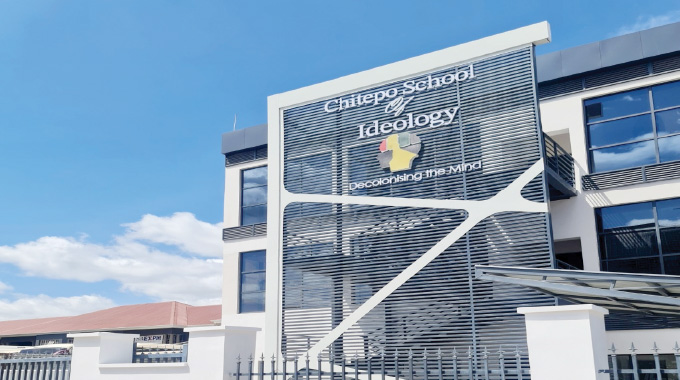
Kennedy Mandaza
In the heart of Zimbabwe’s struggle for genuine independence lies an institution that seeks to revive the revolutionary consciousness of a people burdened by the lingering shadows of colonial rule. The Chitepo School of Ideology, named after the late national hero Herbert Chitepo, has emerged as a critical vehicle in the fight against neo-colonialism and the socio-political and economic ills that accompany it.
At its core, the Chitepo School of Ideology is more than an educational centre; it is a revival of the ideological fire that once fuelled the liberation war. As Zimbabwe continues to grapple with systemic economic imbalances, foreign interference, and cultural erosion, which are hallmarks of neo-colonialism, the school should be positioned as the intellectual engine to drive the second phase of the liberation struggle: total and irreversible independence.
Neo-colonialism, by definition, is the indirect control of a sovereign nation by external forces through economic, cultural, or political pressures. In Zimbabwe, this has manifested in subtle but harmful ways. Despite the formal end of colonialism in 1980, the country remains entangled in unequal global trade systems, a foreign-dominated financial structure, and the infiltration of values that dilute national identity and sovereignty. Without ideological clarity, these forces remain unchecked and often go unnoticed by younger generations who did not live through the struggle for political independence.
This is where the Chitepo School comes in. Its primary mandate should be to instil a strong sense of national consciousness which is rooted in Pan-Africanism, socialism, and self-determination. Riding on the mantra “leaving no one and no place behind,” by educating civil servants, youth leaders, party members, and the broader citizenry on the ideological foundations of Zimbabwe’s independence, the school should arm them with the intellectual tools to resist neo-colonial tactics and safeguard national interests.
One of the key roles the school should play is challenging the dominance of Western narratives in media, education, and governance. This resonates with the mission of the school to decolonise the minds.
For decades, the African perspective has been marginalised or distorted, leading many Zimbabweans to unwittingly embrace foreign ideologies and narratives that do not serve their national development. The Chitepo School of Ideology should aim to correct this imbalance by fostering pride in African knowledge systems, history, and values. This ideological reorientation is vital for nurturing a leadership and citizenry that can defend Zimbabwe’s sovereignty at all levels and is grounded in the ideals and aspirations of the people.
Moreover, the school should provide a platform to analyse and critique the structural economic dependencies that bind Zimbabwe to former colonial powers and multinational corporations. Through seminars, research, and debates, participants can be encouraged to explore alternative models of development that prioritise local ownership, empowerment, honest hard work and self-sufficiency. This includes advocating for the indigenisation and equitable distribution of resources, promoting agricultural and industrial self-reliance, and pushing for policies that reduce dependence on foreign aid, donations and imports.
Critics may dismiss the school as a political tool or relic of the past, but such a view underestimates the enduring power of ideology in shaping national policy and unity.
Across the globe, nations that have achieved sustainable development, such as China, Cuba, and Vietnam, to mention but a few, have done so by investing in ideological education that aligns their citizenry with national goals. Zimbabwe can learn from these examples and localise them to its context through institutions like the Chitepo School of Ideology.
In a world where global powers continue to exert subtle and overt control over weaker nations, ideological awareness is not a luxury but a necessity. The struggle for land may be over, but the battle for the minds of Zimbabweans rages on. Without ideological grounding, the victories of the liberation struggle risk being eroded by cultural imperialism and economic exploitation.
The Chitepo School of Ideology is, therefore, not just relevant, it is indispensable. As Zimbabwe seeks to complete the journey towards true independence, through Vision 2030, this institution must be supported, expanded, and embraced as a national asset. Only through a united, ideologically conscious citizenry can Zimbabwe defeat the new face of colonialism and chart its own path to prosperity.


 Bongani Ndlovu