admin
admin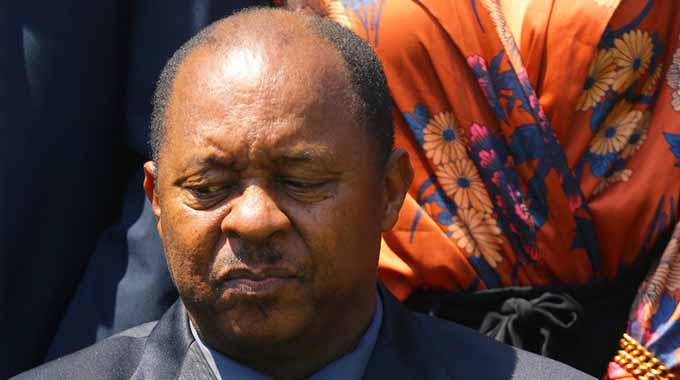
Abigail Mawonde, Harare Bureau
THERE has been no increase in the deaths from cholera in the last five days, with the death toll remaining at 49 recorded on Wednesday last week, a sign that the disease is being contained and is no longer a big threat.
This comes as more stakeholders continue to donate towards containment of the water-borne disease, whose epicentre is in Harare’s Glen View and Budiriro suburbs.
Health and Child Care Minister Dr Obadiah Moyo confirmed the stalling of the death toll in an interview yesterday, as Government is making frantic efforts to eradicate the disease.
“The death toll remains at 49,” he said. “We continue to receive further assistance from our partners, among them the Chinese, who donated $200 000 towards the cause over the weekend. “Otherwise we continue to ensure that the infected receive treatment.”
Presenting a ministerial statement on the cholera outbreak to the National Assembly on Wednesday last week, Dr Moyo said as of September 26, 2018, over 10 000 persons had presented to the screening and treatment centres. He said 6 645 suspected cases had been reported, with 96 of them testing positive to Vibrio cholerae, while 49 had died.
Dr Moyo said 21 percent of the cases and a similar proportion of the deaths recorded by then were children below the age of five, with the youngest patient being eight months old.
“We realise that this is a unique outbreak from those experienced earlier in that there have been high levels of resistance to antibiotics commonly available, high fatalities despite the outbreak being predominantly urban and in that it is happening in the same areas that are heavily affected by typhoid and that raises the possibility of dual infections,” he said.
Dr Moyo said Government had already initiated plans for dual vaccination of cholera and typhoid.
He said surveillance had also been intensified in Harare and nationwide to pick cases early for effective treatment at the static clinics.
Government has already provided over $6 million for emergency rehabilitation of water and sewer pipes in Harare as part of measures to deal with the outbreak.
Long term solutions include addressing the water and sewer reticulation system.
Council has been failing to supply water to some suburbs in Harare, further exposing residents to water borne diseases.
Residents end up relying on shallow and unprotected wells.



 Online Reporter