Michael Magoronga, [email protected]
Tameka Ncube (17) should be at school like the rest of her peers but she has just given birth to a baby boy after her dreams of pursuing an education came crashing.
After completing her primary school education, Tameka could not continue with her education as the nearest secondary school is located many kilometres away from her rural home in Zhombe.
At the instigation of her parents, she stayed at home and concentrated on household chores in line with patriarchal norms that educating girls is a waste of time as they would be eventually married off.
Not too long after she dropped out of school, Tameka met a man in the bush while looking for firewood. The man raped her before disappearing.
“That was the last time I saw him and he doesn’t take care of the child. It has been the burden of my parents ever since I gave birth to the child. At times I feel that if only I had stayed at school, this would not have happened to me. I could have been somewhere in life because I was good at school,” she said fighting tears.
Tameka’s situation is similar to that of many other children in Kwekwe District who have dropped out of school due to long distances that have to travel to school due to the unavailability of schools where they live.
Recent statistics released by the Kwekwe District Civil Protection Unit showed that 11 girls were impregnated in the district within two months, the majority of them in rural areas.
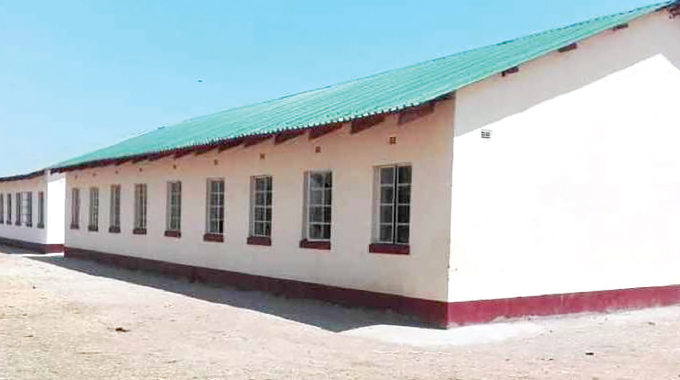
It has since emerged that while girls are mostly affected given their exposure to sexual exploitation as they travel long distances to school, boys also end up giving up on school and venture into illegal gold panning to earn a living.
Girls often end up falling pregnant after being lured by money from gold panners. This also fuels child marriages. Boys tend to turn to drugs and substance abuse as they are exposed to huge sums of money at a tender age.
It also emerged that there are ‘school leavers’ who wait for girls at school gates in Zhombe and Silobela and forcibly propose love to the girls. If they refuse, they harm them.
Chief Ndabezinhle Gwesela of Zhombe said school leavers were problematic.
“They wait for girls at school gates, and most of them will be armed with machetes and knives which they use to threaten the girls. They also fight among themselves as they fight for the girls which is very bad. In the end, the young boys end up arming themselves for self-defence which becomes very dangerous,” he said.
The Zibagwe Rural District Council master plan recently revealed a serious shortage of schools and as a result an increased number of dropouts.
According to the plan, 44 505 people attended primary school up to Grade 6 (27,8 percent), however only 24 105 completed their primary school (12,3 percent), pointing to a dropout rate of 46 percent cumulatively.
35 104 attained secondary school education up to Form 3 level (21,9 percent) while 36 180 people completed their Ordinary Level (22,6 percent).
Only 1,34 percent of the district population has attained Advanced Level qualifications, while 1,7 percent of the population are tertiary graduates.
Zibagwe Rural District Council lead planner, Mr Johnson Mikuku said the chief contributing factors to these statistics were a shortage of schools and their improper distribution.
“There are 107 primary schools, 47 secondary schools and two agricultural colleges in the district. The ratio of primary to secondary schools stands at 2,5:1 which is above the required 2:1 ratio. This ratio points to a shortage of secondary schools putting a strain on the existing school in terms of enrolment and long distances between two secondary schools,” he said.
Mr Mikuku said the district has two vocational training schools which offer training in Agricultural studies up to Higher National Diploma level. These are Rio Tinto Agricultural College and Mlezu College of Agriculture.
“Only eight percent of the tertiary education holders in the district have gone through vocational training. This points to the need to increase vocational training centres (VCTs) as part of enhancing practical training in agriculture and mining which form the backbone of the district’s economy,” he said.
Mr Mikuku said there is a huge discrepancy between the total number of children enrolling for primary school and those in secondary school implying a significant dropout rate.
According to the master plan, in 2022, a total of 46 751 pupils, 23 344 of them girls, enrolled for primary school education, but only 11 025, 5 816 of them girls, proceeded to secondary school.
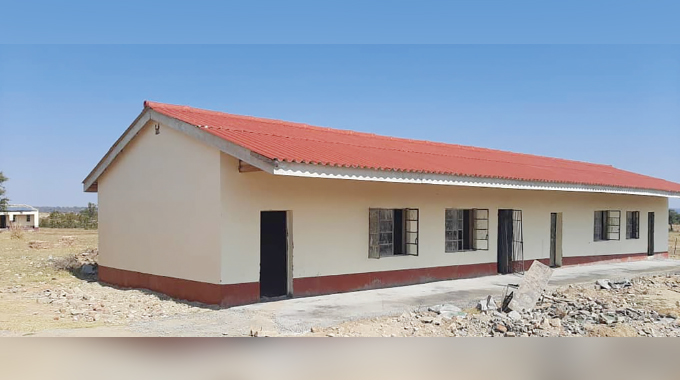
“This shows that the highest number of children are dropping out of school due to poverty. Early marriages contributed 5 642 students. 4 000 dropped out due to long distances travelled to school and 2 559 dropped out to pursue artisanal mining. This points to the need to increase economic productivity, expand educational infrastructure, and reduce distances between schools as mitigation measures on school dropouts in the district. 72,91 percent of respondents indicated the distance to school as being more than one kilometre. Focus group discussions revealed that on average, primary schoolchildren are travelling between 5km to 7km while secondary school pupils are travelling between 7km and 12km,” said Mr Mikuku.
As a panacea, Zibagwe RDC is intensifying efforts to construct more schools through the implementation of gender responsive budgeting.
Zibagwe RDC chief executive officer Mr Farayi Machaya said the council had engaged partners for the construction of more schools and classroom blocks so that children do not have to travel long distances to school.
“In partnership with Plan (International), we have constructed low cost boarding facilities at Msilahobe Secondary and St Judes Mhaze schools which are now fully operational. We have since tendered for the construction of the same at Donsa and Kadanya Secondary is underway,” said Mr Machaya.
Plan International, a major partner, also did four boarding facilities with funding from Japan at Sidakeni, Rujeko, Fatima and Silobela high schools.
“The initial target was high schools to cater for some A-Level female candidates who could be easy prey to artisanal miners who have cars and cash. The other targets for the facilities were Form 4 girls who were perceived to require undisturbed concentration to their studies and examination preparation. Each facility was meant to accommodate 20 girls and had an apartment for the boarding matron. Some schools however improvised to accommodate more girls and others have since expanded using their own resources to accommodate more girls. Other schools are also considering facilities for some of their vulnerable boys too,” said Plan International area manager for Kwekwe District, Mrs Laina Matsikiti.
Speaking after the official commissioning of these facilities in Zhombe recently, Child Member of Parliament for the area, Prince Ndlovu said cases of child marriages had dropped significantly as a result of these projects.
“We want to thank the Government and its partners for this project as it has gone a long way in protecting our girl child from predators who prey on them on their way home. Cases of sexual abuse and child marriages have reduced since these boarding facilities were introduced. I however implore the Government to consider the same for boys as they are also equally affected by the long distances,” he said.
Health and Child Care Minister Dr Douglas Mombeshora said the major aim of the facilities is to address various challenges faced by adolescents, girls and young women (AGYW) in their schools and communities.
“The girl child faces unequal opportunities which leaves them with higher chances of contracting HIV as compared to boys. This is therefore a deliberate effort to reduce the vulnerability of AGYW in this regard. This is also in line with the Government’s aspirations to afford every Zimbabwean child a fair chance to afford education,” he said.
Dr Mombeshora said the intervention was a result of some girls staying in bush boarding facilities which are not safe for them.
He also said four districts were selected on the high influx of gold panners, long distance truck drivers and pirate taxi operators who are potential perpetrators of sexual abuse to young girls.
Dr Mombeshora decried rampant drug and substance abuse among youths saying it increases vulnerability to HIV infection.
“My ministry is worried by the increase in substance abuse especially by young people including AWYG which raises their risk and vulnerability to HIV infection. There is a strong association between the population groups that abuse drugs,” said Dr Mombeshora.
He said although Zimbabwe has already achieved the 95-95-95 target among adults, the country is still lagging behind when it comes to the youths. The HIV/Aids epidemic remains critical in sub-Saharan Africa, with UNAIDS establishing “95-95-95” targets to optimise HIV care in the region.
“We have made significant progress towards the 95-95-95 target and should revolutionise and scale up prevention services towards key populations such as sex workers and AGYW.
“While we have made significant progress in this regard, it is important to deal with rising cases of non-communicable diseases, most of which are associated with HIV,” he said.