

 admin
admin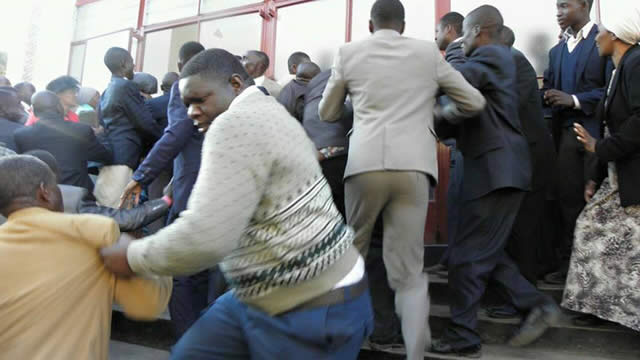

Mashudu Netsianda
THE world has over the years experienced a string of church splits. Biblically, the church is the body of Christ which should always work towards uniting people. Instead of playing a unifying role, the church is more divided today with intra-fighting now the order of the day. Repeatedly we find one group breaking off to form a new church. It does not take long for the new church to split again, forming yet another new church. It is indeed a vicious circle.
The divisions within the church are not exactly new though they are worse in today’s world. In the year 1054 the Church was divided into two parts, the Greek Eastern Church and the Roman Western Church. The Western Church soon became known as the Roman Catholic Church while the Eastern Church remained the Greek Eastern Church.
Other divisions were to follow. The Protestant Reformation had its beginnings in 1517. Many other groups were to break away from the Roman Catholic Church in later years to form new churches. The culture of church splits was to continue from those years till today. Today there are literally thousands of groups throughout the religious world that call themselves “Christians.”
In recent years, the country has witnessed a phenomenal growth in the formation of new churches born out of the traditional ones. One such religious organisation that has been rocked by divisions is the Apostolic Faith Church, one of the biggest and respected churches in Zimbabwe in terms of following. The church was founded by the late Reverend Morgan Sengwayo in 1955.
Rev Sengwayo was indeed a well-respected religious figure in the country and the entire Sadc region. He was arguably one of the greatest preachers of the twentieth century ever to emerge from Africa. His religious success story is well-documented. The late reverend left Harare (then Salisbury) to start his religious ministry in Gweru which was at that time known as Gwelo. He began to preach in the area and later moved to Bulawayo where he established a church in Pelandaba suburb.
We are told that during the humble early days of his ministry, he used to travel from Gweru to Bulawayo on foot. He had visions and is believed to have had several divine encounters along the way. In his lifetime, Rev Sengwayo managed to spread his work throughout the country, reaching out to neighbouring countries such as South Africa, Zambia, Botswana, Malawi, and Mozambique.
However, sadly soon after his demise in March 1982, the church was to be rocked by a string of endless divisions. The late Rev Philemon Sibanda led the first breakaway group from the original Pelandaba church in 1985 and formed his own just across the road at Lobengula Extension, renaming it Apostolic Faith Mission of Africa (AFMA).
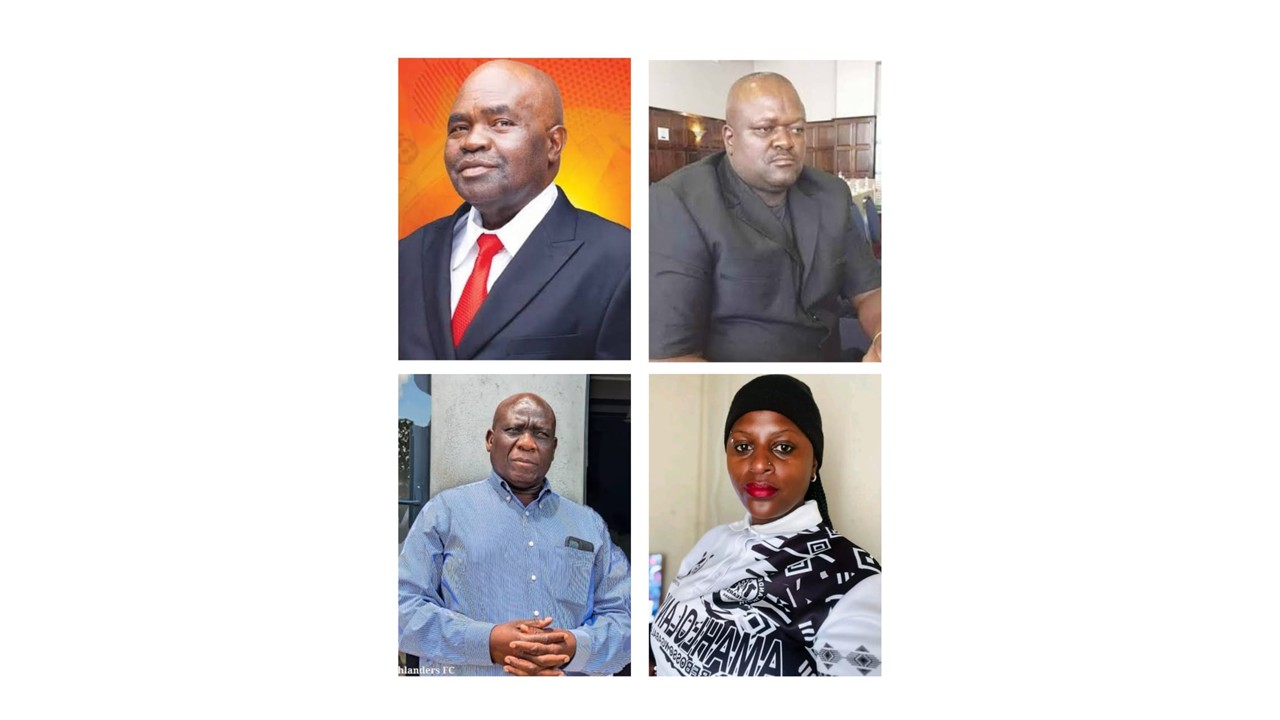
Today the AFMA is also locked in an acrimonious leadership wrangle pitting Rev Sibanda’s successor, Rev Tony Tshuma and a faction led by his rival Rev Clement Nyathi. The two rival camps have since the beginning of 2014 been locked in a series of legal battles over the control of the church assets.
The original church in Pelandaba has since the mid 90s been plagued by divisions. In 2005, another group led by former Zimbabwe Broadcasting Corporation director-general, Onias Gumbo, broke away from the church. The Gumbo-led group has for the past 10 years been fighting the Pelandaba church leadership over the control of the church properties and buildings among them a farm and Greengables High School, an affluent school situated on the outskirts of Bulawayo.
The dispute, we are told, primarily emanates from church policies, procedures and the dress code. The squabbles have since spilled into the courts. The Pelandaba church leadership is accusing Gumbo of attempting to introduce a “foreign” culture into the church. Guta Ra Mwari, another popular church in the country has also been hit by divisions resulting in several splinter groups dragging each other to the courts over properties.
Formed in 1954 by Mai Chaza who became the first host, the church now has Guta Ra Mwari Religion based in Old Lobengula whose leaders are Joseph Tayali, Joel Tawedzera, Stephen Sibanda, Francis Mwene, Calvin Chauke and Sam Mkhithika. Tayali’s father, Taxwell Tayali was appointed second host after the death of Mai Chaza and with the help of his wife Laizah, registered the church as Guta Ra Mwari in 1974.
Following Taxwell and his wife’s death in 2003, the church has been rocked by serious infighting. In all honesty, Rev Sengwayo and Mai Chaza would be turning in their graves if they knew what was happening to their legacies more than 60 years on. In fact, people have divided themselves from that one original church into numerous groups with distinctive names and various teachings. These are divided groups of people who believe in the same gospel of Jesus Christ albeit each in their own particular fashion and ways that stress their own particular beliefs.
The scriptures give us a reasonable understanding of what the church was like in the first century. Jesus Christ established one church and pleaded for its unity. But, in the second century, following the death of the apostles, this unity began to suffer as some began to introduce some teachings and practices that would result in a church far different to that one found in the writings of the New Testament.
According to religious experts, the causes of divisions in the church are many, but ultimately the main reason for a church split is that someone would have shifted from serving Jesus Christ to using the church for his own ends. The same happens when someone seeks to manipulate people to achieve his/her goals.
Power hungry individuals often wrestle leadership from a pastor or elders by rallying a group of people around himself to accomplish a coup d’état. The excuses for the conflict are numerous, but they all stem from the same root cause —pride and selfishness. Difference of opinion regarding music and worship style is also a frequent cause.
The Apostle Paul uses the analogy of the body to describe the church. In I Corinthians 12 and Romans 12 he calls the church the body of Christ. We are the body which does the will of the Head, Jesus Christ. If everyone in the body is focused on doing the will of God and on worshipping Jesus Christ in love and humility, then there may be disagreement, but the disagreement will be worked out in a loving and appropriate manner.
The effects of a church split, regardless of the cause, can be devastating. Church splits distress and dismay mature believers, disillusion new believers, cause havoc in the lives of pastors and their families, and bring reproach upon the name of Christ. According to renowned American author and evangelist, Ron Susek, there is hope. He says churches that split can experience healing and restoration.
In his book, Firestorm: Preventing and Overcoming Church Conflicts, Susek likens churches to hospitals, which are full of wounded and sick people. But, he however, says, in the church the sickness is sin and the wounds are those we inflict upon ourselves and one another because of sin.
“One sin that causes multiple problems is a lack of forgiveness. No Christian is perfect, and no pastor or elder or deacon is perfect. When all these imperfect people get together, disagreements, hurt feelings and misunderstandings are inevitable. If our expectations of others are too high, disappointment is inevitable and can cause further feelings of hurt and resentment. Our response to one another should be to forgive one another in kindness and compassion,” he states.
The churches are divided and these divisions do exist and we need to recognise them and understand them. God did not bring about these divisions; man did. These schisms and divisions exist because of man’s ignorance, failure, pride, lust for power, position and selfishness.
Divisions come about because of man’s failure to stay right with God. When people are not right with God they will not be right with other people. The vertical relationship with God determines the horizontal relationship with others.


 Online Reporter
 derick.khumalo