Online Reporter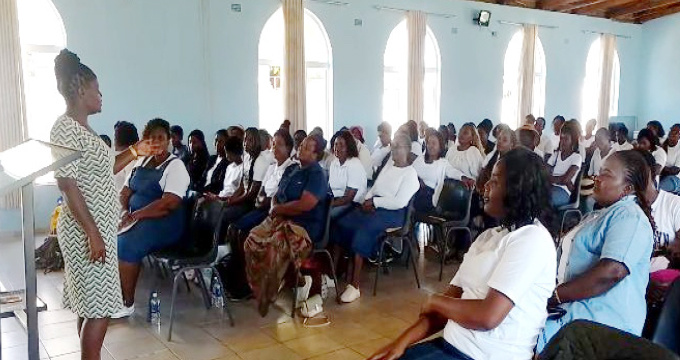
Tsenulo Moyo
CHURCH is no longer just about hymns and hallelujahs — in Bulawayo, it is now also about condoms, cancer checks and cutting through bedroom myths!
As Sexually Transmitted Infections continue to creep up, churches in the City of Kings are stepping into the hot zone, arming women and young girls with Sexual and Reproductive Health and Rights (SRHR) knowledge.
At Nkulumane Church of the Nazarene, things got real during a zonal ladies and girls indaba that pulled crowds from Emganwini, Nketa, Pelandaba, Nkulumane and Pumula South.
Under the theme “Growing in Grace and Purpose,” the gathering ditched silence for straight talk — tackling HIV, STI treatment, prevention methods and even the much-whispered-about PrEP injection.
And no, this wasn’t sugar-coated!
Guest speaker Simanga Ngwenya did not beat about the bush with her words.
“We are all either infected or affected by HIV and AIDS. It’s a global pandemic just like Covid-19,” she declared, sending murmurs across the room.
She urged women to stop guessing and start testing.
“Check your HIV status every six months. If you test positive, start treatment early. There are also risks like cancer, so screening is important,” she warned.
Her message was; Knowledge is power — and silence can be deadly.
Reverend Rebecca Mafohla from Emganwini Church of the Nazarene said the church was forced to act after noticing worrying trends.
“We are seeing more early pregnancies and dangerous misinformation among young people. That’s why we introduced these programmes,” she said.
She admitted that talking sex in church still raises eyebrows, but insisted times have changed.
“It’s not easy, but these conversations are necessary. We are working with health professionals so that what we teach is correct while still guided by Christian values,” she added.
And yes, morality is still part of the script.
Rosemary Mungure from Nkulumane Church of the Nazarene said abstinence remains a key message.
“The church promotes responsible behaviour. Teaching our children with real-life examples helps them avoid risky lifestyles,” she said.
Beyond the preaching, the impact is already being felt.
One woman who attended said the session opened her eyes.
“I learned about HIV transmission, how to protect babies from infection and safe breastfeeding for HIV-positive mothers. Now I can teach others,” she said.
With stigma still choking open conversations about sex and HIV, these church-driven talks are breaking barriers — one sermon at a time.
From pulpits to practical life lessons, Bulawayo churches are saying saving souls is as important as saving lives.
If this bold approach continues, the next generation might just grow up wiser, safer and stronger.