

 admin
admin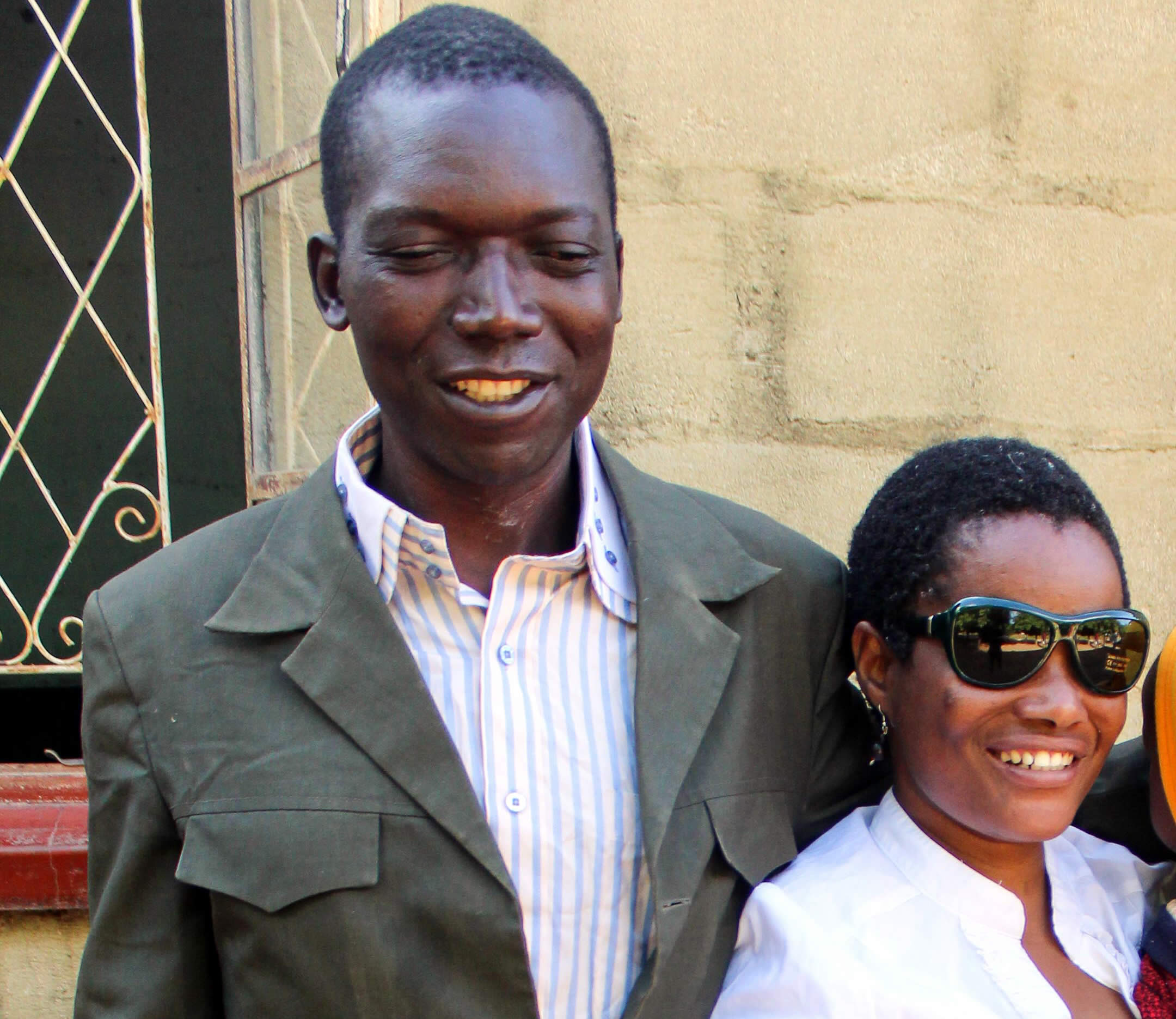
 Thandeka Moyo Chronicle Reporter
ON the fringes of Zimbabwean society are the disabled. So forgotten is this group of citizens that they had to go to court to ask to be counted in the national census. In a February 2016 ruling, a High Court judge found the 2012 government census, whose results were released in 2015, had deliberately left out the disabled.
Justice Maxwell Takuva ordered the government statistics agency, Zimstat, and the finance minister to “immediately facilitate the full participation of persons with disabilities on an equal basis with others in future population censuses or any other exercises. This will include budgeting for the use of assistants by the visually impaired persons who will be participating in the exercise.”
Watch video here…….
A consequence of the deliberate exclusion of disabled persons in the census has been that Zimbabwe has no reliable information about their number or location – and any social interventions must rely on estimates. In a choice between life and death, this exclusion has often meant the latter for the disabled — particularly in the worldwide battle against the HIV/Aids pandemic.
Zimbabwe launched a Voluntary Medical Male Circumcision campaign in 2009, aiming to put 1,2 million men under the knife by 2015 after studies showed circumcision reduced the risk of contracting HIV by 60 percent.
Watch video here…….
Some 600,000 men had been circumcised by the end of 2015 — yet the country has no statistics on how many of this number were disabled males, a most vulnerable group, according to campaigners.
“We don’t have statistics for persons with disabilities that have HIV, or are participating in voluntary medical circumcision because health institutions are not yet recording such information,” says Hamida Ismail of the Disability, HIV and Aids Trust (DHAT).
“People with disability,” she adds, “have no access to information and services and thus programmes like the Voluntary Medical Male Circumcision are still alien to most of them. This, despite the World Health Organisation identifying this group as being at higher risk of exposure to HIV.”
For Last Honye, a visually impaired 38-year-old hawker from the Midlands city of Kwekwe, hearing about voluntary circumcision was every much a chance encounter like the way he attracts his customers: shouting at the public square.
Public health messages booming from roadshow trucks got him thinking in April this year. He has a loving wife and four children who were very supportive when he shared his intentions with them.
“When I heard that a Population Services International (PSI) team was in my neighbourhood, urging men to get circumcised at no cost at the community clinic, I also went with my second son and we immediately registered,” says Honye.
Another of his sons, Tatenda, had been circumcised in 2014.
“My wife, Blessing, was the first to wake us up on April 13, the day we got circumcised. She accompanied us to the clinic where we first got counselled before undergoing the procedure,” says Honye, leaning against his walking stick which he uses to beat the pavements of the familiar Kwekwe streets where he earns a living selling clothes, vegetables and mobile phone recharge cards.
“My wife is amazing. She constantly reminds us to keep our wounds clean, and we’re already discussing circumcision with our 11-year-old third born son. We hope he too will get circumcised when the time comes.”
The couple, both born blind, may have seen the light but they know it was largely by chance that they heard of voluntary medical male circumcision. Now they feel like evangelists and want to get more members of their community to sign up.
Said Blessing: “I’m happy he finally got circumcised. Together, we’ll start raising awareness among our friends living with disabilities. My husband should be healed fairly soon, and we’ll share the good news with others. “I can’t let this opportunity pass my friends by and since the procedure is free, I don’t understand why men are not making use of the chance they have.”
Blessing is also urging other women to guide their husbands and sons to the circumcision clinics. She believes there is no danger of her husband cheating on her, but circumcision guarantees his health with other benefits such as easier hygiene, especially for one who cannot see, and decreased risk of urinary tract infections.
Despite making major strides in HIV prevention in recent years, Zimbabwe remains with the fifth highest HIV prevalence rate in sub-Saharan Africa at 15 percent. The World Health Organisation (WHO) recognises that by encouraging women like Blessing to be involved in sexual decision making, including contraceptive use, and encourage communication between partners, great strides in prevention of HIV globally will be achieved.
Zimbabwe is one of the 14 priority countries identified by the WHO for large scale male circumcision. The WHO says that this preventive strategy is an excellent model to both save costs by averting new HIV infections and reducing the number of people needing HIV treatment and care. The revised Zimbabwe Policy Guidelines on Voluntary Medical Male Circumcision estimates that only one in ten Zimbabwean men are circumcised since the start of the programme in 2009.
The National Association of Societies for the Care of the Handicapped (NASCOH) estimates that of Zimbabwe’s 13 million people, almost 1,8 million live with disabilities. It is not known how many of this number have heard of or taken up voluntary circumcision.
Dr Owen Mugurungi, the director of the Aids and TB Unit in the Ministry of Health and Child Care, admits their efforts at reaching the disabled community are still at formulation stage. “Our current Voluntary Medical Male Circumcision communication strategies target the adolescent and adult male population, though we’ve suggestions on incorporating people with disabilities in our communication efforts,” he said. According to Dr Mugurungi, by December 2015, Zimbabwe had circumcised a total 601,346 males.
“We’ve so far surpassed our halfway target of circumcising 1,2 million men. This is a great milestone. Whilst we could do better, we’ve to remember that there’re other critical factors to consider — particularly the issue of having men want to get circumcised.”
Dr Mugurungi cites lack of funding for their failure to come up with a targeted programme for disabled males — made harder by lack of accurate information. “As a ministry, we regard this as a noble development worth pursing and we’ll hopefully, with the availability of funding, develop some specific initiatives,” he told The Chronicle.
Shingirai Nziradzepatsva, Population Services International’s acting Midlands field officer, applauds the combined efforts by both government and non-governmental organisations to promote voluntary medical circumcision in communities.
“Our target is to reach out to all men, whether disabled or not. However, those with disabilities also deserve to access this programme and we’ve incorporated some disabled persons to participate in community based mobilisations and encourage more men to get circumcised,” he said, blaming inadequate resources for failing to scale up the programme to remote areas.
“We strive towards building healthier communities where men actively choose to participate in circumcision to ensure an HIV free generation. Our message is still, ‘be smart and get circumcised today’.” For Honye and his household, they are determined – even at the risk of ridicule, as their son Tatenda found out, to spread the message of healthy living.
“My primary school teacher introduced me to voluntary medical male circumcision. I was delighted when my parents gave me permission to go ahead with the procedure. The process was not that painful and within three weeks, I was able to play football and do some chores,” says Tatenda.
It was a hard sell, in the beginning, to his friends. He recalls: “During our frequent river baths, my peers jeered at my penis because it looked different from theirs. “I laughed it off and with time I won them over and many of them got circumcised.”
Honye says he carries an even bigger task to share his experience with peers who travel to the neighbouring South Africa and Botswana to buy their wares for resell. “For how long shall our fears blind us to ignore VMMC?” he asks.


 Online Reporter
 derick.khumalo