Chronicle Editor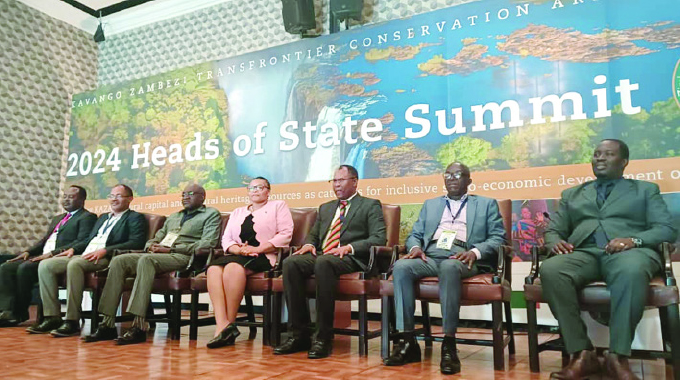
Leonard Ncube in Livingstone, Zambia
WILDLIFE conservationists from Kavango Zambezi Transfrontier Conservation Area (Kaza TFCA) member countries have warned the Convention on International Trade in Endangered Species of Wild Fauna and Flora (Cites) to desist from continuously disregarding conservation efforts by Southern African countries.
The Kaza TFCA is a conservation area, spanning five Southern African countries, namely Angola, Botswana, Namibia, Zambia and Zimbabwe that is centred around the Caprivi-Chobe-Victoria Falls corridor.
The bloc is holding its 2024 Summit in Livingstone to take stock of work done since its establishment more than a decade ago and to deliberate on various strategies for the future of conservation.
Ending on Saturday, the summit is being held under the theme: “Leveraging Kaza’s natural capital and cultural heritage resources as catalysts for development of the eco-system.”
Speaking at the meeting of senior officials at the ongoing 2024 Kaza Heads of State Summit in Livingstone, Zambia, delegates drawn from government and private sector players called for sustainable localised financing models for conservation to reduce over-dependence on donors if the Kaza bloc is to prevent human-wildlife conflict that is prevalent in all the five countries.
They said human-wildlife conflict is a real issue in the Kaza region and needs an integrated approach to address it. Zimbabwe Parks and Wildlife Management Authority director general, Dr Fulton Mangwanya, who spoke on behalf of Zimbabwe said there is a need for alternative financing methods such as carbon financing.

“Without corridors, we experience human-wildlife conflict. We need to be trans-formative and use natural resources to uplift people.
“We have to harness our natural resources and we are looking at carbon credits and unlocking value so that if donors pull out, we continue with programmes for financial sustainability,” said Dr Mangwanya.
“Conflict is because the population is growing. It is like we are suffering from the good work that we have been doing but when we go to Cites we are not listened to.
“We need our partners to come with funding so that we strategise. We need funding to have trenches, chilly bombs, chilli guns, fences and other mitigation strategies.”
The experts concurred that all flora and fauna were important assets that should translate to sustainable conservation for wildlife and communities around them.
They said currently, investment in Kaza is project-based and with timelines, while conservation is continuous and long term hence the need for policy harmonisation especially on shared resources.
Dr Miguel Xavier from Angola implored member countries to continue improving policies for private investment.
“Human-wildlife conflict is a real issue and people out there should understand, especially us in Southern Africa because we have done very well to conserve wildlife and we need to be listened to,” he said.
From Namibia, Mr Bennet Kahuure said wildlife financing is needed to address human-wildlife conflict and wildlife crimes.
He said programmes should be channelled towards a wildlife economy.
Germany has been singled out as a major financier of wildlife conservation in Kaza and member states are called upon to show commitment to sustainable management of funds and use of natural resources.
Director of wildlife management in Zambia, Mr Dominic Chiinda, said human-wildlife conflict was a hot issue in Kaza.
“It is something that as directors in partner countries we are concerned about. As Zambia we are contemplating running some protected areas as business centres to prepare for when funding dries up,” he said.
Mr Moemi Batshabang from Botswana said human-wildlife conflict and law enforcement are some of the broad issues to be discussed at the summit, which ends on Saturday.
He said several key mitigation initiatives are being taken up in the Kaza region, including the adoption of conservation farming as a response to conflict in member states.
Delegates said there is a need to adopt an inward-looking sustainable framework to mitigate human-wildlife conflict with an emphasis on leveraging conservation fees charged at park areas.
The summit will escalate into the Ministers’ Meeting on Thursday and the Heads of State summit on Friday.


 Online Reporter