Online Reporter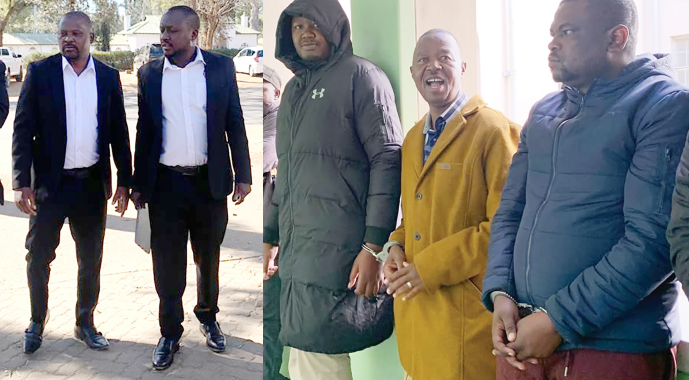
Peter Matika, [email protected]
THE arrest of five Bulawayo City councillors on allegations of extortion has thrust the city council into the spotlight, prompting renewed debate about accountability, transparency and public trust within the local authority.
The arrested councillors are deputy mayor Councillor Edwin Ndlovu, Councillor Ntandoyenkosi Ndlovu (Ward 28), Councillor Mxolisi Mahlangu (Ward 3), Councillor Ashton Mhlanga (Ward 15) and former Ward 22 Councillor Rodney Jele.
Their arrests have triggered widespread concern among residents and civic organisations, with growing calls for stronger internal accountability measures alongside the ongoing criminal investigations.
With the matter now before the courts, Bulawayo mayor Councillor David Coltart said it would be inappropriate to comment on the specific allegations facing the councillors. However, he acknowledged that the situation had damaged public confidence in the city’s governance structures.
“In the course of the past five days, four City of Bulawayo councillors, including the deputy mayor, have been arrested by Zacc and the ZRP and are now facing charges of extortion. Given that their cases are now sub judice, it would be inappropriate for me to comment on the allegations levelled against them or the circumstances surrounding their arrest,” he said.
While stressing that the accused remain innocent until proven guilty, Clr Coltart said the number of councillors facing criminal allegations was cause for concern.
“The spectre of six councillors either facing criminal charges, or actually convicted of criminal charges, deeply undermines public confidence in the council.”
The controversy has intensified calls for council to strengthen its own oversight mechanisms rather than relying solely on criminal prosecutions.
The Bulawayo Progressive Residents Association (BPRA) has been among the organisations pushing for reforms. The residents’ body wants council to introduce disciplinary procedures for councillors facing serious allegations, make asset declarations compulsory and strengthen oversight through the involvement of civic groups and political parties.
Coltart said he shared many of those concerns but pointed out that council does not have the legal authority to suspend elected councillors.
“In terms of Section 114(2) of the Urban Councils Act, if the Minister of Local Government has reasonable grounds for suspecting that a councillor is guilty of misconduct, the Minister of Local
Government may suspend any councillor, order that an investigation be held and, if needs be, refer the matter to an independent tribunal,” he said.
The mayor said councillors accused of offences involving dishonesty, corruption or abuse of office directly linked to their public duties should be suspended while investigations and legal processes run their course.
He suggested that affected positions be temporarily filled by other councillors to ensure council operations continue without disruption.
“My view is that all the offices affected at present should be filled during this period of suspension by other councillors, in acting positions, pending either the upliftment of the suspensions or the ultimate removal of the respective Councillors if they are ultimately convicted,” said Coltart.
The arrests have also reignited discussion around financial transparency at Town House, particularly the issue of asset declarations by councillors and council employees.
Coltart revealed that he tried to introduce an asset declaration policy shortly after assuming office but encountered resistance.
“Soon after taking office, I sought to implement the asset declaration policy but faced opposition to the suggestion,” he said.
He added that when he sought an update from the council’s human resources director on July 7, he was informed that progress on the policy had stalled.
“I agree that this policy needs to be reinvigorated and adopted by BCC as a matter of urgency and undertake to do everything in my power to expedite the process,” he said.
The mayor believes such a policy should apply to both elected officials and council employees.
“I should stress that my view is that the policy should be applied to both councillors and members of staff,” he said.
Despite the controversy, Coltart urged residents not to judge the entire council based on the actions of a few individuals.
“There are a total of 38 councillors and many dedicated councillors working diligently in the public interest. My view has always been, and has often been stated publicly by me, that there needs to be a zero-tolerance approach to corruption. Unless we deal with the scourge of corruption in Bulawayo and indeed throughout Zimbabwe, we will not realise the tremendous potential of our city and nation.”
The arrests come at a time when Bulawayo City Council is already under pressure to improve service delivery. As criminal investigations continue, residents will be watching closely to see whether the local authority follows through on calls for stronger safeguards aimed at protecting public resources and restoring confidence in local government.