admin
admin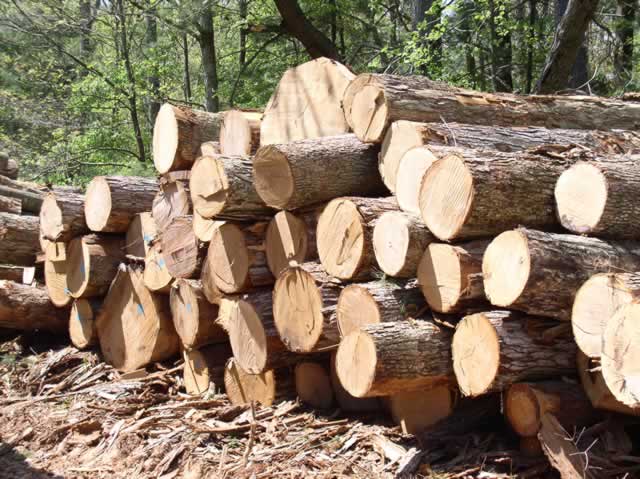
 Focus on Bulawayo Gatsha Mazithulela
Past discussions on this column have dealt with background issues on the (re)industrialisation of Bulawayo but some detail on what exactly is suitable for a future industrial policy is now required.
As far as policy direction goes, His Excellency, President Mugabe made it crystal clear during his inauguration that the resources of the country will drive economic development. I expect that this policy position will be translated into development plans for every area of economic activity that exists in the resources value chain.
In other words, if you expect to benefit and in turn be a driver of growth within the resources value chain, it is instructive to seek alignment with the direction given by His Excellency because his Government will certainly do so in the next five years and beyond. The question therefore is “how does this broad policy position translate to the growth of Bulawayo’s industries?”
In various discussions around this matter, there has been a level of dismay from some analysts because when you look at Bulawayo Metropolitan Province, it has almost no natural resources which can be exploited to fit into a simplistic translation of the President’s policy direction.
For me however, the policy was a cause of celebration because I know that Bulawayo itself has never had any natural resources to exploit but its growth in the past was linked to the substantial resources in its surroundings. All metropolitan areas in the world share this feature. They are many of a choice amongst administrative, residential (dormitory towns), financial or secondary industrial centres. Bulawayo has certainly positioned itself firmly as perhaps all of the above and hence a perfect candidate for its metropolitan status.
My main interest related to the incoming Government industrial policy is discussing the role of the Bulawayo Metropolitan Province as a secondary industry centre — it has always been that.
The textile industry thrived when there was no cotton farming or even spinning of fabrics in this city; the leather tanning and related industries grew without any cattle in the city; heavy engineering survived with almost no mining activity in Bulawayo; the largest cattle abattoir in the country was established here without any cattle on our streets and the examples are endless.
The point is that natural resources were identified in the surroundings of Bulawayo and their processing was then performed in this city. History must repeat itself but this won’t happen on its own as a result of exploitation of resources in surrounding towns and rural areas mainly in the nearby Matabeleland and Midlands Provinces.
It requires identification of the opportunities and collaborative development of industrial value chain policies with our neighbouring provinces to include Bulawayo in the economics of exploitation of their resources. If Bulawayo misses this point, it will really become irrelevant as it may be easier in many cases to start brand new industries where the resources are actually occurring – outside the Bulawayo Metropolitan Province.
I will now attempt to deal with major groups of resources, where they occur and how their exploitation can drive a resources-based re-industrialisation of Bulawayo.
Timber
Zimbabwean hardwood forests are mainly located in Matabeleland North and their wholesale exploitation has been a cause for serious ructions in the past. The processing of logs into timber and other products is an industry that can grow exponentially in Bulawayo under certain conditions.
Some of those conditions can be legislative arrangements to prevent logs from leaving a certain radius of their origin without basic processing being required to licence “export” from the province.
In other words, such a policy should encourage those who process logs into timber to invest in sawmills, furniture factories and other related activities within the region where the logs were harvested. For clarity, “exporting” raw logs from this region should attract a compensatory fee into our public coffers and this fee should be pegged to discourage haulage of logs away from here and make it very attractive to purchase processed planks and other products instead.
Mineral Resources
The extraction of minerals and their beneficiation require very different competencies and the opportunities presented by the discovery of such resources everywhere within a radius of some 250km around the Bulawayo Metropolitan Province are limitless.
The very special advantage of the railways network passing through Bulawayo should be used as to encourage value addition and not just transit of minerals from this region, via Bulawayo to other areas. In that light, any number of industries related to processing of primary resources into alloys, separation of rare metals, smelting, forging and others should feature very strongly in any development plans in Bulawayo. There is a particularly large range of opportunities related to the new coal and gas deposits which can drive a new chemicals industry.
However, this opportunity can be exploited far away if the investment prospectus of Bulawayo does not give a reason why such new industry should be established here.
Livestock and Wildlife Products
Livestock farming is very well suited for the provinces bordering Bulawayo and value addition of products of slaughter was once established in local factories. The processing of animal products is a competency that should be re-established and protected.
The abattoirs in and around Bulawayo are responsible for perhaps 30-40 percent of all inspected meat consumed in the country and yet there is no leather industry anymore. Legislative arrangements need to be developed to discourage the export of hides and other slaughter by-products and encourage leather tanning and other downstream industries in Bulawayo. Again, licence fees and certification of product origin can form a revenue stream from those who want to take away raw hides, horns and so on but ultimately it should encourage them to invest in value addition here. I have been surprised to find out that the leather sector alone is worth eight times the value of the meat. Clearly we are currently selling the family jewels. It’s not about the meat . . .
I could easily go on to many other areas but I think the point has been made.
Sanctions
There is however a very significant factor in this puzzle and that is the illegal sanctions against Zimbabwe. A most frustrating view is that some people believe that economic sanctions are against only a few Zimbabweans. The Zimbabwe Democracy and Economic Recovery Act (Zidera) of the United States makes it extremely difficult for all these economic development plans to happen.
The elected MDC-T councillors and Members of Parliament and Senators have the economic blood of this city on their hands for lobbying the US Congress to pass that piece of legislation which sucked the remaining life out of Bulawayo industries.
If they are to be taken seriously, they should immediately start calling for the unconditional lifting of the sanctions so that we can progress. If they still want the illegal sanctions, they should explain to the people of Bulawayo that they are anti-development because you cannot ask for sanctions and then claim to be fighting to develop this country.
What are they going to be doing in the offices for the next five years if they are still asking the world not to trade with us? The MDC-T has to reign in the monster that they created when they lobbied the US Congress and others to sanction Zimbabwe.
I say this is a monster because it is also illegal under US law to lobby for the removal of sanctions against Zimbabwe. The International Emergency Economic Powers Act, again of the USA and supported by the MDC makes it illegal for anybody to lobby for the removal of Zidera sanctions. On 6 August 2013, Prince Asiel Ben Israel and C. Gregory Turner of Chicago, USA were prosecuted by the US government for asking for the lifting of Zidera sanctions. They now face a maximum of 20 years in US prison if found guilty.
The government of Zimbabwe was not party to those meetings where MDC successfully asked for these laws to be passed against Zimbabwe. So it is them who must ask for their unconditional removal. The funny thing is that the same MDC people actually face arrest in the USA if they lobby for the removal of those sanctions. What a tangled web they have woven!
What remains is that without the MDCs telling the public that they have made a mistake and have the sanctions removed, we don’t expect many results from their involvement in the re-industrialisation of Bulawayo. Can they be involved in economic sabotage through asking for the continuation of the illegal sanctions and claim to be involved in economic revival at the same time?
Dr Gatsha Mazithulela is a scientist and politician with a special interest in the development of Bulawayo. He can be contacted on 0773227561 or email – [email protected]


 Online Reporter