Emmanuel Kafe-Check Point Desk
AT dawn in Harare’s central business district, before offices fully wake and municipal officers take their posts, a quiet economy comes alive.
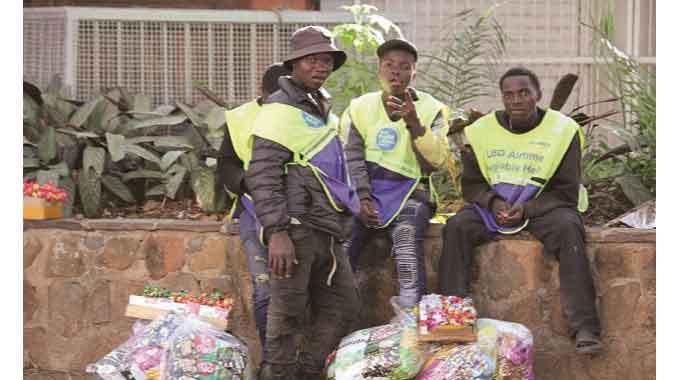
Boys barely in their teens dart between commuter omnibuses and suited workers, hawking airtime, sweets and loose cigarettes along Nelson Mandela Avenue.
They scatter at the first sign of enforcement, only to regroup minutes later.
Some speak fluent local vernacular Shona, while others slip between broken Shona and Portuguese-accented English.
What looks like routine street vending, multiple sources say, is the visible end of a deeper and darker enterprise, a corruption-linked network that allegedly traffics children across borders and folds them into Zimbabwe’s identity system for profit.
Check Point Desk found consistent accounts suggesting that some of the boys are Mozambican nationals who entered Zimbabwe irregularly and later acquired Zimbabwean birth certificates and, in certain cases, national identity cards through bribery and falsified records.
Far from random street kids, they are described as the commodities of a system sustained by porous borders, poverty, and alleged corruption within state institutions meant to safeguard citizenship.
Their lives, sources say, are organised, controlled and monetised, from recruitment in Mozambique to documentation in Harare.
Promises across the border
Zimbabwe and Mozambique share a long, largely porous frontier shaped by decades of informal movement for trade, family ties and seasonal work.
In recent years, worsening economic conditions in parts of central and southern Mozambique have intensified the movement of unaccompanied minors.
For these boys, crossing the border is often framed as opportunity.
For those who control them, it is business.
Fourteen-year-old Mateus Joaquim, from Manica province, said he was told he would work in a grocery shop and send money home.
“They said in Zimbabwe, I would go to school and work part-time,” he recounted.
“We crossed at night. We walked for hours. When we reached Harare, there was no school. They gave me sweets to sell.”
In Zimbabwe, Mateus became Tawanda Moyo on paper.
Another boy, Carlos Domingos, 15, from Tete province, said he travelled with two older boys after a man in his village promised construction jobs.
“He told my mother I would earn US$10 a day,” Carlos said.
“When we got here, they took my Mozambican papers.
They said I am now ‘Blessing’ and I must not speak Portuguese.”
Carlos now carries a Zimbabwean birth certificate under the name Blessing Dube, which he says was obtained months after his arrival.
A third minor, Anselmo Pedro, 13, described being transported by truck to Harare before being housed in Mbare.
“They told me I was born in Gokwe,” he said. “I have never been there. They made me practise the story.”
His Zimbabwean identity reads Simbarashe Ncube.
The fixer’s account
A self-described recruiter, who agreed to speak on condition of anonymity and identified himself only as “Victor”, said the system relies on poverty and weak enforcement.
“We look for boys who have already left school,” he claimed. “Some families agree because there is no food. Some boys come alone. In Zimbabwe, they can make money quickly by selling on the streets.”
Victor alleged that documentation is the most valuable stage of the operation.
“Without papers they are always running. With a birth certificate, police leave them. Later you get an ID. That paper is money.”
He claimed fees for documentation can exceed US$100 per child, shared among intermediaries.
Manufacturing “paper citizenship”
Zimbabwe’s birth certificates and national identity cards are not mere paperwork.
They unlock schooling, healthcare, employment and social services.
They are also the foundation of voter registration.
The integrity of the civil registry is therefore a governance and national security issue.
Yet while there is no official data on how many foreign minors may have obtained documents fraudulently, this investigation found repeated descriptions of how the system is allegedly manipulated to manufacture “paper citizenship”.
Late birth registration is described as the main gateway.
Mateus, now “Tawanda,” said he was taken to an office in Harare where an adult man claimed to be his uncle.
“They told me not to talk,” he said. “The man signed papers. They said I was born at home and never registered.”
Carlos described a similar process.
“They told me my parents died,” he said. “I had to memorise their names.”
According to sources familiar with registry processes, affidavits are allegedly used to claim Zimbabwean birth years after the fact.
Parental details are fabricated, sometimes naming deceased or untraceable citizens as parents or guardians.
Payments, sources claim, range from tens to hundreds of US dollars per document.
Two highly placed sources within the registry offices said investigations into document fraud at the central registry “periodically arise”, pointing to systemic vulnerabilities such as heavy reliance on affidavits when hospital records are absent.
Control on the streets
In Harare, the boys’ lives are described as tightly controlled. Street vendors and a former handler said they are housed in overcrowded rooms or makeshift shelters, issued goods to sell daily and required to surrender their earnings each evening.
Failure to meet targets, sources allege, can result in beatings or being denied food.
Anselmo, now “Simbarashe,” said:
“If you don’t bring enough money, they shout. Sometimes they don’t give you supper.”
Control is reinforced by the retention of documents, genuine or forged, by handlers, ensuring the boys remain dependent and fearful.
On the streets, the boys are both visible and invisible.
Hawking provides daily cash with minimal capital, making it attractive to handlers.
At the same time, the boys’ precarious status discourages them from reporting abuse.
Police crackdowns typically result in brief dispersals rather than sustained interventions.
When arrests occur, those holding Zimbabwean documents, whether legitimately obtained or not, are often released, reinforcing the value of paper identity within the network.
Experts warn against reducing the issue to criminal migration alone.
Child rights activist Dr Fanuel Tsikai said poverty, weak child-protection systems and gaps in regional migration frameworks under the Southern African Development Community all play a role.
Official responses
The Civil Registry Department Assistant Registrar General, Mr William Mbewe, said while there are no reported cases of infiltration, he acknowledged attempted abuse of the system during outreach programmes.
“During mobile registration exercises, however, certain foreign nationals have attempted to register by producing testimonial letters from local political and traditional leadership. These attempts are detected through mandatory interviews and the design of registration forms, which prevent inconsistencies.”
“Mobile teams are staffed with trained officers ensuring such cases are promptly identified,” Mr Mbewe added.
He said the registration process is structured to minimise fraud through layered verification.
While acknowledging past irregularities, he said these were largely linked to older systems.
“Instances of officers conspiring to circumvent procedures have occurred but such irregularities are readily detected during subsequent identity registration. These cases were predominantly associated with non-computerised sub-offices.”
He added that ongoing digital reforms were strengthening the system.
“The Department is progressively computerising service centres with password-protected access, multi-user processes and real-time system visibility across all sites,” Mr Mbewe said.
Meanwhile, the law is clear.
The Births and Deaths Registration Act criminalises false declarations, while the Citizenship of Zimbabwe Act prohibits fraudulent acquisition of citizenship.
Zimbabwe is also bound by international child-protection conventions that place the best interests of the child above nationality.
What is at stake goes beyond paperwork.
Compromised identity systems corrode public trust and undermine service delivery, law enforcement and electoral integrity.
For Mateus or Tawanda, the conflict is personal.“I don’t know which name is mine anymore,” he said.
Arrests expose passport fraud
Arrests in 2024 have exposed vulnerabilities within the Registrar General’s Office, highlighting how criminal syndicates may attempt to exploit insider access.
A suspect was arrested in a case involving the alleged fraudulent issuance of Zimbabwean passports to four Cameroonian nationals.
Chipo Matovanyika, an employee in the passport collection department, appeared before magistrate Mr Stanford Mambanje and was remanded in custody.
Prosecutors allege that on September 17, 2024 four Cameroonians — Christiana Boyembe Dumba, Emile Muya Muya, Marvel Ngei Tegha and Yvette Kum Nnam — successfully applied for Zimbabwean passports at the Registrar General’s Office in Harare.
Two days later, the passports were allegedly issued illegally and handed over by Tapiwanashe Hove and two accomplices.
The quartet was intercepted at Beitbridge Border Post while attempting to travel to South Africa, where immigration officers arrested them and recovered the passports.
It is further alleged that on September 20, Hove, acting in connivance with Matovanyika, attempted to destroy evidence at the Registrar General’s Office.
The suspects are still in remand.
(NB: This can be used as a panel to the story or as particles for a possible Infographic)
How does a foreigner become a Zim citizen?
Foreign nationals seeking to become Zimbabwean citizens must meet stringent legal requirements, including long-term residence and the renunciation of any previous nationality, under the country’s citizenship laws.
The Citizenship of Zimbabwe Act, which came into force on December 31, 1984, and was later amended in 2001 and 2003, outlines the conditions under which non-citizens may be registered as Zimbabwean citizens.
Under the law, a foreign national may apply for citizenship by registration only after completing at least 10 years of legal and ordinary residence in Zimbabwe. Applicants are required to submit their applications in person at the Registrar General’s Office and must demonstrate that they are ordinarily resident in the country.
The process is designed to ensure that only individuals with established and lawful ties to Zimbabwe qualify for citizenship.
In addition to residency requirements, Zimbabwe maintains a strict position on citizenship status, prohibiting dual citizenship for adults. Foreign nationals granted Zimbabwean citizenship are therefore required to renounce their previous citizenship in accordance with the laws of their country of origin.
While minors may hold dual citizenship temporarily, they are required to make a choice upon reaching adulthood and formally renounce one citizenship before turning 19.
The law also imposes conditions on the retention of citizenship once granted. Individuals who acquire Zimbabwean citizenship by registration risk losing it if they reside outside the country continuously for a period of five years.
For individuals born in Zimbabwe to foreign parents, citizenship is not automatic. Such individuals may be required to renounce any foreign citizenship acquired by descent within a prescribed period to retain Zimbabwean citizenship.