Ray Bande in NYANGA
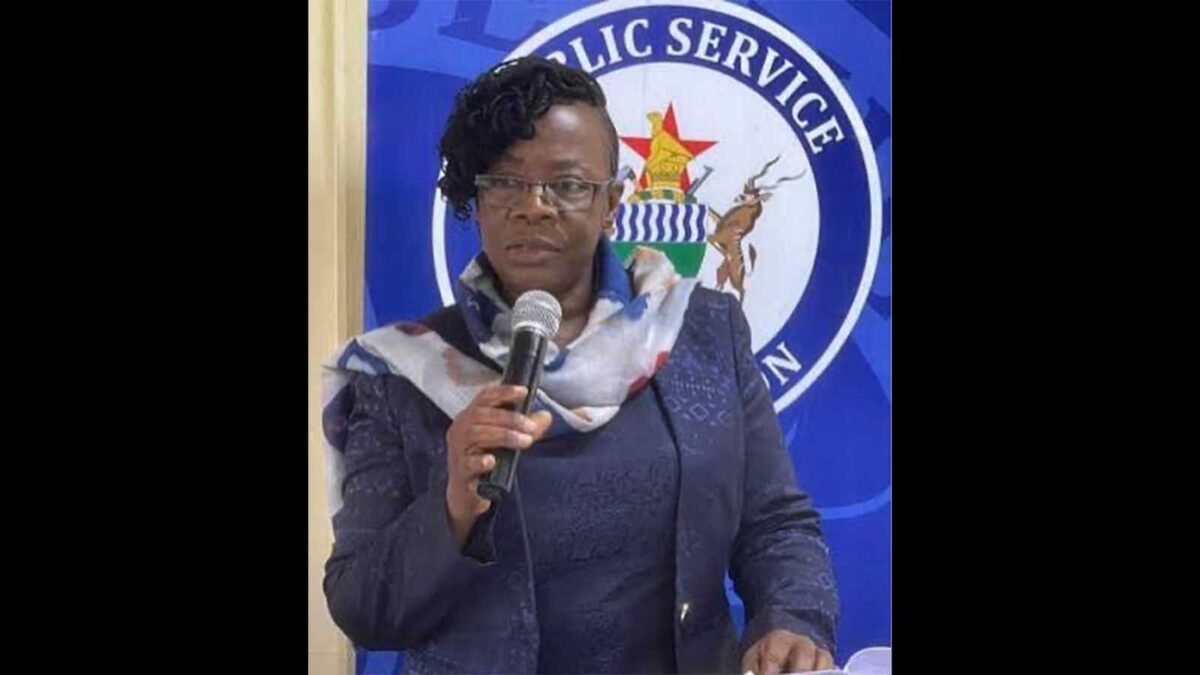
THE Government has introduced mandatory retirement planning training during the induction of all new civil servants to prevent public workers from retiring into poverty, Secretary for Service Commissions Mrs Sibusisiwe Zembe has said.
Speaking in an interview on the sidelines of the Public Service Commission (PSC) Strategic Plan Review Workshop in Nyanga on Wednesday, Mrs Zembe said a raft of measures had been rolled out to prepare employees for life after service, including annual financial-planning conferences for long-serving staff.
“We have also been able to introduce retirement planning into Government, which is a critical component,” she said.
“We have seen in the past that our public servants were retiring into poverty. So we have embedded retirement planning into the whole scope of the work of the Public Service Commission.
“We have introduced retirement planning at the induction stage, at the entry stage. When a new member joins Government, as part of their induction, they undergo training on retirement planning.
“But also for those who are already in the system, we are running annual conferences where we are bringing experts from different sectors, mainly those who are in the pension system so that they can share ways and means in which our public servants can begin to plan for their retirement. It is never too late. Even for those who have been in the service for a long time, they can benefit.”
Mrs Zembe added that the PSC is integrating its payroll and pension administration into a single automated digital system to eliminate delays in processing terminal benefits upon retirement.
“We are gathered here as the Public Service Commission at this critical time when we are critically reflecting on the performance of the Commission in the year 2026,” she said.
“The Public Service Commission has key priorities that it has been pushing, and one of them is job evaluation and its implementation. It is critical in terms of grading to ensure that our jobs are graded correctly and also that remuneration is done in a way that is in line with the job evaluation exercise.
“We are also looking at issues related to coming up with an integrated payroll and pension system. You will appreciate that we have had a payroll and pension system that have been separate and which have been in place for quite a long time.
“So now we are coming up with a digital integrated payroll system which is going to improve efficiency and service delivery in the sense that everything is automated. This means that we will be able to pay salaries, we are also able to meet our pensions at the right time as and when people retire.”
Beyond pension reforms, Mrs Zembe noted that the Commission is strengthening workforce capacity through targeted recruitment, training at the Zimbabwe Institute for Public Administration and Management (ZIPAM), and digital tools such as e-pay slips and online training programmes.
“We are also looking at ensuring that our Ministries, our Commissions, are performing through people who are fit for purpose through recruitment processes and also we want to ensure we develop our capacities and our training for our members that are in the civil service through our campuses and also through our Zimbabwe Institute for Public Administration and Management,” she said.
“We have also embraced technology in Government, in particular within the Public Service Commission, and we are reviewing our processes and introducing e-enabled processes so that it is easier for us to deliver services for people on the ground.
“It should be easier for us to deliver services to people on the ground. All they need is to visit different platforms, and with the click of a button, they are able to access our services.
“Good examples are pay slips. We now have what we are calling e-pay slips. One can now access their pay slip on any digital gadget via the email addresses specifically for all civil servants.
“We are also having e-learning so that we can conduct training programmes that are done online without people necessarily having to attend meetings physically.”
In a keynote address delivered on his behalf by Human Resources Director Mr Wilson Kayerezi, Public Service, Labour and Social Welfare Minister Edgar Moyo said public-sector innovation must remain secure, accessible and practical for both staff and citizens.
“Digital tools can improve access, reduce administrative burdens and make services more efficient. The Commission’s achievements in 2026 include the digital learning platform (E-LMS) and the service-wide job-evaluation reform,” he said.
“These are relevant areas for review: participants should assess what has been delivered, the results achieved, and what remains to be done. Technology and reforms should be secure, accessible and suited to the needs of users and staff. Innovation should simplify service delivery, not add unnecessary complexity.”