admin
admin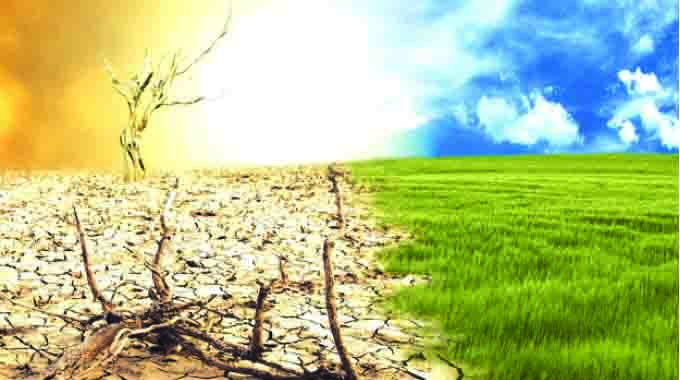
Professor Christopher Chetsanga
The warming of environmental temperature continues to worsen climate change.
In woodlands, global healing has exacerbated aging forest fires and destroyed trees used for carpentry industries.
The factors that inflict the damage are carbon dioxide (CO2) and other global warming pollutants collecting in the atmosphere like a thickening blanket, drawing the sun’s heat and causing our planet Earth to warm up.
This has led to the shutting down of industries and the destruction of homes, leading to court cases.
There has been an increase in the number of climate changes generated court cases globally over the past two decades.
Court cases from climate change
In 2001, there were only two climate change court cases in two countries.
Between 2017 and 2020, climate change induced cases did not only nearly double, but they spread to 14 more countries. This shows that there have been increasing rates of climate change over the years.
Heatwaves and flooding have been observed to grow more extremely, some people are turning to court appeals for urgently needed legal action.
It often happens that when governments fail to regulate something harmful, like greenhouse gas emissions, the courts are one of a victim, only form of redress.
It is being observed that today in the courtrooms around the world, people are holding fossil fuel companies liable, and governments accountable for the causes and impacts of our warming world.
Many people are using the law to force those in power to act, and in some instances to prevent them from acting.
These cases have different purposes and limitations, but there is no doubt that they are already shaping the way societies think about and address climate change.
CO2 Emission from Transportation Systems
In Kilavina, Alaska located about 130 kilometres (Km) North of Actic Circle is found in the polar region. Their scientists found that temperatures are warming nearly four times faster than the rest of planet Earth.
The community of Kivalina said the loss of sea ice had left Kivalina more vulnerable to wave, storm surges and erosion.
The majority of court judges describe the USA transportation sector as emitting an enormous quantity of CO2 to the atmosphere.
They reported that the CO2 emission from the USA transportation sector would on their own, still leave the country the third largest emitter of CO2 in the world.
Carbon pollution is the main factor making planet Earth hotter. It increases the chances of weather disasters, drought and flood as well as hurting our health.
The Environmental Protection Agency (EPA) is a US authority that establishes carbon emission limits and proposes solutions to climate change.
They reduce carbon pollution by limiting the use of fossil fuels. To ensure that there is limited carbon pollution in the environment, one selects sourcing systems that have limited supplies of carbon.
Human Induction of Global Warming
It should be noted that climate change researchers in the US have reported that global warming is primarily human induced.
It is warming up, that is the nature of climate change. It is mankind that works with a wide variety of materials that produce CO2 when they are metabolised, amended or catabolised.
An important strategy should focus on reducing carbon pollution in our environments.
For car owners, they should aim at owning electric cars or specially designed electric power generating plants. These two approaches serve to reduce power plant emissions. It is electric power plants that are used in generating electricity. The resulting reduction in the production of carbon pollution will lower carbon pollution on planet Earth, as well as not promoting climate change.
Fast Growth of Electric Car Industry
In the car industry technologies, the electric cars’ special energy efficiency eliminates their use of fossil fuels as well as carbon pollution.
Car producers are presently being encouraged to engage in the production of electrically-powered automobiles.
Electric cars’ energy efficiency is a proven resource with significant potential to reduce power-plant emissions. Energy efficiency combats climate change and creates carbon-free air.
Electric cars are emerging as a leading transportation system for society.
Chinese electric cars have dominated markets.
China is known to have dominated the electric car market. China has been able to maintain its dominant position through its control of mineral resources necessary for producing batteries for electric cars.
China produced roughly 60 percent of rare earth minerals world-wide, while the Democratic Republic of the Congo (DRC) produced roughly 70 percent of the world’s supply of cobalt.
According to the International Energy Agency (IEA), China was also the world’s number one processor of transition minerals considered key to green energy projects, processing nearly 90 percent of the world’s rare earth minerals and roughly 60 percent of all cobalt and lithium, while accounting for more than 30 percent of global processing for nickel and copper.
Electric cars require more than four times the minerals of a car with a conventional internal combustion engine according to IEA.
While traditional cars typically only require copper and manganese, electrical cars also require nickel, lithium, cobalt, graphite and trace amounts of rare earth minerals.
Broad impact of climate change
This impact of climate change has had considerable disturbances in many countries world-wide. The damages have been inflicted by thunderstorms, earthquakes and firestorms among others.
It was around 2022 that earthquakes devastated Turkey’s and Syria’s major buildings and business emprises. These climate change effects have affected people’s existences on all continents.
In the Southern Africa
Tropical cyclones have caused environmental harms in Zimbabwe (March 2019) and Malawi where the cyclone killed 350 people in March 2023.
These effects have attracted the concern of Zimbabwe’s President Mnangagwa to appeal to other leaders in Southern Africa that they should all work together to address the phenomenon of global warming and climate change.
One frequently hears of these climate change inflicted environmental damages occurring in different cities or countries in different parts of the world.
President Mnangagwa has been wise in alerting country leaders to come together to urgently address the root causes of climate change and adopt mitigation strategies to reduce its impact.
The President said there is need for stakeholders to work hand in glove to improve our disaster preparedness and response to minimise the impact on the vulnerable communities.
I was a Professor of Biochemistry at the University of Zimbabwe during the years I attended a number of international meetings, including UNESCO meetings in Paris where we dealt with detailed discussions on the issue of climate change.
I am impressed by how much society has now come to an awareness of how global warming has caused climate change.
Professor Christopher Chetsanga is at Zimbabwe Ezekiel Guti University



 Online Reporter