

 admin
admin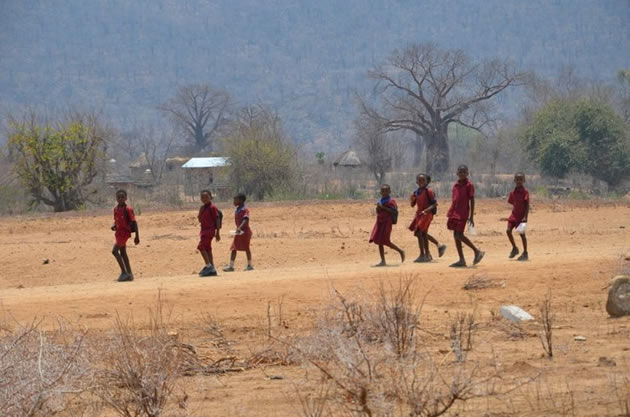
Innocent Ruwende and Nyemudzai Kakore
Zimbabweans are living each day with load shedding as Lake Kariba water levels fall. A warning has been issued that the situation may remain the same over the months ahead as climate experts say there is a high likelihood that a massive El Niño event will reach maturity by the end of 2015 and persist throughout the whole summer rainfall period.
Poor weather conditions during the 2014-2015 agricultural season, including erratic rainfall and long dry spells, contributed to large-scale crop failure across the country.
According to the Zimbabwe Vulnerability Assessment Committee, an estimated 1,5 million rural Zimbabweans will face food insecurity during the next six months.
Hope for mitigation of climate change effects has rested on developed nations which include Germany, France, Netherlands, the United States, Sweden and Britain which have pledged to transfer $100 billion to developing countries by 2020 for mitigation initiative.
Climate Change Department director Mr Washington Zhakata, however, says the news cannot be classified as good news before the establishment of a Monitoring, Reporting and Verifying (MRV) framework for means of implementation is in place.
“There is a danger of accepting false promises which may never materialise. The sources of financing should be clear. We have seen developed countries reporting on fulfilment of their COP (The United Nations Climate Change Conference) 15 pledges under the Copenhagen Accords, a provision that had a pledge to the tune of providing $30 billion between 2010-2012 to be accessible by developing countries for mitigation and adaptation.
“This was never transparently achieved. We did not see the funds in Zimbabwe and most of the region. As a country, having concluded development of a climate change response strategy with clear action plans, if the funds become available, we can significantly reduce vulnerability to climate change,” he said.
The Organisation for Economic Cooperation and Development says $62 billion was spent last year but Oxfam argues that only about $2 billion was invested in helping poor countries which are the most affected by extreme weather events.
According to the Intergovernmental Panel on Climate Change, the interior of the vast African continent will suffer greater increases in temperature than the average warming elsewhere.
Zimbabwe has already experienced a rise in temperatures of up to two degrees Celsius in some areas in the past century.
In areas like Hwange and Mwenezi rivers and small dams have dried up resulting in most people travelling with their cattle for hours in search of water sources and pastures.
Schoolchildren have to bear the brunt of the high temperatures while travelling long distances from schools with most of them finding cover under baobab trees.
Headman of Nekabandama ward in Hwange, Andrew Shoko, said they had appealed to families to provide enough cover for the children against the heat as the number of children suffering from side effects such as nose bleeding and headaches increases.
“It is known that Hwange is usually hot this time of the year but not to the levels we are currently experiencing. The heat has seen most of our cattle dying because of lack of enough grazing land and sources of water to drink,” said Headman Shoko.
Change ward (Hwange) Headman Mr Joseph Change said Government intervention was needed for the construction of irrigation facilities in the district in order to adapt to the changing environment.
The Herald Review visit to the area coincided with the launch of the Lean season relief operation at Nekabandama, Hwange district where The United States Agency for International Development (USAID) contributed food and cash worth $22,5 million to World Food Programme (WFP).
The programme will assist people struggling to buy or produce enough food for their families in seven of the most food insecure districts in the country until March next year.
WFP Zimbabwe deputy country director Niels Balzer said international organisations need to move from giving out food handouts to assisting a country through resilience programmes.
He said his organisation is finalising a Country Strategic Plan that will include trainings on crop management, climate change and financial management.
“USAID has made it possible for vulnerable households to meet their food and nutrition needs and protect their assets at this critical lean season period. In our goal to reach zero hunger in Zimbabwe, we will continue to invest in resilience building activities while doing our best to meet the immediate needs of the most vulnerable people.
Mr Zhakata said vulnerability and adaptation to climate change are problems that belong not only to the national Government but the civil society and local level institutions as well adding that Government is responsible for developing basic needs for the citizens, which makes adaptation a part of Government responsibilities.
“In this regard, a National Climate Change Response Strategy for Zimbabwe has been developed to guide climate change adaptation and also mainstreaming climate change in development planning. Already, using this tool, the country has started approaching development partners and other multilateral funding mechanisms under Climate Change, like the Green Climate Fund (GCF), the Adaptation Fund (AF), and the Special Climate Change Fund (SCCF), among others.
“The consequences of existing climate stresses in Zimbabwe are becoming less manageable for a growing section of the population especially those in dry land areas due to diminishing capacities and options to adapt. The situation is expected to be worse in future as climate continues to change,” he said.
Mr Zhakata said although people are continuously adjusting their livelihoods to stressors, the decline in people’s adaptive capacities is manifest in an eroded asset base, particularly in livestock; a lack of security that restricts access to key drought resources such as grazing areas, water and forests; statutory restrictions on resource uses; and localised degradation of resources in secure areas that are drawing growing numbers of people in search of safety.
“Tokwe-Mukorsi flooding is one of the recent impacts that signals a bleak future under climate change. The 2000 floods caused by cyclone Eline caused unprecedented suffering, loss of property, infrastructure damage and lives. Higher temperatures will also increase evaporation of whatever moisture is left in the soil, thus impacting water resources. The worrisome low levels of the Kariba dam and other inland waters may be worsened by global warming,” he said.
In many dryland areas of sub-Saharan Africa, conflict, referring to competition for resources, livestock raiding, banditry, violence against women and the vulnerable, and a generalised climate of criminality and impunity, influences livelihood decision-making in the short and longer term.
Presenting the country’s Intended Nationally Determined Contributions (INDCs) to the United Nations Framework Convention on Climate Change last week, Environment Water and Climate Minister Cde Oppah Munchinguri said Zimbabwe seeks to contribute to an ambitious global goal of limiting temperature rise to below 1,5 Degrees Celsius.
INDCs are climate change mitigation actions, strategies or policies that result in reduction of emissions of greenhouse gases and the consequent slowing down of global warming.
She said the scope of INDCs looks at expanding and promoting the use of renewable, cleaner energy technologies and enhancing energy efficiency.
With climate change nightmares already visible adaptation measures must be effected or we rather wait for the rain.



 Online Reporter